After months of gloom across the luxury sector, even the faintest uptick feels like a relief. LVMH reported its first quarterly growth of this year. Sales rose 1 per cent on an organic basis to €18.3 billion ($21 billion) in the third quarter, buoyed by a long-awaited rebound in Chinese spending and an improving trend across nearly all divisions. The modest increase has injected a sense of cautious optimism into an industry that’s been mired in a slowdown for over a year. Shares surged
surged more than 13 per cent on Tuesday in Paris, their biggest one-day jump since September 2001, after the announcement.
“Mainland China turned positive in Q3,” Cecile Cabanis, chief financial officer at LVMH, told analysts during the company’s earnings call.
The effort in China paid off
The Asia region, excluding Japan, showed what LVMH called a “noticeable improvement” nine months into the year. That’s significant, given that China, representing roughly one-third of the global luxury market, has been the sector’s weakest link since mid-2023.
For much of last year, even powerhouse labels like Louis Vuitton and Dior saw sales stagnate in key Chinese cities.
In September, retail sales of luxury goods in mainland China ticked upward for the first time this year, boosted by a series of localized events and store reopenings. LVMH’s update suggests that domestic shoppers are starting to return to stores.
“It’s still going to take time until we have a rebound on China as a whole,” Cabanis said.
She also noted that Japan improved significantly sequentially, reflecting a high baseline of comparison, which is less challenging than in the first half of the year.
The engine slows, but doesn’t stall
LVMH’s core fashion and leather goods division still posted a 2 per cent year-on-year decline in the quarter. Yet that’s a marked improvement from the 9 per cent drop reported in the second quarter.
This category accounts for more than two-thirds of LVMH’s profits and is often viewed as a proxy for the health of the entire luxury market.
“Q3 has been a notable quarter for the fashion and leather goods division, in particular, with pockets of excitement, including new retail concepts, successful shoes and looking ahead to several new creative designers,” Cabanis said.
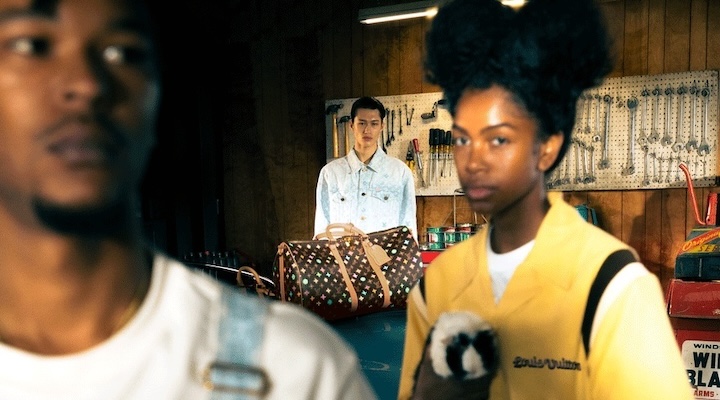
Louis Vuitton leaned on high-profile cultural moments to sustain demand. Pharrell Williams’ menswear collections and the opening of The Louis, an architectural “museum-ship” concept in Shanghai, exemplify the company’s continued investment in experiential retail and brand storytelling. The launch of La Beauté Louis Vuitton, a cosmetics line led by Dame Pat McGrath, signaled further diversification into the beauty category.
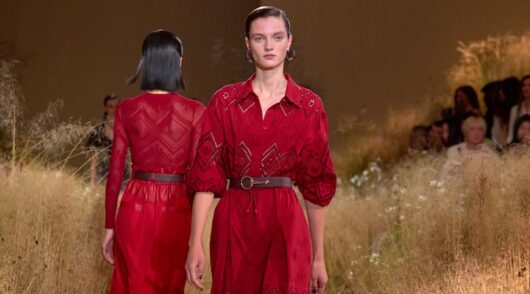
At Dior, new creative director Jonathan Anderson has also unveiled his debut men’s and women’s collections.
Meanwhile, Selective retailing’s revenues, led by Sephora and DFS, were up 7 per cent, outperforming all others. Sephora’s collaboration with Rhode by Hailey Bieber fueled momentum, making it a rare growth engine amid luxury’s broader slowdown.
In Asia, DFS reported improving trends in Macao and Hong Kong. With air traffic and tourism flows finally normalizing, LVMH’s retail footprint in these markets is beginning to pay off.
Other divisions gain footing.
Outside of fashion and retail, LVMH’s other divisions each showed modest improvement. Perfumes and cosmetics grew 2 per cent organically in the quarter. Watches and jewelry also posted 2 per cent growth, buoyed by Tiffany & Co’s continued store rollouts and Bvlgari’s high jewelry exhibitions in Tokyo and Mumbai.
The wines and spirits segment, which had been hit by trade tensions and slower cognac demand in the US and China, managed a slight 1 per cent uptick, thanks to stronger sales in champagne and Provence rosé wines.
Cabanis warned that unfavorable currency rates and global uncertainty could weigh on fourth-quarter results. The company’s official outlook describes this year as a year of “resilience” rather than a rapid rebound.
Further reading: As profits slip, LVMH rethinks what belongs in its portfolio.


![A headshot image of Hannah Mercer wearing a purple hoodie against a gray background. ]\\](https://insideretail.us/wp-content/uploads/2025/10/hannah-mercer-gymshark-530x294.jpg)