Pandora’s efforts to reinvent itself as a full-fledged jewelry brand are beginning to produce results, with modest sales growth prompting the company to raise its 2026 guidance. But analysts say the Denmark-based firm’s recovery remains incomplete: much of the momentum is coming from expansion into new markets, while it has yet to fully reignite demand among consumers who already know it for charms and bracelets. Pandora reported organic growth of three per cent in the second quarter, compri
comprising like-for-like growth of one per cent and a two per cent contribution from network expansion. The performance beat consensus estimates. Its gross margin reached 80.5 per cent, or 78.2 per cent excluding a one-off boost from tariff-related income. The results prompted Pandora to raise its 2026 organic growth forecast from between minus one and two per cent to between zero and three per cent.
Speaking after the results’ release, the brand attributed its improved sales to a greater focus on design as a driver of desirability, as well as changes to its marketing model designed to deliver stronger local and cultural relevance.
In July, Pandora launched Pandora Wonders, a multi-year campaign intended to increase cultural relevance through distinctive design and the reinterpretation of iconic jewelry materials. Its first iteration, co-created with stylist Harry Lambert, debuted in Paris during Haute Couture Week and generated significant buzz.
“We are making progress in re-energizing Pandora’s growth engine,” said president and CEO Berta de Pablos-Barbier. “Q2 delivered one per cent LFL growth, with encouraging early signs from the actions we are taking. There is more work ahead, but we are moving in the right direction and raising our 2026 guidance for both growth and profitability.”
What experts have to say about Pandora’s Q2 results
Christine Russo, principal of retail creative and consulting agency Russo’s Retail, said a significant portion of Pandora’s growth could be attributed to “Fuel with More”. The multi-year strategy was launched in 2019 to reverse declining sales as market trends shifted away from the brand’s more recognizable SKUs.
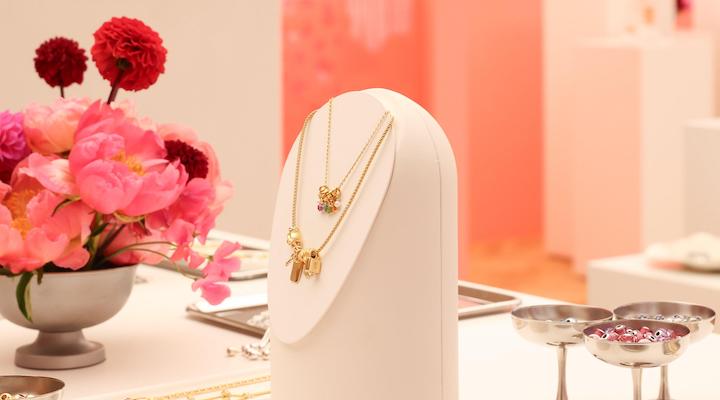
Pandora is historically famous for its customizable silver charm bracelets, but Fuel with More was designed to transform it into a more cohesive brand with a broader range of jewelry. Its new offerings include lab-grown diamonds and platinum-plated pieces, which launched in the Netherlands in July.
“The brand created a successful blueprint to expand the product offering and raise awareness of it. That being said, North America still has declining sales, as does the EMEA region, whereas growth is strongest in Asia Pacific and Latin America,” Russo said.
Meanwhile, Frankie Margotta, strategy director at consulting firm Triptk, said Pandora could be on its way to a successful revival.
“From the outside in, it seems like Pandora is navigating its next era thoughtfully and with some positive effects,” Margotta said, adding that the brand was getting many of the fundamentals right by sharpening its focus and operationalizing the business. However, he was not yet convinced it had returned to growth. Much of its expansion has come from entering international markets rather than building demand in established ones.
“To me, that suggests that the existing brand still has enough awareness and equity to travel into new markets, but perhaps not yet enough renewed relevance to motivate consumers who already know Pandora and seem to have moved on from it,” he said.
Nevertheless, Margotta believes Pandora had a lot going for it. The brand occupies a sweet spot that feels premium yet affordable – a position that works particularly well when many consumers are being forced to become more frugal and discerning about their spending. Its accessories also remain compelling, particularly to younger consumers who crave customization as both a form of self-expression and a way to experiment in an increasingly commodified world.
“Even in a crowded category with brands like Mejuri, Quince and others, Pandora carries palpable equity and heritage that help it stand apart. The underlying challenge is Pandora’s ambition to evolve from a brand primarily associated with bracelets and charms into a full-fledged premium jewelry brand. Shifting years of reputation and association takes time, and that’s okay.
“Berta de Pablos-Barbier already seems to be putting many of the right pieces in motion: homing in on clearer creative direction, introducing new materials and product categories that can break some of those older perceptions, and finding meaningful ways to participate in culture that bring Pandora closer to fashion and allow it to benefit from those halos of influence.”
The challenge for Pandora is to expand its product and marketing strategy while overcoming the existing associations that are limiting its growth. As it moves into more jewelry categories and introduces collections for different needs and audiences, consumers will increasingly need to understand how those pieces fit together, who the broader brand is for and what Pandora uniquely offers.
“The next step is getting clearer on who that proposition is for now, why it matters today and how it’s continuing to evolve,” Margotta concluded. “That’s what can give consumers in established markets a reason to believe again, come back and choose Pandora over an increasingly crowded field of alternatives.”
Further reading: Pandora aims to become full jewelry brand, eyes affordable luxury market