
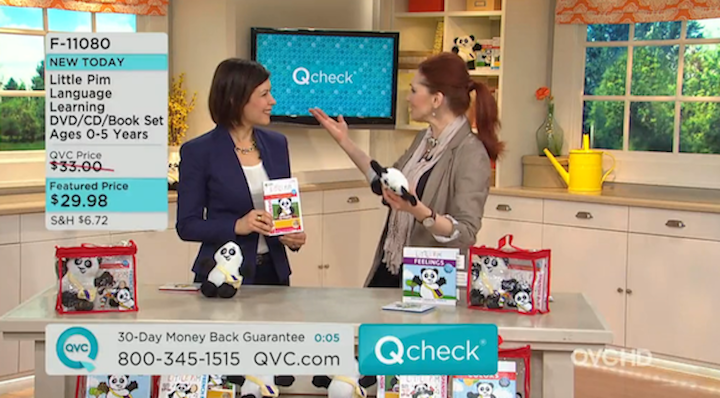
Beekman 1802, Bose and Bareminerals are just a few of the now giant brands that once thrived on QVC. Launched in 1986, the channel revolutionized the retail industry by introducing shoppers to a new way to purchase from the comfort of their homes, in a way that was informative and entertaining. Star hosts included media and retail icons Joan Rivers and Martha Stewart. However, it would appear that the once-mighty shopping platform has fallen after its holding group filed for bankruptcy on
tcy on Thursday.
This follows reports from early April where the company indicated in a Securities and Exchange Commission filing that there were “substantial doubts about the company’s ability to continue as a going concern”.
In 2025, QVC faced a tough year with several rounds of layoffs, the closure of its HSN campus in St. Petersburg, Florida, and nine months of losses that added up to more than $2.4 billion.
Many industry experts believed it was only a matter of time before QVC declared bankruptcy.
As retail strategist Christine Russo, principal of Retail Creative and Consulting Agency (RCCA), told Inside Retail, “In an era where commerce happens on phones and screens, the pioneer of live selling has not kept up.”
Today, big digital platforms like Tiktok have their own live shopping features, and new players like Whatnot are offering products and sellers that connect with current trends. QVC has struggled to keep up and is now almost irrelevant as a shopping channel.
QVC’s bankruptcy announcement
Russo noted that several factors contributed to QVC’s Chapter 11 filing, including product selection, content quality, and limited reach.
As cord-cutting ramped up, Russo explained that QVC failed to make meaningful progress in social media and social commerce.
She explained that it was no surprise that QVC struggled to stay afloat, as third-quarter 2025 operating income fell by 61 per cent and viewership plummeted after 2020.
Neil Saunders, managing director and retail analyst at GlobalData, added that the backdrop to QVC’s struggles is a large amount of debt, currently at $6.6 billion.
“This [debt] gives them very little room for manoeuvre and makes every sales decline all the more painful,” explained Saunders.
He emphasized that the debt was the biggest factor in QVC’s failure, adding that its traditional, linear shopping model and older target audience no longer align with the growth of younger consumer platforms, such as live streaming.
Scott Benedict, founder and CEO of Benedict Enterprises, said that QVC’s problems are not just about a few mistakes. They show a bigger change in how people find and buy products.
“Their model was built around curated storytelling and scheduled programming – effectively a linear, one-to-many version of what we would now call “influencer commerce.” The issue is that today’s consumer doesn’t wait for discovery to be delivered – they actively seek it out across platforms like Tiktok, Youtube, and AI-driven personalized, on-demand, interactive experiences.”
Benedict said QVC is squeezed between online marketplaces, which offer convenience and better prices, and creator-led commerce, which provides faster, more authentic storytelling. This leaves QVC out of sync with modern shopping habits.
Is there hope of a comeback for QVC? Experts discuss
To sustain the business, Russo stated that QVC will need to rethink everything, including its product assortments, hosts, social media, pricing, lighting, audience interactivity and even a potential rebrand and new name.
The company will need to rework its entire structure to connect with the Gen Z audience, rather than the Gen X audience they grew up with and relied on until the past decade or so.
To start, “QVC will need products that are more timely and resonate with Gen Z,” said Russo.
For instance, where Tiktok often wins with product assortment is that it curates an interesting mix of up-and-coming brands, like beauty brand Sacheu, alongside legacy brands like Maybelline or Victoria’s Secret.
Russo also pointed out that there is a modern methodology for live-selling hosting that connects with all audiences, which QVC has simply not adapted to.
Instead of a personable host simply talking to the shopper about a product’s quality points, sellers on platforms like Whatnot and Tiktok Shop often talk about their personal connection to a brand’s product and can connect with the audience in a more seemingly authentic manner.
“QVC has long-standing hosts that have a loyal following, and they also have guest hosts. I would suggest that they expand the stable to more culturally relevant hosts to reach a wider demographic,” said Russo.
In August 2024, the QVC Group signed an agreement with Tiktok. Later, in April 2025, it deepened its partnership with the social media platform, beginning to debut 24/7 shoppable streaming content and increasing the number of partner brands highlighted.
QVC’s current issue, then, doesn’t lie in shifting to more digitally relevant platforms, like Tiktok Shop, but in adapting to younger shoppers across several generations.
Is a comeback possible? Benedict argued any turnaround would require fundamental repositioning, with QVC transitioning to a digitally native, creator-led platform that embraces short-form video, social commerce, and AI-driven discovery. And it will have to do all that while leveraging its brand relationships and storytelling strengths.
Whether QVC will be able to use the Chapter 11 filing as a liferaft, or if it is ultimately a marker of a sunken ship, remains to be seen.
Further reading: From QVC to Whatnot: The evolution of live shopping in US retail