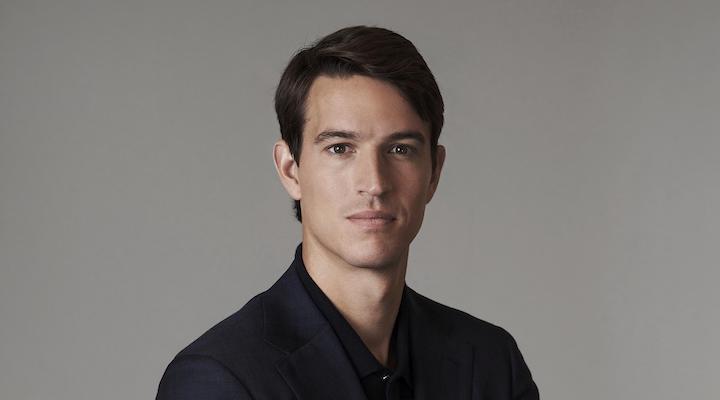
Alexandre Arnault’s appointment to Nike’s board has given investors another reason to believe the company’s turnaround may be gathering momentum. But while the LVMH heir can help sharpen its strategy and challenge entrenched thinking, analysts argue that the sportswear giant’s revival will ultimately depend on whether it can produce shoes that consumers actually want to buy. Speaking after the appointment was announced, Nike executive chair Mark Parker said Arnault had “earned a reputa
reputation for helping iconic global brands evolve, innovate and grow” and would bring a fresh perspective to the company.
“Alexandre’s leadership across some of the world’s most respected brands will make him a strong addition to our board,” he said.
Arnault has served as deputy CEO of Moët Hennessy since February 2025, following four years at Tiffany & Co. A lifelong Nike fan, he said he was “excited to contribute to what comes next”.
Arnault’s appointment, though, comes at a tough time for the legacy footwear and lifestyle retailer. Nike has struggled to make significant headway with the Win Now turnaround plan introduced by CEO Elliott Hill after he took on the role in October 2024.
In June, the company reported a two per cent decline in full-year revenue on a constant-currency basis, to $46.4 billion in fiscal 2026. On September 21, Nike will be delisted from the S&P 100 for the first time in 18 years, after the company’s stock fell to about 80 per cent below its 2021 peak.
What experts say about Arnault’s addition to Nike’s board
Christine Russo, principal of a retail creative and consulting agency, sees Arnault’s appointment as a step in the right direction, especially for investors.
Shortly after news of the appointment broke, Nike stock traded nearly one per cent higher overnight on September 16.
Russo compared investors’ excitement about Arnault’s appointment with the reaction to the selection of Elliott Hill, who began his role as Nike’s CEO in October 2024.
Since the day Hill’s appointment was announced, Nike’s stock has fallen approximately 53 per cent.
“When Elliott Hill was selected as Nike CEO, there were two distinct camps, and they were divided primarily into two categories: brand and money. The brand people applauded the appointment, cheering: “Who better to bring back our glory than someone who understands our DNA and not an outsider!” The money side, referring to investors and Wall Street, was disappointed. They opined that an insider will not be able to navigate this new world of commerce,” recalled Russo.
By contrast, investors and the broader retail industry are intrigued by what Arnault could bring to Nike. That interest stems from both his professional career and his personal connection to LVMH as one of the luxury conglomerate’s heirs.
“LVMH is a master at longevity, owning some of the world’s oldest and most prominent brands. Appointing an Arnault to the board of directors brings external governance and guidance from a family and companies navigating the complex consumer landscape,” said Russo.
Frankie Margotta, strategy director at consulting firm Triptk, shared Russo’s approval of Arnault’s appointment.
“Bringing Arnault onto Nike’s board in an advisory capacity was a smart move that complements Elliott Hill’s turnaround strategy already underway, particularly around rebuilding product innovation and reducing dependence on oversaturated franchises that have cannibalized their own value and appeal,” said Margotta.
Margotta said Arnault’s value lies not necessarily in his experience in luxury retail, but in his ability to evolve brand strategy.
“Across his time at Rimowa, Tiffany & Co. and now Moët Hennessy, he’s spent much of his career working on the exact problem Nike now faces at scale: taking iconic brands with strong legacies, preserving the codes people know and value, and evolving them to remain relevant and desirable to a new generation.”
Margotta added that Arnault understands the value of restraint, controlled distribution and scarcity in the luxury sector. This could help Nike rebuild equity around some of its core franchises while protecting the value of future innovations. Arnault also understands that heritage alone isn’t enough.
A brand like Nike can’t simply rest on what it has already built.
“Nike is a challenger at heart, but it’s now the incumbent, operating in a category with more innovation and more credible players than ever. Reconciling that challenger spirit with the realities of being the category leader is the paradox Nike has to solve. In the wrong hands, that tension can lead to complacency or holding too tightly to what already works, and neither is good for a company built on a challenger ethos. However, in the right hands, the paradox can become the thing that defines Nike’s next era,” concluded Margotta.
Deanna Andersen, co-founder of advisory firm Wade, also welcomed Arnault’s appointment.
Andersen said it would be a “cynical read” to assume Nike appointed Arnault solely because of his unusually close ties to luxury retail as the third son of LVMH CEO Bernard Arnault.
“The actual case rests on track record, not pedigree. Arnault has already taken Rimowa and Tiffany & Co., two brands that had gone soft, and made people want them again through real product discipline and a willingness to make bold calls instead of safe ones. Nike’s problem was never product quality or its logo. It was a company that stopped taking risks and let discounting do the talking instead,” said Andersen.
She noted that if the board lets Arnault operate at Nike as he did at Rimowa or Tiffany & Co., it will be the clearest signal yet that Nike is serious about becoming desirable again, not just profitable again.
If, however, the appointment ends up being symbolic governance dressed up as strategy, Nike will have wasted its best asset at the exact moment it can least afford to.
Nike shouldn’t rely too heavily on Arnault’s appointment
Barney Stacher, CEO of consultancy Retail OCD, also welcomed the appointment, but with a caveat.
“I think this is a smart board appointment, with an important caveat: Nike cannot accessorize its way out of a turnaround.”
Stacher noted that Arnault’s experience in refreshing the appeal of established brands such as Tiffany and Rimowa could help Nike sharpen its storytelling, develop more meaningful collaborations and reconnect with consumers who know the swoosh. However, Arnault’s main challenge will be to determine how to give shoppers a fresh reason to buy from the brand.
He also said Arnault’s background in luxury retail may help Nike work out how to protect desire and pricing power, with the latter a particular sore point for the brand.
“Nike should apply that thinking while keeping its products accessible and its sporting credibility intact. A limited edition can create a queue. The everyday assortment has to create repeat customers,” said Stacher.
“Nike’s latest results show why execution matters: fourth-quarter Nike Direct revenue fell seven per cent, while wholesale revenue rose 4 per cent. That reinforces the importance of retail partners and meeting shoppers where they choose to buy.”
Arnault could bring a fresh perspective to Nike and challenge some of management’s outdated assumptions.
“As a member of the board, he will influence strategy rather than run the turnaround. The revival still depends on compelling performance products, strong retail relationships and consistent execution.”
However, Stacher warned that although an Arnault in the boardroom may add some sparkle, the shoes will still have to do the running.
Further reading: Nike appoints LVMH’s Alexandre Arnault to its board