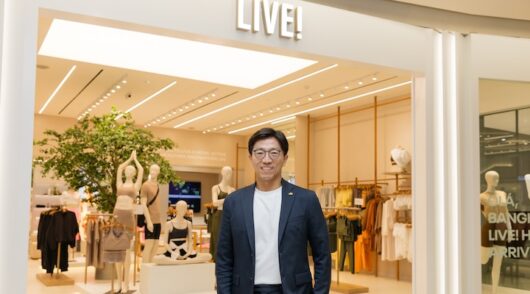
Before companies like Sephora and Sukoshi made their deep dive into the competitive K-beauty sector, competitors like Memebox were ahead of the game, first with a curated subscription model and later as a multi-brand beauty incubator. For founder and CEO Hyungseok (Dino) Ha, the company’s 14-plus-year journey mirrors the evolution of K-beauty in the US, from a niche category known mainly to enthusiasts to a mainstream retail phenomenon. Yet before launching Memebox, Ha got his start in retail,
etail, working in the public relations department at Tom Ford International. “During my time there, I was exposed to multiple categories across the brand, including menswear, fragrance, beauty and film projects,” said Ha. “That experience gave me a deep appreciation for branding, storytelling, luxury positioning and consumer experience.”
After working with the luxury lifestyle label, Ha moved to TMON, one of South Korea’s early mobile e-commerce platforms. The business later surpassed a billion dollars in transactional value and was subsequently acquired by a subsidiary of Amazon.
The experience gave Ha valuable exposure to the art of scaling a digital business at a rapid pace. He then combined his experience in beauty and e-commerce to launch what would become one of K-beauty’s biggest businesses abroad: Memebox.
The company, which officially launched in 2012, began with a fairly simple but innovative premise: combining beauty discovery with a singular, seamless mobile commerce experience. While that may seem unremarkable today, in an era when international players like Olive Young and local retailers such as Ulta Beauty, Sephora and Sukoshi Mart deliver K-beauty brands en masse, Memebox was at the forefront of the K-beauty wave in the US retail market.
Ha explained that what helped Memebox stand out was not simply giving customers the chance to try products through samples, but introducing them to a tightly curated range of goods before funneling them directly into a digital storefront where they could act on those preferences immediately.
As the company evolved, Ha said the model shifted in response to changing consumer behavior and market dynamics.
Between 2012 and 2015, Memebox focused heavily on themed and influencer-curated subscription boxes that helped surface niche Korean beauty products to American consumers. From 2015 to 2017, the company pivoted toward a DTC e-commerce platform, expanding into a broader marketplace that offered thousands of South Korean and global beauty products as customers increasingly preferred repurchasing full-size items over sampling.
Eventually, Memebox transitioned again, moving beyond being solely a multi-brand retailer or subscription beauty service. From around 2017, Memebox evolved into a brand incubator focused on building and scaling its own data-driven beauty brands, including I Dew Care, Kaja and Pony Effect. The company used insights from its earlier subscription and e-commerce businesses to create and grow its own product lines.
Looking back on a 14-plus-year founder journey
Reflecting on his founder journey, Ha said Memebox helped set the standard for how K-beauty brands were introduced to non-Korean consumers.
“Memebox was one of the earliest companies to aggressively introduce K-beauty to global consumers, particularly in the United States. We established our US entity in late 2013 because we believed American consumers were looking for more diversity, experimentation and innovation within beauty,” recalled Ha.
“Our thesis from the beginning was that Korean beauty manufacturing and skincare technology were among the best in the world, and that consumers should be able to access those innovations at affordable price points.”
He added that the journey had rarely been straightforward.
“Over the past 14 years, there have been challenges almost every single year. Building a global consumer brand is never linear.”
Memebox established its first US office operations in 2014 and, by 2017, had launched several brands with major US beauty retailers, including I Dew Care with Ulta Beauty and Kaja with Sephora.
At the time, Ha noted that K-beauty was still relatively niche in the US market, but consumer awareness and demand have progressed rapidly since then.
“Today, US consumers are far more educated and interested in the science, ingredients and innovation behind Korean beauty products, as well as the experiential aspect of beauty itself,” said Ha.
“At the same time, despite the growth of K-beauty, it still represents a relatively small percentage of the overall US beauty market, meaning there is still significant room for growth.”
One way the company has kept pace with changing consumer behavior is through social commerce platforms such as TikTok Shop.
Ha said social commerce has become particularly important for Memebox because it allows consumers to discover products organically through creators and communities rather than through traditional advertising alone.
The past and future of Memebox
Today, Memebox continues to grow at a steady pace.
Ha disclosed that the company expects approximately 50 per cent year-over-year growth in the second quarter of 2026 alone.
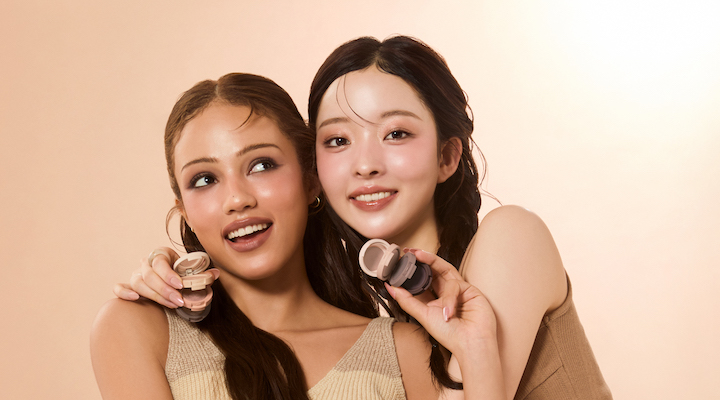
He attributed much of that growth to the team’s focus on hero products such as Nooni Lip Oil. Memebox sold about 2.2 million units of the product in 2025 and had already more than doubled that figure, with over 5 million units sold by May this year. The company expects to sell between 12 million and 15 million units of the SKU by the end of 2026 and is already planning production capacity to produce 35 million units in 2027.
“Our company is currently growing at a very strong pace. In Q2 2026 alone, we expect approximately 50 per cent year-over-year growth, and we believe much of that momentum comes from our consumers and retail partners.
“Over the next five years, our ambition is to continue building globally recognized beauty brands while pushing Korean beauty innovation to a much larger global audience.”
Looking back on his 14-plus-year journey building Memebox, Ha said he would tell his younger self to spend more time enjoying the journey of being a brand founder rather than focusing solely on results.
“Building a company is incredibly difficult, and there are always challenges and uncertainty. But over time, you realize that the relationships, the team, the consumers and the journey itself are what matter most.”
Further reading: Korean beauty brand I’m Meme debuts at Target