
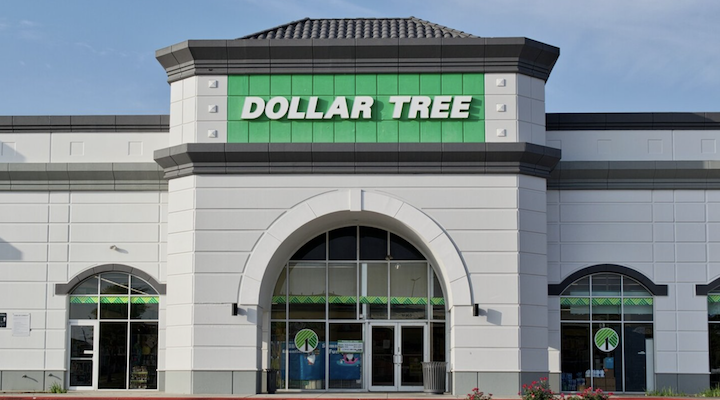
On September 3, American discount chain Dollar Tree posted positive second-quarter fiscal results, despite ongoing market volatility. Net sales increased 12.3 per cent, year on year, to reach $4.6 million, with same-store net sales increasing by 6.5 per cent year on year. This was driven by a 3.0 per cent rise in traffic and a 3.4 per cent increase in average ticket, compared with the prior corresponding period. Dollar Tree has generated $639 million of net cash in the year to date, driven by
en by operating activities from continuing operations and $145 million of free cash flow from continuing operations.
Global Data’s managing director, Neil Saunders, remarked that Dollar Tree’s “very solid results” indicate that the company has made progress since completing the sale of its Family Dollar business to Brigade Capital Management and Macellum Capital Management on July 7 for about $1 billion.
The discount chain has opened 106 new Dollar Tree stores in the past quarter alone, while continuing to work on an attractive pricing policy for consumers of various economic backgrounds.
As Dollar Tree CEO Michael Creedon stated, “Following the selective pricing actions that we’ve taken so far, we are pleased with the understanding and resilience of our customers and the effect on unit volume has been less than we initially expected. This again demonstrates the power of our value proposition and validates multi-price as a structural advantage as we navigate a challenging tariff landscape.”
Factors behind Dollar Tree’s strong Q2
Saunders cited two major factors behind Dollar Tree’s strong performance this past quarter: heightened customer acquisition rates and the continued expansion of its Dollar Tree 3.0 concept, a multi-price store model that was launched in 2024 that offers consumers a wider product selection and price points up to $7. In the past quarter, Dollar General converted about 585 traditional stores to the 3.0 format.
The discount retailer confirmed that over the past quarter, consumers with annual incomes of over $100,000 accounted for two-thirds of its new customers, about 2.4 million total, a 50 per cent increase from the previous quarter. This reflects the pressure that consumers across various income levels are feeling in the current economic climate.
As CI&T’s global director of retail strategy, Melissa Minkow, pointed out, “The sales growth and strong Q2 seen by several retailers is a testament to consumers’ willingness to spend right now, as long as they are met with prices they appreciate. Dollar Tree’s results are the perfect exemplification of that. This is really an ideal time for Dollar stores to shine, but particularly, for the benefits to be reaped from the intentionality Dollar Tree has demonstrated over the last year.”
On LinkedIn, Edward Salas, the senior vice-president of strategy for DataWeave, a digital commerce analytics SaaS platform, highlighted three factors that he thinks are behind Dollar Tree’s Q2 results.
Expanded assortment driving growth: “3600+ “3.0 format” conversions (with 5000 planned by year’s end) are broadening categories, with seasonal, party and home outperforming and drawing in new customers,” Salas wrote.
Operational strength: “Dollar Tree enters the second half with healthy holiday inventory, steady store expansion (254 openings, year to date, including 42 Party City conversions), and new digital reach through its Uber Eats partnership,” he added.
Tariff mitigation: “Management leaned on five levers to offset higher tariffs: supplier negotiations, product re-spec, sourcing shifts, stock keeping unit rationalization and pricing, which helped protect margins while maintaining customer value.”
While tariff volatility remains a headwind, Dollar Tree declared that its mitigation playbook and expanded assortment will help protect its margins and sustain momentum.
What’s in store for Dollar Tree in Q3 & Q4
As Barney Stacher, CEO of retail consultancy firm Stacher & Stacher and Rethink Retail adviser, told Inside Retail, “This quarter was like hitting a three-pointer at the buzzer.”
However, starting in Q3, “They will be staring at a full-court press from tariffs,” he said. “Now the scoreboard in Q3 will depend on how well they defend against rising tariff costs. Current economic trends and mindset of the consumer indicate topline revenue won’t be the problem.”
Dollar Tree stated that it expects continued growth going into Q3 and Q4, despite higher tariffs and other input costs. It now expects full-year net sales from continuing operations in FY25 to be in the range of $19.3 billion to $19.5 billion, based on comparable store net sales growth of 4-6 per cent.
“By balancing assortment, price points and cost discipline, they’re not just navigating tariffs, they’re reinforcing their position as a destination for value and discovery. The second half of 2025 will test that discipline, but Q2 shows they’re well positioned to deliver,” Salas concluded.
![A headshot image of Hannah Mercer wearing a purple hoodie against a gray background. ]\\](https://insideretail.us/wp-content/uploads/2025/10/hannah-mercer-gymshark-530x294.jpg)