
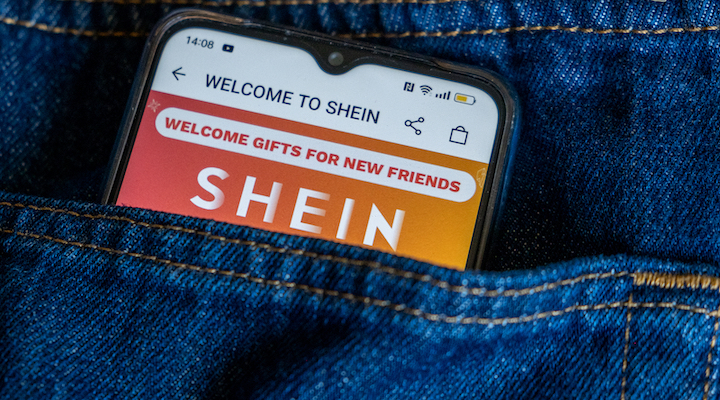
When Everlane launched in 2011, the San Francisco-based startup promised “radical transparency” across its operations, from ethical supply chains to eco-friendly materials and timeless wardrobe staples. Now, however, the company is reportedly set to be acquired by arguably the world’s most controversial e-commerce retailer, Shein, in a $100 million deal. As CI&T global director of retail strategy, Melissa Minkow, told Inside Retail, “This is a major shakeup for the industry and hones
onestly suggests we’re in an era where anything goes.”
Everlane CEO Alfred Chang reportedly sought an investor for months to help clear the company’s $90 million debt burden. Yet Shein has spent the past several years mired in allegations ranging from forced labor and greenwashing to anti-competitive pricing practices.
“Considering how well the resale industry has been doing, there’s clearly demand for sustainability,” added Minkow. “However, despite being an early success story in the eco-friendly world, Everlane just couldn’t stay ahead. Their inability to maintain consumers’ affection is, to me, symbolic of how crucial affordability is when it comes to retail longevity, especially if you’re not inside the luxury category.”
Does the Shein/Everlane acquisition deal make sense?
Neil Saunders, managing director at GlobalData, said Everlane’s deal should not come as a surprise.
“The business hasn’t been performing well and has a lot of debt that is not sustainable,” he said. “It needed new ownership to survive over the medium term. Shein provides that financial stability.”
From Shein’s perspective, Saunders argued, Everlane gives the company an opportunity to play in a segment beyond fast fashion.
“That’s important now that growth is harder in the low-price space, especially as there are a lot of obstacles to trading in the US from tariffs. Everlane is not revolutionary for Shein, but it does support a narrative of having a more balanced portfolio that can be sold to potential investors during any future IPO.”
However, Saunders noted that the broader question is whether the two brands are a natural fit. Shein is not an obvious home for Everlane. While it is unlikely the retailer will immediately overhaul Everlane’s supply chain, simply being part of the Shein group could prove off-putting for the apparel brand’s core customer base.
“Longer term, our view is that Shein may want to transition Everlane into its own version of Quince,” added Saunders. “That makes sense, and having an existing infrastructure would support such a venture. However, it would involve a major brand repositioning. Shein has the finances and patience to undertake this, but it would also need to be prepared to endure short-term pain from customer churn. Ultimately, the deal likely saves Everlane, but that salvation comes at a price.”
Minkow shared similar concerns.
“I’m not really sure where Everlane goes from here, as I don’t know how much control they’ll have moving forward over their brand,” she said. “These two labels couldn’t have more disparate positioning, so I’ll be very curious to see if Everlane attempts to maintain its sustainability-focused reputation.”
Christine Russo, principal of RCCA, suggested the acquisition signals Shein’s ambition to move further into higher-quality goods and potentially compete with brands such as Quince.
“Quince and Shein are similar from an infrastructure standpoint,” she said. “They both source directly from factories in China and elsewhere, cut out middlemen [in the production process], ship factory-to-consumer to keep prices low, sell online-only with minimal physical retail overhead and target the value-conscious buyer who wants quality aesthetics without luxury pricing.
“Shein produces 500-2,000 products per day, betting on trend, velocity and volume. Quince’s brand is timeless basics. Guess who else is known for timeless basics: Everlane. Let’s see what Shein’s strategy will be.”
Cutting off the nose to spite the face
Everlane is far from the first direct-to-consumer darling with an eco-friendly mission to stumble in today’s increasingly volatile retail environment. Nor is it likely to be the last.
Other notable examples include the collapse of fellow San Francisco-based sneaker startup Allbirds and clean beauty retailer Beautycounter.
While Everlane continues to operate and promote sustainable fashion, investors and retail experts such as Saunders believe that aligning with Shein could ultimately damage the company’s long-term prospects.
As Arielle Jackson, head of brand and product marketing at First Round Capital, explained, “Everlane selling to Shein is one of those headlines that would have been unthinkable five years ago. The ‘radical transparency’ brand acquired by the fast fashion giant was essentially built to oppose… Turns out Everlane didn’t stick to the story either.”
Jackson argued the company quietly pivoted from its original MO to a softer “clean luxury” positioning, undermining the values that originally differentiated the brand and potentially alienating both existing and prospective customers. “When you abandon the very thing that made you different, you need to find a new reason to exist. Everlane never found one,” she said.
Disney Petit, CEO of sustainable software platform LiquiDonate, offered a more optimistic perspective.
“Watching this acquisition is a gut punch, but it doesn’t have to be the end of the story,” Petit said. “Shein has started publishing sustainability reports and signaling they want to engage with circularity. The question is whether owning Everlane pushes them to actually build the operational infrastructure to back that up, or whether Everlane’s credibility just gets absorbed and quietly dissolves. The opportunity is there; the proof isn’t.”
The era of idealistic millennial DTC brands is ending
Barney Stacher, CEO of consultancy firm Stacher & Stacher, said the timing of the acquisition is particularly striking given renewed scrutiny surrounding Shein’s pricing practices and “discount theater”.
“What makes the timing particularly fascinating is that this acquisition lands almost simultaneously with renewed scrutiny around Shein’s pricing practices and “discount theater” – including the recent allegations that some of its reference pricing and markdown structures may have been misleading consumers,” he said. “In a market already questioning the sustainability of ultra-fast fashion, it raises the question: was acquiring Everlane a strategic evolution… or a reputational hedge?”
Everlane built its identity around ethics, while Shein has become synonymous with algorithmic speed, hyper-volume production and impulse-driven pricing. On the surface, Stacher argued, the acquisition feels less like synergy and more like a collision of retail philosophies.
He added that the deal also reveals something important about the current retail climate: even brands with strong missions, loyal followings and cultural relevance are struggling if they cannot achieve scale, operational efficiency and sustained profitability.
“I don’t think this signals the death of conscious fashion – but it may signal the end of the ‘millennial DTC idealism’ era, where branding and values alone could support premium positioning without relentless operational discipline. The larger irony is that as consumers increasingly pull back from disposable fast fashion, Shein appears to be searching for credibility, trust and legitimacy through acquisition – not unlike what we’ve seen historically in other retail sectors when disruptive players mature and seek broader acceptance.”
The question now is whether Everlane will help Shein evolve in a new direction, or whether Shein will ultimately dilute what made Everlane valuable in the first place.
Further reading: Will the surprise exit of Rent the Runway’s co-founder help or hurt the business?