While retail has always been a dynamic sector, this past year has presented a uniquely challenging combination of economic volatility, rapid technological advancement and heightened global competition. In this environment, strategic acquisitions have become essential instruments for growth. Whether to expand market presence or acquire new capabilities, M&A activity increasingly reflects the visionary leadership and strategic planning necessary to compete. With that in mind, Inside Reta
e Retail has selected 10 global transactions that offer insight into the changing retail landscape. Looking beyond transaction value alone, we’ve examined the impact of these acquisitions and asked industry experts what they indicate about the future direction of retail.
Keep an eye out for the complete list in our exclusive global report, The Shapers, in the next issue of Inside Retail US magazine. Below, we highlight the four of the deals on the list and explain the key takeaway from each.
Prada bets on Versace: Italy consolidates to rival France
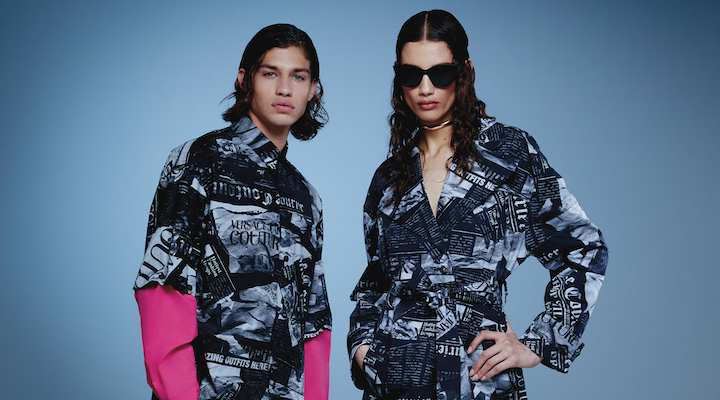
Few deals captured the imagination of the industry like Prada Group’s $1.375 billion acquisition of Versace from Capri Holdings. Bringing together two of Italy’s most storied fashion houses, the move consolidates domestic strength while positioning Prada as a rare European rival to French luxury giants LVMH and Kering.
Versace remains a powerful brand with deep cultural cachet, but it has struggled to remain relevant in today’s fashion landscape. With Versace’s revenue falling 15 per cent last year, Prada is facing a difficult equation of restoring Versace’s performance and relevance without diluting its DNA.
For Capri Holdings, the divestment is equally telling. Shedding Versace allows the group to focus resources on Michael Kors and Jimmy Choo while easing debt.
Analysts argue the deal will test whether Italy can build a homegrown powerhouse capable of standing toe-to-toe with Parisian dominance. If successful, it may inspire similar consolidation among Europe’s mid-tier luxury players.
Alibaba’s retreat: Sun Art moves to private equity
At the other end of the spectrum, Alibaba’s divestment of its majority stake in Sun Art Retail Group to DCP Capital is part of the shifting dynamics of Chinese grocery retail. Once hailed as the core focus of Alibaba’s ‘new retail’ strategy, Sun Art’s sprawling hypermarket network became a liability.
Sun Art’s network of more than 460 hypermarkets at its peak proved mismatched to the pace of consumer change. Post-pandemic, shoppers flocked to nimble players like Sam’s Club, Costco and Pangdonglai, or to digital-first platforms like Freshippo and community group-buying apps. Sun Art, with its ageing store base and mid-market positioning, increasingly looked like dead weight in Alibaba’s ecosystem.
The challenge for DCP is to reinvent Sun Art for a generation of digital-native consumers while leveraging its real estate footprint. Success is far from guaranteed, but the deal encapsulates how quickly yesterday’s retail innovations can become liabilities.
ELF Beauty acquires Rhode: Buying cultural capital
In beauty, ELF Beauty’s $1 billion acquisition of Hailey Bieber’s skincare brand Rhode captured headlines not just for the valuation, but for what it represents. A brand with just 10 SKUs, Rhode has leveraged its founder’s cultural influence into a growth engine that rivals heritage names.
To some experts, the acquisition of Rhode positions ELF as a multi-brand house rather than a single-label disruptor. And instead of relying solely on patents and product pipelines, ELF is buying cultural capital and an owned media ecosystem, mirroring L’Oréal’s portfolio strategy but through the lens of digital virality and founder-driven branding.
Department stores consolidate: Saks Global takes shape
Perhaps the boldest restructuring occurred in the US, where Saks Fifth Avenue and Neiman Marcus merged to form Saks Global in a $2.65 billion transaction. Long considered an endangered format, the department store suddenly has new life, with Saks, Neiman Marcus, Saks Off 5th, and Bergdorf Goodman under one umbrella.
The merger creates a rare moment of optimism for a category that has struggled for relevance in the digital age. Analysts see parallels with the 1994 Federated-Macy’s merger, which reshaped the American retail landscape for a generation. Success will depend on whether Saks Global can modernise operations, leverage its flagships, and integrate online and offline ecosystems more seamlessly than its predecessors.
These four transactions only scratch the surface of the forces reshaping retail this year. From beauty to grocery, luxury to e-commerce, M&A is redrawing competitive boundaries across every sector.
The Shapers appears in Inside Retail US magazine’s September Issue. For the full picture and deeper insights into all 10 deals featured in the report, please read the complete global report here.