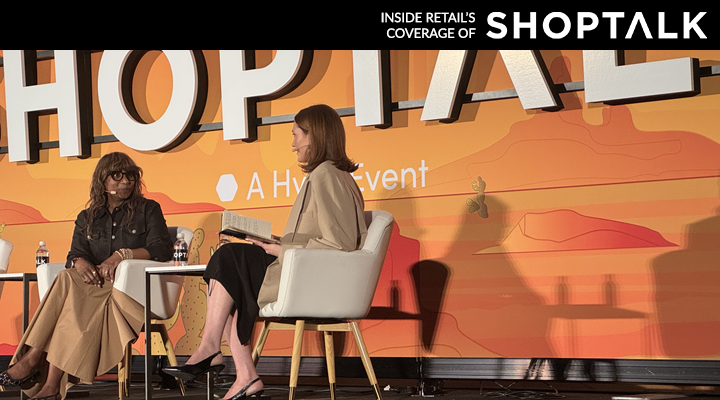
This year’s Shoptalk retail conference, running from March 17-20, in Las Vegas, Nevada, features speakers from leading retail companies, including Mattel, Zales, Crate & Barrel and many more.
Despite the outward differences between these companies, a common thread connected their sessions: Crate & Barrel has been open for over 61 years, Mattel will be marking its 80th birthday this year, and Zales has been in business for about a century.
On day two of the conference, the executives behind these brands discussed the importance of keeping a heritage brand alive and how to adapt to the needs of the modern consumer.
Combining entertainment with retail
On the very first panel of the day, Robbie Brenner, the president of Mattel Films, and Steve Totzke, the president and chief commercial officer of Mattel Inc, explained the importance of combining retail initiatives with entertainment productions.
The Barbie film led to record-breaking success for both the entertainment company and the legacy toy corporation. Not only were consumers inspired to buy the iconic doll, but the film also inspired countless retail collections, including everything from branded beauty launches, such as a Barbie–scented perfume, to clothing collections by brands like Zara, Forever 21, and more.
The retail boom brought about by Barbie also had a knock-on effect for other legacy products owned by Mattel Inc.
“Last year was the largest share gain we’ve had in our history,” Totzke stated.
He explained that not only was Barbie the number one fashion doll in the world, but Hot Wheels was the number one toy vehicle sold, and Fisher-Price was the number one infant/toddler preschool brand.
The entertainment company and toy brand plan to ride the wave of this retail victory with additional productions and product launches centered around popular toys like Polly Pocket.
The executives credited animation legend Walt Disney and his character Mickey Mouse with creating the blueprint for advertising children’s toys via media productions. Before Mickey Mouse, this wasn’t common, but as Barbie has demonstrated, collaborations between retail and entertainment are not only effective, but necessary in today’s retail world.
“It’s getting more complex to create demand, so we need to continue to stay ahead of the curve,” Totzke concluded.
Creating a “one-commerce” platform
For Crate & Barrel’s CEO Janet Hayes and CTO Jason Booth, one of the most important ways the company is working to revive itself is by creating a “one-commerce” platform across all its shopping channels.
In their keynote on “Organizational Agility and Resilience”, Hayes expressed her frustration with the discrepancies between different retail channels, from a brand’s app to its direct-to-consumer site to its in-store environments. The consumer shouldn’t expect to have a swift, seamless shopping experience online, and then have to deal with the hassle of a long line and a list of inquiries at the sales counter.
The key to a brand’s success, and the goal of Crate & Barrel, is to create an experience that easily transitions from one to the other, and allows the consumer an enjoyably efficient shopping encounter. The best way to do that, Hayes insisted, is by combining the human experience of a sales assistant with the expediency of a digital platform.
“I think retail stores need a digital assist and digital channels need a human assist,” Hayes stated.
While the journey to creating a “one-commerce” platform definitely won’t be a totally smooth one, it will be worth it as the Crate & Barrel executives promised Shoptalk’s audience and their consumers.
As Booth stated, “It’s going to be messy, we are going to make mistakes, and we waste zero time trying to be perfect.”
Introducing a less “stuffy”, less “precious” Zales
For Kecia Caffie, who took over as president of Zales and Signet in February last year, words like “precious” and “exclusive” convey a “stuffy” brand image that she wants to shift away from in order to appeal to modern consumers, particularly Gen Z.
The executive of the nearly 100-year-old jewelry brand wants consumers to feel welcomed when they enter a Zales store. The company has been slowly but steadily shutting down ineffective locations and remodeling its existing shops in recent years.
Customers should feel like they are not only allowed but welcomed to try on the brand’s jewelry pieces, and it goes without saying that the pieces should speak to the aesthetic tastes of the modern taste-maker.
One example Caffie brought up was a recent red-carpet appearance with an American singer sporting a 100-carat Zales necklace that was designed to honor the brand’s history.
Cassie stated, “The ideal Zales store is that I would want it to be less precious and more inviting to a customer. Ultimately, I want it to be less stuffy than it’s traditionally been.”
While some companies may rush ahead to revive an outdated image, Caffie insisted, that “sometimes you need to slow down to speed up.”
She also emphasized the importance of a brand holding on to its staple, best-selling items for a safety net. This then allows a brand to go a bit wild and experiment.
Simply put, Caffie stated that brands should “make sure your classics, your bread and butter are there, so you can test out new things.”
Additionally, she recommended that instead of fearing failure, brands should embrace it and use it as a learning experience.