The stage lights seem to be fading on beauty counters across China’s great department stores. At one point, they were the theaters of luxury, and places where sharp and polished ambassadors turned curiosity into allegiance and loyalty, where lipsticks gleamed under pristine glass and the fragrances promised you entry into another world. Today, it seems those stage lights are growing dim. Their audience has moved and not into the street, but onto their screens. The question here is not whether
er luxury beauty has lost its relevance; we all know it hasn’t. The question is how it has reinvented exclusivity for a generation raised on Douyin livestreams and Xiaohongshu diaries. And what that reinvention tells us about the future of retail everywhere.
Why the curtain fell
It’s not really a mystery. China’s live‑commerce market surpassed ¥4.9 trillion in 2023. It’s also been growing more than 35 per cent, year on year. On Singles’ Day, a single influencer’s livestream can sell tens of thousands of serums in just minutes. Algorithms are now the stylists, and KOLs are the gatekeepers.
Even as overall beauty revenues dipped slightly in 2024, prestige e-commerce and travel retail together accounted for more than 20 per cent of all beauty sales, highlighting the shift. At the same time, China’s homegrown brands like Maogeping are absolutely surging, with IPO demand outstripping supply. Gen Z and Millennials, who together make up over half of China’s luxury consumers, are not chasing glass counters. They’ve moved and are now chasing relevance, memory and experience.
The livestream stage
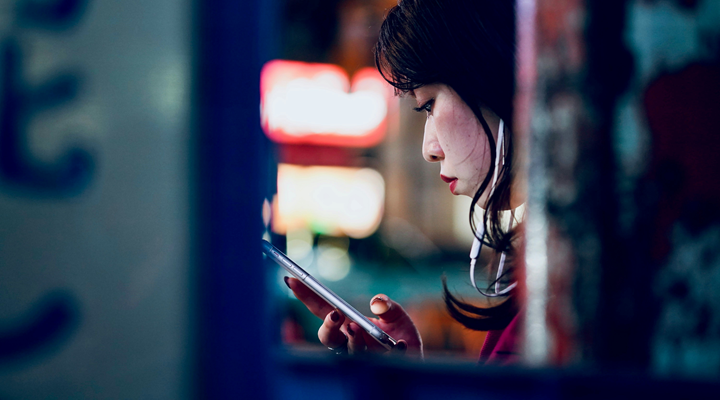
Exclusivity used to be about beautiful velvet ropes, glass cabinets and the slow unveiling of new product lines. In China, this has now been rewritten. Platforms like Douyin and Xiaohongshu have become the new counters. The performance is certainly still there, but the setting has changed. Discovery now lives in the scroll, curated by personalities whose credibility feels closer than any counter manager could ever stand.
Flagships as laboratories
In Sanlitun and Shenzhen’s MixC, physical stores have not disappeared, but they have been transformed. AR mirrors share perfect complexions at a tap. Installations pair rose‑infused creams with calligraphy workshops and VIP suites, turning skincare into bespoke performance. These flagships are no longer stores but now the laboratories of sensory storytelling.
The hybrid gesture
Scarcity hasn’t gone either but it, too, has evolved. A livestream might move 10,000 units in minutes, but the real magic now lies in pairing immediacy with depth, a digital masterclass that comes with a hand‑embossed case, or a virtual rendezvous with a perfumer tracing centuries‑old techniques. Exclusivity now lives in the strategic overlap between the tangible and the digital.
The role of physical retail
Let me be clear. Physical retail hasn’t lost its place in exclusivity; it has just been redefined. We might see counters fading, but flagships now serve as the physical anchors of memory and presence in a hybrid world. They don’t compete with livestreams; they actually complete them. Flagships or physical retail remain some of the strongest, most tangible and measurable tools luxury has. Why? Because presence creates memory, and memory drives loyalty.
Nobody drives across a city and walks into a flagship just to browse a rack of stock they’ve already seen online. They come for that spark of surprise, that quiet thrill of belonging and the emotional imprint they can carry away. Research proves it, sensory retail environments increase dwell time, boost basket size and elevate purchase likelihood. This is when you move from just shopping to having them stay, engage and remember.
This is the human advantage. AI can predict a serum you’ll want before you search for it, but it cannot hand you a rose‑scented cream while a calligrapher etches your initials, creating a story you’ll tell for years. That is presence. That is memory. And that is still one of retail’s most powerful currencies.
The global lesson
What’s happening in China isn’t a local phenomenon. It’s a clear signal to every retailer that exclusivity has been reinvented. The stage is no longer a counter nor a storefront but the choreography of digital immediacy and physical memory. Ignore one half of that, and you risk losing the loyalty game entirely. So with all this, the question for every brand becomes simple. If a scroll can spark curiosity, what will your store do to spark belonging?
We can’t ever cling to efficiency alone. We have to design for memory, for presence and for the human truth that logic rarely decides, but those goosebumps and butterflies in your stomach do.
Further reading: How China’s fragrance scene is reimagining luxury, heritage and global influence