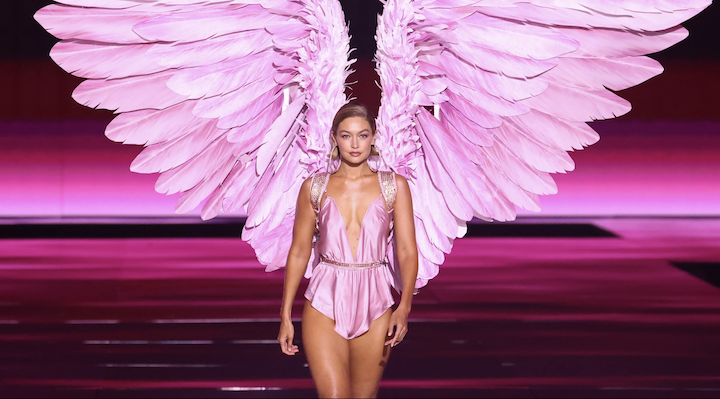
For the second year in a row, following the brand’s six-year hiatus, Victoria’s Secret will be hosting its annual fashion show in New York City. The show will feature an array of Victoria’s Secret OG angels, including names like Adriana Lima and Joan Smalls. It will also include several hot-on-the-scene models like Anok Yai and Alex Consani, as well as some non-models, including WNBA star Angel Reese, who will be making her runway debut. Following the formula of last year’s show, V
how, Victoria’s Secret has lined up an impressive roster of female performers, including Missy Elliott, Madison Beer, Karol G and the K-pop group Twice.
Consumers and retailers alike are buzzing about how tonight’s show will turn out, especially the latter group, considering this is CEO Hillary Super’s second show since joining the Victoria’s Secret family on September 9, 2024.
By bringing back the brand’s annual fashion show in 2024, after canceling it in 2019, and introducing a home fragrance collection, Super has been diligently working to revive the legacy lingerie retailer’s image and introduce the brand to a younger generation of shoppers.
Judging by recent sales figures, it would appear that Super’s efforts have been paying off.
As revealed by Victoria’s Secret’s Q2 report results, the company’s net sales reached $1.459 billion for the second quarter of 2025, an increase of 3 per cent compared to net sales of $1.417 billion for the second quarter of 2024.
However, one positive quarterly report isn’t enough to indicate a full brand comeback just yet.
Retail experts reflect on Hillary Super’s year-long reign over Victoria’s Secret
Rome was not built in a day, and Victoria’s Secret’s retail reputation or sales have not been fully restored in a single year of Super’s direction.
As Christine Russo, the principal of Retail Creative and Consulting Agency (RCCA) and the host of the retail podcast “What Just Happened”, pointed out, the brand is still fielding negative feedback from Super’s naysayers.
“In June, it was reported Victoria’s Secret shares had dropped about 56 per cent year-over-year, sparking intense pressure from [shareholders] BBRC Int’l and Barrington Capital to press for significant board changes, including questioning CEO Hillary Super’s ability to successfully lead,” noted Russo.
Additionally, while the latest Q2 report revealed that the brand’s net sales have grown, largely thanks to a strong international expansion strategy and revival of Victoria’s Secret’s lifestyle brand Pink, the direct online channel saw a 5.5 per cent decline.
With all that being said, Russo commended the new CEO, remarking that she is “a champ at tuning out the noise”.
“She joined at a time of massive market share and stock declines and increasing cultural irrelevance. Add to that a very hostile activist investor, who, while not quite focused on Super, has it out for the board.”
Russo explained that the board retaliated not just with a poison pill but a filing with the Federal Trade Commission that the activist failed to properly identify the stock purchases quietly building a significant stake without the required antitrust scrutiny.
“Despite all of this, Super has delivered. The stock is down roughly 35 per cent since Victoria’s Secret became an independent company in July 2021, but is up nearly eight per cent since Super became CEO. Sales have increased in all but one quarter since she took the helm.”
She contributed the brand’s current sales boost and return to relevancy to Super’s freshened storytelling narrative.
“Super has questioned and is attempting to redefine sexy, leaning into comfort and confidence while being less focused on a hyper-sexualized view. As we await the fashion show, it’s most likely that it will be a fantasy-first experience and perhaps fantasy with a comfort twist,” remarked Russo.
Where does Victoria’s Secret go from here?
As CI&T’s global director of retail strategy, Melissa Minkow, told Inside Retail, “I still firmly believe Victoria’s Secret is due for the same full comeback that its millennial brand peers, including Gap, J.Crew and Abercrombie, have experienced.”
Minkow elaborated, “Super seems to be very in tune with the feedback she’s received, and the brand has been smart to create custom looks for Sabrina Carpenter.”
She suggested that there is room for more digital innovation within the brand.
For example, one step the brand should consider taking is launching exclusive fashion show content solely on the app. Or, following in the footsteps of retail players like Gap and Sephora, partner directly with creators through its website.
“In the meantime, selling through Amazon, consistently debuting new assortment, and putting the right effort, such as connecting to the world of women’s sports, into the fashion show this year are all great moves,” said Minkow.
Meanwhile, Naomi Omamuli Emiko, founder and owner of TNGE – a marketing agency and growth studio built to accelerate beauty and wellness brands – noted that Victoria’s Secret still has a way to go before fully connecting with the younger, harder-to-please Gen Z consumer.
“Victoria’s Secret sits at a crossroads between nostalgia and a new cultural mandate: transparency, inclusivity and authenticity. To regain trust with millennials and earn credibility with Gen Z, it needs to move from performance to principle,” said Emiko.
Simply reviving a show, however grand the turnout, is not enough to set up a successful comeback.
The brand needs to completely rewrite its system, which means embedding authentic layers of representation across all stages of the brand, from campaign casting, to design, leadership and supply chain.
“It should feel less like a marketing apology tour, but more like an open-source evolution: co-created with the communities it once excluded, accountable in public and creatively ambitious enough to turn the runway into a cultural laboratory.”
Emiko remarked that while millennial customers might return for the reimagined heritage, Gen Z will only consider staying loyal if the brand proves it can listen, experiment, and lead.
“The Angels once sold aspiration, but this new era must sell agency, meaning beauty as participation, not projection,” she concluded.