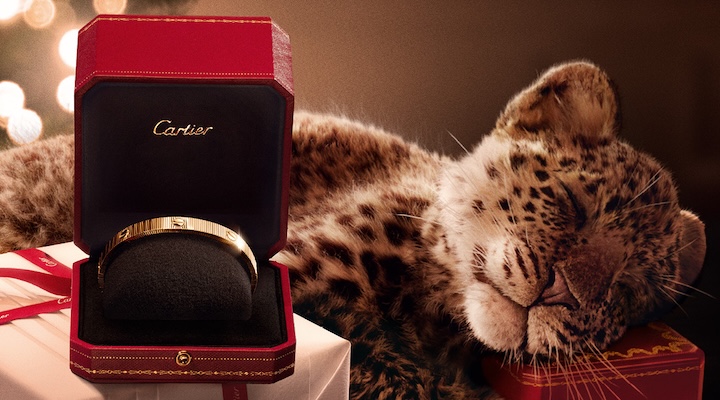
Swiss luxury group Richemont continued its momentum into the final quarter of 2025. For the quarter ended 31 December, the company posted sales of 6.4 billion euros, up 11 per cent at constant exchange rates. Over the first nine months of its financial year, sales reached 17 billion euros, representing 10 per cent growth. Jewelry’s structural advantage The engine of Richemont’s growth remains its jewelry maisons, led by Cartier and Van Cleef & Arpels. In the third quart
ird quarter alone, jewelry sales rose 14 per cent, matching a demanding double-digit comparative from the prior year. Across the nine months, jewelry sales climbed to 12.5 billion euros, up 14 per cent, accounting for nearly three-quarters of the group’s incremental growth.
Jewelry has emerged as luxury’s most resilient category, benefiting from its positioning as both an emotional purchase and store of value. In an environment marked by inflation, geopolitical uncertainty, and currency swings, high jewelry and iconic lines have proven more defensible than seasonal fashion or aspirational watches.
Richemont’s maisons have leaned into this dynamic by doubling down on recognizable design codes, limited novelties and high-impact storytelling rather than aggressive expansion or discount-driven volume. The result is broad-based growth that does not dilute brand equity.
Retail-first, but not retail-dependent
Another defining feature of Richemont’s quarter is the continued dominance of its retail network. Retail sales rose 12 per cent in the third quarter and now account for 72 per cent of group revenue. Over the nine months, retail sales reached 12 billion euros.
Unlike peers that are still recalibrating wholesale exposure or navigating department-store rationalization, Richemont benefits from a retail-heavy model that was built mainly before the pandemic. That legacy investment now gives the group greater control over pricing, assortment and customer data at a time when luxury consumers are spending less frequently but more deliberately.
E-commerce, meanwhile, remains a complementary rather than dominant channel. Online retail sales grew 5 per cent in the quarter at constant rates, led by jewelry.
A tale of five regions
Geographically, Richemont’s performance reads like a map of luxury’s shifting center of gravity.
The Americas delivered one of the strongest showings, with third-quarter sales up 14 per cent, driven by local demand rather than tourist flows.
Japan emerged as another bright spot, posting 17 per cent growth in the quarter, primarily driven by jewelry. A weak yen continues to support tourist spending, but Richemont also benefited from strong local demand.
The Middle East and Africa region delivered the fastest growth, up 20 per cent, led by the UAE. Europe, often perceived as vulnerable to macro pressure, recorded a solid 8 per cent increase. Tourist spending from North American and Middle Eastern clients remained supportive, while domestic demand held up better than expected in markets such as the UK and Italy.
Asia Pacific remains the most complex picture. While regional sales rose 6 per cent, reported growth was negative due to currency effects. Mainland China, Hong Kong and Macau combined grew by just 2 per cent, with strength in Hong Kong offsetting a more subdued mainland environment. Elsewhere in the region, markets such as South Korea and Australia delivered robust growth.
“While trends and performance might vary significantly by brand and region, the overall results give a good indication for the industry that demand remains high and aspiration to own a piece of jewelry is certain,” Eric Macaire, a Switzerland-based luxury expert, shared.
Watches stabilize, fashion lags
Richemont’s specialist watchmakers posted a second consecutive quarter of growth, with sales up 7 per cent. While still well below the peaks of the post-pandemic watch boom, the improvement suggests stabilization after a prolonged correction, particularly in the Americas and the Middle East.
The group’s other division, which includes fashion and accessories, was broadly stable. Fashion and accessories sales rose 3 per cent, with brands such as Peter Millar and Gianvito Rossi showing momentum, while Watchfinder & Co delivered double-digit growth.
Discipline over acceleration
Richemont ended December with a robust net cash position of 7.6 billion euros, providing flexibility to continue investing despite margin pressure from weaker currencies and higher material costs. Management has remained cautious, prioritizing brand investment and long-term positioning over short-term volume gains.
Further reading: Does Richemont’s results show the worst is over for the luxury slowdown?