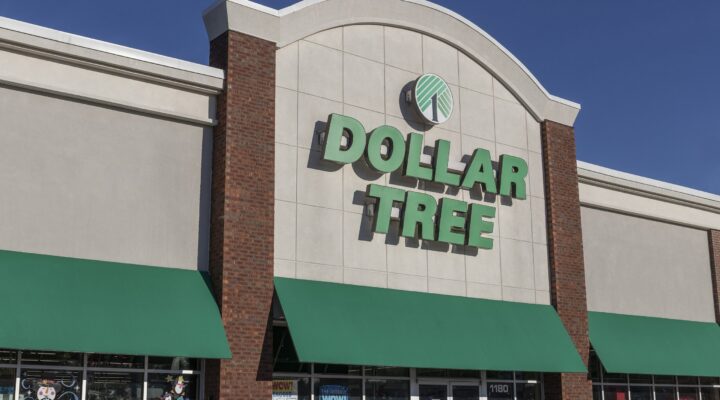
In a sea of high-and low-Q4 fiscal reports, American discount brand Dollar Tree was able to land out on a fairly high note. In its latest fiscal release, Dollar Tree reported that its net sales increased by 9 per cent to $5.45 billion. In contrast, same-store net sales increased five per cent, driven by a 6.3 per cent increase in average ticket, partially offset by a 1.2 per cent decline in traffic. Overall, the brand’s gross profit increased by 13.3 per cent, and its gross profit margin
margin increased by 150 basis points to 39.1 per cent. Dollar Tree stated that the improvement in gross margin was primarily driven by higher mark-ups from pricing initiatives and lower domestic and import freight costs, while higher tariff costs partially offset these benefits.
In addition to these strong sales numbers, Dollar Tree also opened 402 brick-and-mortar stores in fiscal 2025. “Our strong results this quarter show that Dollar Tree remains America’s retail destination for value, convenience and discovery – underscored by our 20th consecutive year of positive same-store sales,” said Dollar Tree’s CEO Mike Creedon. “By delivering great value at low prices, with disciplined execution, we continue to expand our reach and drive long-term growth.”
Afik Tori, financial markets and data analyst, said that despite the strong quarter, Dollar Tree issued cautious 2026 sales guidance of $20.5 billion to $20.7 billion, leading analysts to maintain a “Hold” consensus rating with an average price target around $124.62. “Looking ahead, management plans aggressive store expansion – opening about 400 new locations while closing 75 underperforming stores, signalling continued operational adjustments despite near-term uncertainty,” said Tori.
Why Dollar Tree underdelivered in Q4
In a growing sea of discount retailers, ranging from Quince to Dollar General, it has become increasingly difficult for retailers to stay lax in meeting consumers’ expectations, especially in product assortment.
Neil Saunders, managing director and retail analyst at GlobalData, pointed out that this quarter marks Dollar Tree’s weakest of the fiscal year. “Dollar Tree is not as strong on consumables as a chain like Dollar General, which is one of the reasons it struggled more to pull in customers,” he said. “The challenge is to ensure that this trend does not accelerate into the new year, especially as lower-income shoppers remain very constrained.”
John Mercer, Coresight Research’s head of global research, noted that Dollar Tree missed Wall Street expectations due to higher-than-expected gross margins and operating income, as well as a lower-than-expected tax rate, which drove EPS of $2.56, three points below Wall Street expectations. However, Dollar Tree should benefit from consumers’ move towards value in the current K-shaped economy. Especially as higher gas prices at present due to the Iran war put pressure on disposable income, and higher oil prices could also drive up the prices of many consumer goods.
Similarly, Melissa Minkow, CI&T’s global director of retail strategy, remarked that Dollar Tree is set to benefit from an increasingly distinct K-shaped economy. The dollar category is well-positioned for this economic environment, where all consumers are being extra cautious with their spending, are open to a variety of retailer formats, and higher-income consumers are choosing lower-cost brands.
“The dollar store model in general tends to lag a bit behind the rest of the retail space when it comes to innovation,” said Minkow. “Dollar Tree has been intentional about investing in AI to modernise the business and has changed its pricing strategy to give shoppers a wider selection. The commitment to leveraging technology for reinvention is why Dollar Tree is bouncing back.”
Further reading: Dollar Tree sales grow in Q4, but falling traffic signals underlying challenge