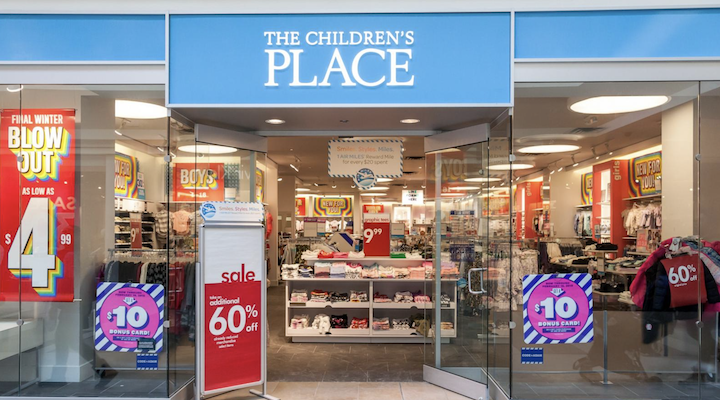
Saddled with debt and unable to grow sales in a weak consumer environment, children’s apparel retailer The Children’s Place has filed for Chapter 11 and is looking for a buyer to rescue the 60-year-old business. The collapse comes despite an infusion of funds from Saudi investment firm Mithaq Capital, which took a 54 per cent majority stake in the company two years ago, and recent attempts to boost sales through brick-and-mortar expansion, with 19 stores opening in just the second quarter of
of the year.
But while tough economic conditions were a factor, industry experts say the retailer made some critical mistakes that made its situation worse.
“While the market for childrenswear has not been particularly healthy, Children’s Place put itself into a position where it was unable to succeed,” said Neil Saunders, managing director at GlobalData.
“The primary cause of the problems came from huge levels of debt – some of which was acquired during the pandemic.”
Rather than paying down this debt with the healthy profits from the 2021 boom, Saunders noted that the business chose to buy back shares and take on even more debt.
“That proved to be a huge mistake, especially as the fortunes of the company changed in 2022 and beyond,” he said.
At the same time, consumers facing a cost-of-living crisis started seeking out lower-priced kidswear, and non-specialist players like Target, Walmart, Amazon and off-price brands all took market share from The Children’s Place.
“What’s now needed is a complete financial restructuring and overhaul, with the wipeout of some debt,” said Saunders.
In court documents, the company listed total debts of over $881 million and total assets of about $742 million.
Too little, too late
Barney Stacher, CEO of consultancy Retail OCD, said The Children’s Place failed to give parents a reason to come back when their children eventually outgrew the clothes they originally bought there.
Stacher highlighted the $31 million drop in net sales that the retailer recorded in the three months ending August 1, a 19 per cent decrease year on year.
“Management pointed to weaker traffic, fewer shoppers making a purchase and a heavy reliance on clearance. That’s a tough combination. You’re getting fewer chances to make a sale, and too many of the sales you do make come at a markdown,” said Stacher.
While The Children’s Place attempted to address these challenges, Stacher said the retailer’s efforts were taking too long to take effect and simply weren’t sufficient.
“The company opened 19 stores in the second quarter, and management said its move to Salesforce for e-commerce was taking longer than expected and contributing to the sales decline,” he said.
“Certainly, the timing of such an implementation is part of the story – trying to grow and rebuild while making such a significant technology change is ill-advised. A better website can make checkout easier. The harder job is getting a parent to think of you first the next time their kid needs jeans.”
Where to from here
Moving forward, Stacher and Saunders agreed that the only way for The Children’s Place to move forward is by seeking out a buyer for the business.
“A buyer could keep the strongest stores and rebuild around the purchases parents make over and over again: school basics, pajamas and the next size up. Making it easier for consumers to find the right size, know what’s in stock and to buy a whole outfit at a price that makes sense,” Stacher said.
“After that, I’d judge a potential comeback by how many families return between sales events. That tells you whether you’ve earned a place in their routine.”
The Children’s Place has begun liquidating its inventory. On November 8, it formally launched its court-supervised sale process and began seeking out a buyer. Potential buyers must submit formal bids by December 9, and the company aims to finalize and close a transaction by the end of December.
In the meantime, The Children’s Place will keep the majority of its stores, of which there are roughly 500 in North America, open.
Further reading: Under Armour claims to beat expectations despite sales decline