Over the past decade, Joe Kudla, Vuori’s founder and CEO, has achieved what the leaders of many other activewear start-ups have struggled to do: cut through a hyper-saturated market to build a profitable and rapidly growing global business. How did he get here? Let’s rewind. In the early 2010s, Kudla, an accounting executive-turned-entrepreneur, was trying to reshape the way men thought about yoga attire, one of several areas he felt the athleisure industry was ignoring. It took him a few ye
him a few years to determine the exact type of products to sell and the best methods for marketing these items, but once he found the right formula, it was game on.
Just two years after launching in 2015, Vuori reached profitability, and by 2018, it had expanded into women’s apparel, which makes up roughly half of Vuori’s sales today. By November 2024, after securing an $825 million investment led by General Atlantic and Stripes, Vuori hit a valuation of $5.5 billion.
In August, the brand opened its 100th brick-and-mortar store, and it shows no signs of slowing down anytime soon.
Figuring out the brand messaging
As Kudla explained to Inside Retail, the Vuori of 2025 looks very different from the brand he launched in 2015.
In the early days of Vuori, Kudla was working under the premise that there were millions of men in the US who practiced yoga, but didn’t have a go-to apparel brand.
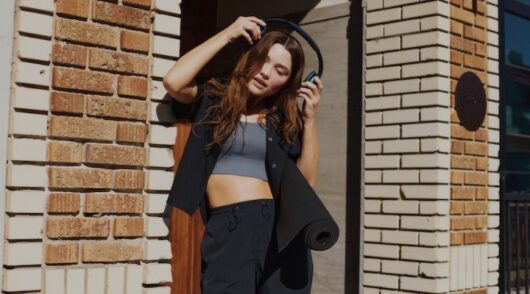
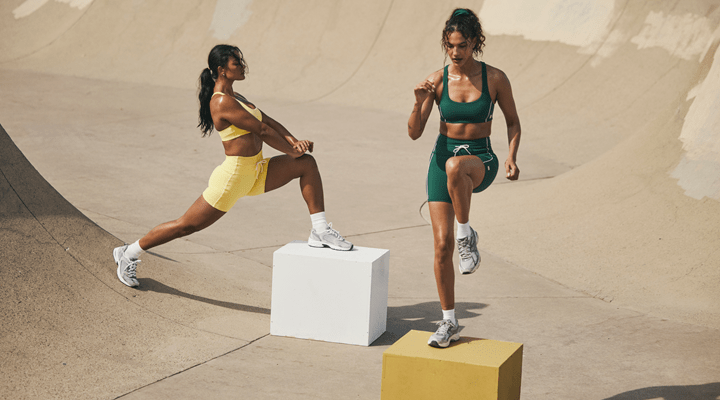
Through consumer feedback, however, he realized customers weren’t using Vuori products just for yoga; they were wearing the brand for training, running, relaxing on the couch and chasing their kids around the house.
“We had the wrong product marketing connection and we had the wrong distribution strategy, because we were also selling into yoga studios, and the sell-through wasn’t strong,” Kudla said.
It was a lightbulb moment. With only a few months’ worth of financial reserve left in the bank, the brand pivoted and began to define its “engine of growth”: versatile, stylish and casual designs made with superior materials.
“The fabrics that we source have this kind of trifecta of technical performance, a luxurious hand feel, [and] the way we design our products in an elevated modern style,” Kudla said. “That is really the recipe that we bring to market, and it ladders up to the primary inspiration for our brand, which is where we’re from.”
Tapping into the California-cool aesthetic
Vuori was born on the beach in a “beautiful little surf town” about 25 miles north of San Diego, called Encinitas.
Encinitas has a yoga or fitness studio on every corner and is home to professional athletes and health and wellness professionals – individuals who take care of themselves, not just for vanity’s sake, but to do things they love, such as hiking, surfing and skiing, Kudla noted.
“The lifestyle here very much informs the product we make,” Kudla explained. “People didn’t necessarily resonate with the big technical activewear brands that identify you as somebody going to the gym, such as with shiny synthetic materials, big brand logos and reflective detailing.”
In contrast, Vuori’s aesthetics are a little more understated.
“We have this duality at play of products that are going to support you through a tough workout for this active, charged and kind of ‘lit’ lifestyle, with an undercurrent of effortless and sophistication, which come together to really give Vuori a unique edge,” he said.
From established North American competitors like Lululemon to international players like the UK’s Gymshark, there’s certainly no scarcity of activewear brands in the market.
Kudla explained, however, that Vuori’s ‘it factor’ largely stems from the fact that the brand isn’t trying too hard to be cool.
What’s next in store for Vuori
Last November, in collaboration with global investment groups General Atlantic and Stripes, Vuori successfully led an investment round worth $825 million.
But while many companies raise capital to support more aggressive consumer growth strategies, Kudla said this has never been the brand’s approach.
“We never acquired customers at big losses just to fuel growth,” he said, noting that the brand has embraced a multi-channel strategy that has resulted in positive cash flow.
“We’re really proud of the way we built our business and not needing to raise all this money to fuel our future growth ambitions.”
There were two primary reasons for last year’s capital raise, he explained.
“One was to provide a return to early investors, so we facilitated an opportunity for our early lenders to sell stock to new investors,” he said.
The second reason was to bring in talented partners to support the brand in its growth journey, both in the US as well as abroad.
In July, Vuori tapped former Fabletics and Honey Birdette executive Ashley Kechter as its new global president.
“Ashley is going to bring a lot of discipline and operating rigor to our family,” Kudla stated. “Having been trained through merchandise planning, she has this unique ability to connect on product strategy and investment to your commercial strategy. She is going to be an incredible addition to our ambitions for growth in the future.”
Next year, the brand looks to further expand its international reach by diving into new territories, such as the Middle East – specifically, the United Arab Emirates – and new product categories.
Vuori is set to open its first bricks-and-mortar store in Seoul, South Korea, this fall, and it aims to open a location in Dubai by next February.
In addition, Vuori plans to launch a broader assortment of technical outerwear this fall.
“For the first time, Vuori will be launching technical ski items, both for men and women, which is a really exciting moment for us, as well as other lifestyle categories,” Kudla stated. “But we’re really going to be staying focused on apparel as we look forward.”
Maintaining steady growth
For start-ups that have grown as rapidly as Vuori, keeping up with the increased scale of operations can be a major challenge. As the saying goes, the higher they climb, the harder they fall.
However, Kudla explained that growing steadily has always been part of the brand’s strategy.
“We’ve gradually scaled over time, from when we first started opening five to 10 stores a year, to opening 30 stores in one year in North America alone. That steady growth has allowed us to strategically hire and build the team structure, along with the operational bandwidth we needed, to foster and support the kind of cadence and rhythm we have,” he said.
He noted that as a digital-first brand largely built upon e-commerce sales, Vuori was able to amass valuable customer data that helped the team open stores with efficiency and plenty of confidence.
“I would also say that we’ve built a team and a culture that is very energized by building. People are deeply connected to our mission and vision, and that helps sustain that momentum, even when the work might get intense,” Kudla stated. “Our goal from day one has been to blur the lines between fitness and life and to make sure that one is integrated with the other.”
When thinking about the future of Vuori, Kudla said the team’s ambition is to make the best product.
“Our North Star is to build products that make people feel great on the journey of life,” he said.
Reflecting on ‘day one’
Going from running a business out of his garage to leading one of the industry’s leading activewear brands with 100-plus locations has been quite the journey for Kudla.
“I don’t think I would have been able to fully grasp the evolution of our brand and all of the things that we’ve gone through,” he said, thinking back to his vision on day one of the business. “You have to remember we lived through Covid and so many things; it would have been hard to envision where we sit today back then.”
His advice for other entrepreneurs is to “just take the step.”
“You don’t have to have this perfectly thought-out plan that addresses every turn in the road, but you should always stay connected to the inspiration that brought you to do what you’re doing in the first place,” he said.
“In the journey of entrepreneurship, there’s so much stress and there are so many outside opinions, so what’s really important is to maintain some level of awareness practice.
“Whether that’s taking a walk out in nature alone, meditation, breathing or yoga, just do something that turns your energy inward and stays connected with your reason for being. Always stay guided by your intuition and your North Star.”
This story first appeared in the September 2025 issue of Inside Retail US magazine.