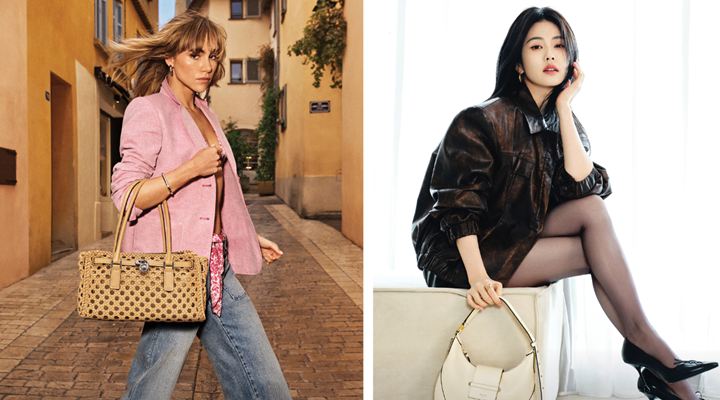
Capri Holdings continued to record lower sales in the third quarter, as management, despite recent efforts, has yet to fully address the decline at Michael Kors.
The fashion luxury group saw revenue decrease 4 per cent year-on-year in the quarter ended December 27. On a constant currency basis, revenue fell 5.9 per cent.
Most of the decline was driven by a 5.6 per cent drop at the Michael Kors label.
Neil Saunders, MD of GlobalData, pointed to the fact that Michael Kors’ decline came off the back of a sharp 12.1 per cent decrease in the prior year. This means revenue was down by over a fifth on a two-year basis, which represents a considerable loss of market share.
Saunders attributed some of the decrease to the fact that Michael Kors is trying to be less promotional, especially in its outlet channels, which is a necessary step to rebuilding brand equity.
However, there are other factors that continue to drag down the numbers, the analyst continued.
“Foremost among them is the still awkward position of Michael Kors. While it is supposed to sit alongside the likes of Coach, Ralph Lauren, and even Burberry, it lacks the refinement of any of those brands.
“As far as a lot of consumers are concerned, it is a premium-priced label with too many attributes of a mass-market one. This deters a lot of people from buying and means Michael Kors has seen consideration progressively deteriorate – especially so in a luxury market that has become softer and more considered,” he said.
Saunders noted that management did try to resolve this position, which showed in recent product launches, improved marketing, and remodeled stores. However, he believed it would take many more quarters of these kinds of initiatives to course-correct and get improved traction with consumers.
“The correction will also naturally dampen sales numbers as the pullback from promotions reduces volumes. Over time, the rebalancing of price and volume should produce higher quality earnings. We see some evidence of this coming through in the current numbers, but it is being offset by higher costs from tariffs – which are outside of the control of management,” he added.
At Jimmy Choo, sales rose 5 per cent during the quarter. According to Saunders, the brand continued to hold appeal, and the expansion into more casual styles also helped expand its share of wallet among existing customers, as well as attract some new ones.
“The strategies here are solid and are delivering against the backdrop of a weak footwear market. Unfortunately, Jimmy Choo is a smaller business and cannot make up for all of the issues at Michael Kors,” the analyst said.
Versace sale strengthens balance sheet
Saunders highlighted some good news for Capri during the quarter, with the sale of Versace allowing the group to strengthen its balance sheet and pay down its debt.
Long-term debt, which previously stood at almost $1.5 billion, has been reduced to a much more manageable $224 million.
Operating margin increased from 2.4 per cent in the prior year to 4.5 per cent. Net income also increased from $6 million to $57 million.
“This, along with the fact that management will now have more time and resources to concentrate on its two remaining brands, provides the opportunity to strengthen existing operations,” Saunders added.
For the full year, the company expects revenue from continuing operations to be $3.45-$3.475 billion, up from the previous range of $3.375-$3.45 billion.
“Looking ahead, we remain confident that our strategies will support a return to growth in fiscal 2027 as well as establish the groundwork for sustainable performance well into the future,” said Capri chairman and CEO John D Idol.