From Gap to J.Crew to Victoria’s Secret, the retail industry has seen several Y2K-favorite apparel brands come back from the grave over the past few years. However, other non-fashion-related retailers, like Toys R Us, have been having a harder time regaining the popularity they experienced in the early aughts. With the influx of online toy shopping sites and the rise of the kidult consumer, the market that once flourished for this iconic retailer looks very different today. However, that
, that doesn’t mean that Toys R Us is prepared to give up without a fight.
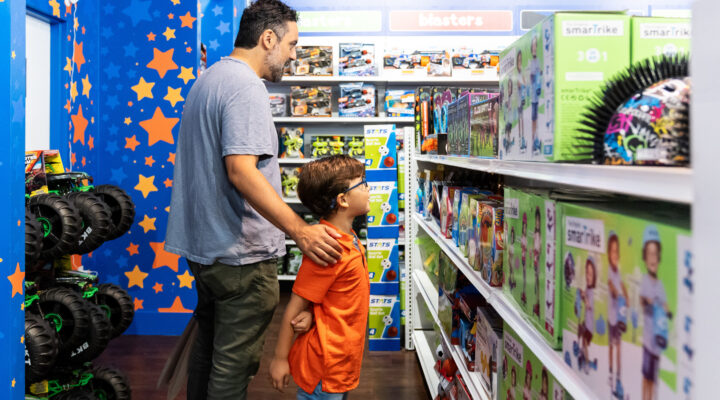
Last week, Toys R Us announced that it would be opening 30 new stores this holiday season, continuing its “successful partnership” with Go! Retail Group.
In addition to rapidly regrowing its presence in the North American market, Toys R Us is also expanding into new international markets, including Chile, Peru, Venezuela, Ecuador, Morocco and Lebanon, while also reestablishing its presence in Turkey.
Some retail experts, like CI&T’s global director of retail strategy Melissa Minkow, were surprised by Toys R Us’s aggressive holiday expansion plans.
As Minkow told Inside Retail, “The toy space is very competitive, and margins have gotten tighter this year… However, if they’re going to do it, they have picked the correct part of the year. Toys usually have their big moment in Q4 each year.”
What happened to Toys R Us?
Global Data’s managing director, Neil Saunders, pointed out that Toys R Us’ downfall didn’t come from a place of irrelevancy, but from being “saddled with crushing debt from private equity game-playing”.
In July 2005, an investment group consisting of affiliates of Bain Capital Partners, Kohlberg Kravis Roberts & Co. and Vornado Realty Trust completed the acquisition of Toys R Us, Inc. for $6.6 billion.
The mismanagement of the brand eventually led to crushing corporate debts and Toys R Us’s filing for Chapter 11 bankruptcy in September 2017.
Not to mention, as Saunders elaborated, the market has drastically shifted since the brand’s heyday.
“Competition is fiercer, price sensitivity is greater, and volumes are under pressure as traditional toys compete with electronic apps and games. Many of the mass merchants, like Target and Walmart, also place a bigger emphasis on toys, as does Amazon in the online space. All of this means there is less white space for Toys R Us.”
To get back on top, the chain will need to add value through experience and excitement.
Given that the holidays are the peak trading season for toys, Saunders pointed out that pop-ups may have been a smarter route for Toys R Us to capture volume.
Similarly, Minkow remarked that it may have been wiser for the retailer to focus more on a digital strategy and widening virtual channels, as it would be easier for parents to access available goods.
Saunders added, “As for international markets, most of these seem to be partnerships or shop-in-shops, which means Toys R Us will not need to take on huge risk. All of this is a play by WH P Global to monetize the well-known Toys R Us brand. But at least in the US, there is no real scope for Toys R US to be the dominant player it once was.”
Can Toys R US win over today’s toy shopper?
Scott Benedict, the founder and CEO of Benedict Enterprises, remarked that the brand is “clearly committing to both scale and presence”.
However, in alignment with Saunders and Minkow’s skepticism, Benedict also believes that Toy’s R Us may be biting off more than it can chew.
“Given the reasons for Toys R Us’ previous failure, which included the inability to compete on price and a lack of a cohesive omnichannel strategy, such rapid expansion may be ill-advised in my view,” he said.
Benedict warned that to translate that ambition into durable success correctly, Toys R Us will need to do three things, including:
Build distinctive in-store experiences
“At a time when e-commerce dominates toy‐purchasing, physical stores can still create unique value only if they offer something that online can’t—interactive demos, events, immersive displays and in-person expert help.”
“If the new flagships feel like their previous generic retail boxes, they’ll struggle to justify the investment.”
Ensure frictionless omni-channel integration
“A global roll-out is exciting, but the core US market remains fiercely competitive (and rife with big players, online pure-plays and niche toy specialists).
“Toys R Us must tie together online-inventory visibility, in-store pickup, seamless returns and a digital layer of engagement (loyalty, recommendations, personalized offers) so it doesn’t feel like a ‘store for nostalgia only’ but rather a modern toy-destination.”
Focus on brand relevance and operational discipline
“The brand is nostalgic and beloved by many, but nostalgia alone won’t drive sustainable growth.”
He advised the retailer to curate the toy assortment to reflect current trends, such as gaming, collectibles and social media-driven play, and to move quickly in inventory and supply chain to avoid being stuck with dead stock.
Additionally, Toys R Us should tailor the international launches to local market dynamics, factoring in consumer tastes, price sensitivity and competing channels.
“They should avoid over-extending too quickly without mastering the domestic base first,” Benedict concluded.
In addition to working on logistics, Barney Stacher, CEO of retail consultancy firm Stacher & Stacher and Rethink Retail adviser, thinks that Toys R Us needs to work on bringing back the “magic” of toy shopping.
“The soul of Toys R Us was never its aisles of plastic—it was the promise of imagination, the permission to play,” he said. “That’s what’s been missing.”
Versus creating spaces that feel like a warehouse, Stacher advised the toy retailer to create “playgrounds for discovery”.
“Spaces where kids and grown-ups can test, tinker, build, and co-create. Not just demo tables, but story zones, mini-maker labs, fandom corners, even moments of analogue quiet in a digital life. Play as a cultural act and space to connect.
“Toys R Us doesn’t need to chase the algorithm. It needs to rediscover what made it iconic in the first place: not just selling toys, but celebrating how we play together.”
Further reading: Gap, J Crew, and Abercrombie: The retail comeback stories you need to know