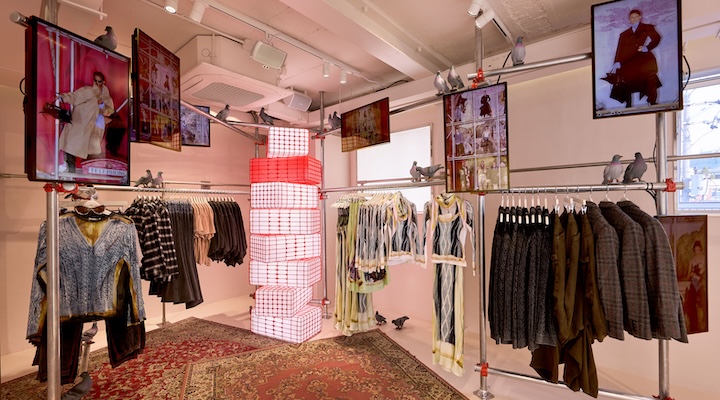

On an afternoon in Seongsu-dong, Seoul’s former industrial quarter turned creative nerve center, the queue forms quietly. There is no frenzy, no shouted instructions from staff, no banners advertising discounts. Instead, visitors wait with a kind of patient curiosity. Guests drift between installations, pausing at curated displays and architectural details, as if navigating a gallery rather than a fast-fashion outlet. The choreography is intentional: To slow the customer down, to invite engage
agement before purchase.
Concept stores
Over the past decade, Seongsu has become one of Seoul’s most influential creative zones, home to independent fashion labels, experimental cafes and cultural projects that sit at the intersection of art, commerce and community. It is precisely this density of creative energy that makes the neighborhood an ideal testing ground for new retail ideas.
“Seongsu is one of Seoul’s most culturally influential neighborhoods, it attracts creators, designers and early adopters,” Saed El-Achkar, president of H&M East Asia & Greater China, told Inside Retail.
“From a retail expansion perspective, those areas are where new formats are most effectively tested.”
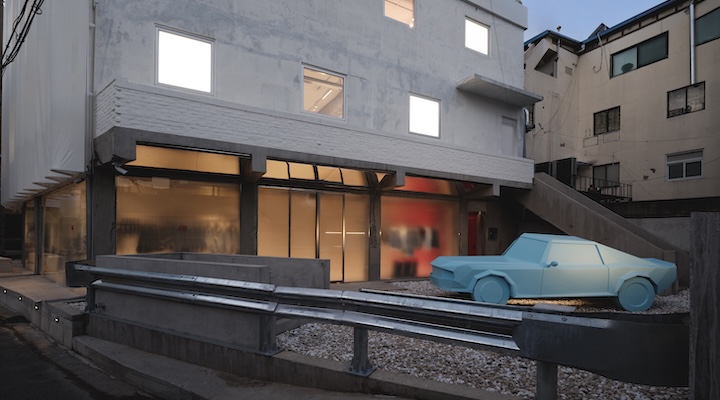
The building itself reflects this thinking. Its fluid, semi-transparent facade blurs the boundary between street and interior, allowing the city to bleed into the store. Inside, the three-level space avoids the efficiency-driven logic of conventional fast-fashion retail. Instead of dense racks and clearly demarcated departments, visitors move through zones that feel curated rather than stocked. Merchandise appears in edited groupings, framed as part of a broader narrative rather than a volume play.
Edited assortments, fewer markdowns
One of the quiet strategic advantages of Seongsu lies in its product discipline. The store does not attempt to carry everything but blends Seoul-exclusive capsules, previously online-only items brought into physical space, and selected designer collaborations.
From an operational standpoint, this matters. Over-assortment has long been one of fast fashion’s structural weaknesses, leading to excess inventory and margin-eroding markdowns. By grounding assortments in local relevance, H&M reduces the risk of overstock while increasing perceived value.
This approach aligns with management’s stated priority to improve inventory health and raise the share of full-price sales. Better stores, in this context, are not about aesthetics alone. They are instruments of financial discipline.
Why stores matter again
H&M’s most recent financial results show a business that is stabilizing, but under no illusion that scale alone will deliver growth. Over the past year, the company reported modest sales growth in local currencies, while margins remained under pressure from discounting, logistics costs and currency volatility.
H&M has spent the past several years shrinking its store footprint, closing hundreds of underperforming locations worldwide. The era of blanket expansion is over. What’s replacing it is a more selective, capital-intensive approach: Fewer stores, but better ones.
The same logic underpins House of H&M in Shanghai, though expressed through a different architectural language. Reopened on Huaihai Road, H&M’s original China flagship has been transformed into a hybrid of fashion, lifestyle and media. House of H&M features women’s, men’s and kids’ collections alongside a cafe, a flower shop, exhibition spaces and even a livestreaming studio – a nod to how commerce in China now flows seamlessly between physical and digital worlds.
Where Seongsu feels intimate and local, House of H&M is expansive and infrastructural. It reflects a market where consumers expect brands to operate across multiple touchpoints at once: Retail, content, hospitality and community.
“By integrating retail with community spaces, art and culture, we create environments that people choose to spend time in – not because they need to shop, but because they feel inspired or connected,” El-Achkar said.
He said this approach reflects how consumers across Asia experience brands today. Fashion is discovered through culture, social interaction and storytelling. These hybrid spaces allow H&M to express its creative identity beyond the product, positioning the brand as a participant in cultural life rather than a spectator.
“It also creates space for dialogue. Whether through exhibitions, events or collaborations, these fashion destinations become platforms for exchange – between designers and customers, global ideas and local creativity,” he added.
This is a notable reversal from the early 2010s, when H&M’s Asian expansion largely followed a Western playbook. Today, the company’s Asian Design Hub and initiatives like H&M Studio Seoul embed local insight directly into product, storytelling and store design.
“We approach new concepts as long-term cultural investments rather than short-term retail experiments. The starting point is understanding each city’s creative ecosystem – how people gather, consume culture and connect emotionally – and identifying where H&M can participate meaningfully rather than simply occupy space,” El-Achkar said.
And the results paid off.
“Since opening these experience-led fashion destinations, we have seen higher customer retention and increased shopping frequency, alongside more positive feedback around how inspirational and engaging the store experience feels,” El-Achkar said.
Retail as balance-sheet strategy
There is a tendency to view experiential stores as marketing expenses dressed up as architecture. For H&M, they are increasingly part of a financial strategy. As the company works to strengthen profitability, it is prioritizing stores that can do more than transact: Spaces that support brand recovery, reduce churn and justify higher average order values.
This shift also aligns with H&M’s broader effort to clean up its inventory dynamics. By curating assortments more tightly and anchoring them in local relevance, the company aims to reduce reliance on heavy markdowns – a persistent drag on margins in recent years. Better stores, in this sense, are not about aesthetics alone; they are tools for operational discipline.
That discipline shows up in capital allocation. Even as H&M invests in headline concepts like Seongsu, it continues to consolidate lower-performing locations elsewhere. The message is clear: Physical retail remains critical, but only when it earns its place.
Competing without racing to the bottom
This strategy also reflects the pressure H&M faces from both ends of the market. Zara continues to refine its fast-response model and fashion authority, while ultrafast-fashion platforms like Shein compress prices and cycles even further. At the same time, consumers are increasingly skeptical of overproduction and indistinct branding.
For H&M, the challenge is to remain accessible without becoming disposable. Experience-led stores are one way to escape that trap. They create differentiation that cannot be copied by speed or pricing alone.
They also generate content – imagery, events and collaborations that extend the store’s influence far beyond its physical footprint. In an era when discovery often precedes purchase by weeks or months, this content function has tangible commercial value, feeding digital channels and reinforcing brand desirability without relying solely on paid marketing.
The Seongsu opening celebration also serves as the public debut of H&M’s first collaboration collection with Glenn Martens.
H&M was an early pioneer in designer collaborations, beginning with Karl Lagerfeld in 2004, at a time when the idea of high fashion meeting high-street retail was still radical. Since then, it has partnered with a wide range of influential designers, from Versace, Comme des Garçons and Balmain to Maison Margiela and Stella McCartney.
“Our collaborations have been about liberating fashion for the many and making a strong creative vision accessible, and inviting people to explore self-expression and identity through what they wear. Glenn Martens was a natural fit for this philosophy,” El-Achkar said.
“His work has consistently pushed the boundaries of fashion, challenging conventions around silhouette, craftsmanship and expression. What made this collaboration especially meaningful is his shared interest in liberating fashion for the many, which is one of H&M’s key missions.”
A quiet confidence
The brand is now betting on Asia, aiming to build deeper, long-term partnerships.
“We have seen massively successful collaborations with Asian designers such as Rokh, Toga Archives and Sabyasachi, proving that local design voices, when amplified globally, create collections that feel culturally grounded, emotionally relevant and internationally compelling,” El-Achkar said.
To him, an important enabler is H&M’s Asian Design Hub and in-house design teams, which embed local insights directly into product creation and storytelling.
“Through initiatives like our three-year collaboration with Shanghai Fashion Week, the hub supports young Asian designers, brings local culture closer to our customers, and helps exceptional talent step onto the global stage,” he said.
That commitment is extended through its ongoing partnership with Chinese designer Jacques Wei. Now beginning its second project, the collaboration reflects H&M’s growing interest in sustained creative dialogue rather than short-term novelty. The collection reinterprets elements of traditional Chinese culture through a contemporary lens, exploring how heritage can be translated into modern fashion without slipping into pastiche.
Wei’s work blends Eastern romanticism with Western modernity, marked by clean silhouettes, refined tailoring and meticulous craftsmanship that reframe contemporary femininity for a global audience.
“Looking ahead, we aim to deepen these partnerships by incorporating more local voices and sparking new waves of creativity across the region,” he said.
“Our strategic priorities in Asia are focused on building momentum where we are already seeing results. As our performance shows, the steps we are taking through our brand plan are paying off – with profitability strengthening on the back of improved customer offerings and increased brand desirability. The priority now is to build on that progress with consistency and focus.”
Back in Seongsu, as the opening crowd disperses into the store’s upper levels, the atmosphere feels less chaotic. People linger. They take photos, yes, but they also sit, talk, explore. The store does not rush them toward a checkout.
That may be the clearest signal of what H&M is trying to build next: A retail presence that earns time before it asks for money. In a business still under pressure to prove its relevance, Seongsu is a controlled experiment, grounded in financial reality, but driven by a belief that physical retail, done thoughtfully, can still shape the future of a global fashion brand.
“We do not choose locations because they are ‘cool’ in isolation, we choose them because they shape culture, set behavior and influence the wider city. That makes Seongsu the right environment to pilot future-facing concepts before scaling learnings across the market,” El-Achkar said.
“These spaces are designed for longevity – evolving through programming, collaborations and community engagement to stay relevant well beyond opening.”
This story first appeared in the February 2026 issue of Inside Retail Asia magazine.