What happens when great formulations, industry-wide prestige and a cult following aren’t enough to sustain a beauty brand’s profitability? This is precisely the situation that Pat McGrath Labs has found itself in despite garnering a $1 billion valuation just three years after launching. After several years of declining sales, hitting a reported revenue low of under $50 million in 2024, Groupe Bruxelles Lambert, an investment holding company based in Belgium, implied a total company val
ny valuation for Pat McGrath Labs of approximately $162 million.
On January 22, Pat McGrath Labs filed for Chapter 11 bankruptcy and officially announced the move on January 25, the day before the luxury makeup brand had originally planned a public auction of assets.
In a public release, the company stated, “During this process, the company will continue operations in the ordinary course of business while working to restructure its balance sheet and to forge a path to thrive. Pat McGrath Labs remains committed to its community, customers, partners and stakeholders as it continues delivering its signature, high-quality products and culture-defining artistry and innovation.”
As the industry waits to see how the once-mighty beauty brand moves forward from here, one question remains in the air.
How can a brand with so much star power have fallen so low?
Kimber Maderazzo, a professor of marketing at Pepperdine Graziadio Business School and veteran beauty industry expert, argued that the issue was never with the brand in itself. Pat McGrath Labs is led by one of the most influential makeup artists in the world, who brought a clear sense of creativity and artistry and delivered top-notch pigments.
“Where this situation becomes a learning moment for the industry is in the difference between brand notability and business durability,” Maderazzo told Inside Retail.
Why do brand notability and business durability not always go hand in hand?
“Notability creates awareness, excitement and cultural relevance. Profitability requires a repeatable business model, consistent consumer behavior and a clear path to scale.
“In this case, the brand appears to have been valued for its cultural power and early momentum, and investors expected it to scale like a high-velocity beauty business. But the underlying business case didn’t seem aligned with those expectations. That creates a mismatch — not of talent or creativity, but of an operating model.”
The reality is that the hype around Pat McGrath Labs was built on artistry, drops and spectacle, which, although powerful, is not the same as building habitual purchase behavior or a simplified assortment that drives replenishment.
One instance that confirms that brand virality doesn’t always translate into profitability was Pat McGrath Lab’s faux pas with John Galliano’s Maison Margiela Couture Spring 2024 collection.
Pat McGrath, the leading makeup artist for the collection’s presentation, hit peak virality with the glassy, doll-like effect she created on the models as they walked down the runway.
The look was so popular with fashion critics and beauty lovers alike that consumers were beating down the proverbial doors for Pat McGrath to release a product that would help them recreate the effect.
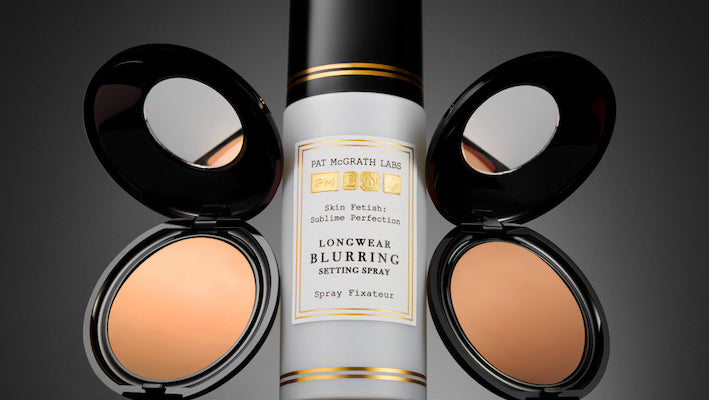
Which Pat McGrath Labs did eventually do, with the Skin Fetish: Glass 001 Legendary Glow Setting Spray… approximately one year later. With limited units, the product sold out within a few hours of being released.
However, the entire situation, from failing to hop on launching a new product or even releasing a makeup tutorial right after a viral moment, exemplified how brands need to be ready to jump on a prime sales opportunity with an optimized supply chain and product development capabilities.
“The lesson for other brands is that fame, influence, and even cultural dominance don’t replace the fundamentals. You still need a clear everyday role in a consumer’s routine, a disciplined assortment and a model that can deliver both creative expression and operational efficiency.”
As Maderazzo pointed out, “Overvaluation can actually limit flexibility, because once expectations are set at a certain scale, every decision becomes harder.”
It’s a sentiment that experts such as Naomi Omamuli Emiko, founder and owner of TNGE, a marketing agency and growth studio built to accelerate beauty and wellness brands, agree with.
“Where brands like Pat McGrath Labs can struggle is in the translation layer. Simply put: how can they scale reverence into repeatable behavior? Prestige beauty today demands not just aspiration, but operational precision: disciplined stock keeping unit architecture, frictionless customer experience, clear use cases and margins that can withstand volatility,” said Emiko.
“Even the most respected names are no longer immune to those realities.”
Where does Pat McGrath Labs go from here?
Maderazzo noted that while it’s genuinely sad to see a brand with this level of potential end up like this, she doesn’t believe Pat McGrath Lab’s story is over.
“The brand still holds tremendous creative equity, and with the right expectations, focus and operating model, there’s an opportunity to unlock a next chapter that honors both the artistry and the business. I’m genuinely looking forward to what’s next for this brand.”
“The takeaway for other founders isn’t necessarily caution, but clarity: Build systems as intentionally as you build symbolism—design for daily rituals. Do not just rely on iconic launches. Make excellence easy to access, not just easy to admire.
“As for Pat McGrath Labs’ future, the opportunity is not to reinvent the brand, but to refine it to make it commercially resilient. A tighter portfolio, clearer product hierarchy and a renewed focus on how the brand lives in real-world routines could facilitate longevity without diluting its legacy.”
Further reading: How Pat McGrath Labs fell from a $1 billion valuation – and what’s next