
For a decade, direct-to-consumer (DTC) was not just a channel, but a cultural movement. It whispered the golden promise of founder-led disruption. The potential for scale was unlimited, algorithmic and didn’t require a middleman. It seemed like the dream of brand affinity was born not in the aisles of Target, but in the intimacy of Instagram ads and podcast pre-rolls. But the DTC dream, as we knew it, is dead, right? It is, in fact, not dead, but it has evolved. What killed the DTC dream
DTC dream?
There are a few factors that played into DTC’s collapse as a stand-alone strategy, including:
The decline of organic reach
DTC brands were born in the Golden Age of Meta ads, where one dollar could still buy you attention and a conversion.
In 2016, Facebook organic reach hovered around 16 per cent per post. Fast forward to today, and it is estimated at less than 1 per cent.
Instagram now favors Reels, and TikTok simply makes virality a lottery, with seemingly no best-practice plan in place for marketers to follow. Then there are Meta’s 2025 restrictions on health-related advertising, tightening the noose for wellness, beauty and supplement brands, which had pretty much relied on aspirational content for the past decade.
Additionally, paid reach is not faring any better. The cost per 1000 impressions on Meta rose over 89 per cent between 2020 and 2022. A 2023 report from e-commerce growth agency Common Thread Collective revealed that the average return on ad spending for DTC brands fell by 38 per cent between 2021 and 2023.
The digital ad ecosystem is in flux. We’re in the midst of a great channel redistribution, a time when brands are forced to move beyond traditional “sales and broad targeting” playbooks and have to rethink how they warm up the top of the funnel.
Platform dependency became a vulnerability
The pandemic boom tricked many into thinking DTC was future-proof. However, as iOS 14.5 privacy changes dramatically throttled ad targeting and global supply-chain cracks widened, it became clear that DTC was more vulnerable.
If your brand is only a Shopify storefront with good branding and a Facebook pixel, you’re not a brand, you’re a short-lived arbitrage machine.
A DTC-only model is not resilient enough to survive disruption, inflation or an ever-changing algorithm. Mixed-media modeling, multi-touch attribution and geo-holdout testing are no longer ‘nice to have’, they’re essential. Brands can no longer afford to rely solely on shallow metrics or single-channel performance data.
Customer fatigue and commoditization
Let’s be honest. How many pastel-packaged wellness gummies can the average consumer buy?
The 2010s-era DTC wave commoditized not just products, but also aesthetics. ‘Brand’ became almost synonymous with ‘bland’, and differentiation has almost disappeared.
Consumers, overwhelmed by sameness, now crave either radically utility-driven brands or those that can build something deeper – identity, emotion and community.
Meanwhile, creators are evolving, too. In 2025, we’re seeing a convergence of influencer, affiliate and seeding strategies.
Leading brands are shifting from transactional campaigns to ‘influence-for-equity’ partnerships.
Retail was never the enemy
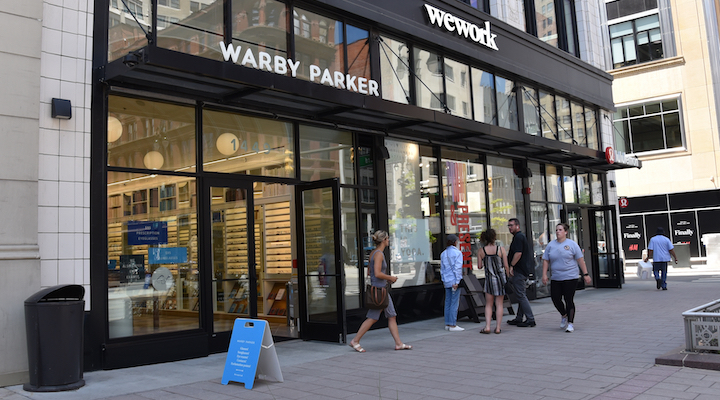
Ironically, the most notable brands in the DTC era, like Glossier, Warby Parker or Allbirds, have all pivoted into physical retail.
Why? Because customer acquisition costs are often lower in-store, retail builds trust and omnichannel is sticky.
Global marketing research firm NielsenIQ found that omnichannel shoppers deliver 30 per cent higher lifetime value than DTC-only customers. Brands must evolve beyond being purely DTC-focused, into models that blend retail, marketplaces and social commerce with precision.
This isn’t an abandonment of DTC. It’s the realization that distribution isn’t the enemy, it’s the multiplier.
From DTC-only to DTC-smart
Use DTC to test, not scale.
DTC-smart brands treat their online storefront like a real-time innovation lab. Before hitting shelves, they test formulas, pricing, positioning and even bundling. First-party data becomes the proof point for larger bets.
With Meta tightening and AppLovin – primarily a mobile ad network for apps – emerging as an experimental performance channel among 40-plus users, brands are reallocating budgets into smaller-scale testing environments instead of chasing scale too soon. The goal: understanding true incrementality before doubling down.
A DTC-only model is not resilient enough to survive disruption, inflation or an ever-changing algorithm.
Leverage DTC data for retail negotiations
Retail buyers are no longer impressed by branding alone. They want velocity projections, cohort data and regional heatmaps.
DTC-smart brands walk in with dashboards, not decks. They use DTC-related performance data to guide localized product assortments, test promotional mechanics and derisk distribution partnerships.
This is especially powerful in an era when the first-party data imperative dominates. DTC data has become as valuable as, if not more valuable than, a brand’s marketing strategy.
Embrace omnichannel as a system, not a slogan
Between Amazon, Target, TikTok Shop, Instagram and brick-and-mortar flagships, there are endless channels for consumers to explore in this era of retail. Today’s customer doesn’t think in individual channels, so neither can brands.
The 2025 playbook means treating each channel as a part of an infrastructure with integrated systems, inventory syncing, consistent pricing and shared loyalty.
Invest in AI for measurement and scale
AI is no longer a toy, it’s operational infrastructure. Leading brands are using AI agents to optimize average order value, segment lifetime value cohorts and orchestrate cross-channel journeys. AI is also reshaping customer service, where AI agents deliver real-time, brand-specific support.
A similar movement is happening in creative.
AI-powered asset production is slashing ad creation costs and enabling higher ad volume, which is now a key to performance scaling.
Though retailers need to be aware of the tradeoff, mass AI user-generated content could backfire if audiences no longer trust what looks real.
Make the DTC experience irresistible
If you want customers to buy directly from your site, make it worth their time. Make the customer experience concierge-level by playing with early drops, exclusive bundles and immersive shopping experiences.
Companies like supplement brand Athletic Greens have already mastered this recipe. Athletic Greens makes DTC buyers feel like insiders, not just shoppers, starting from the very first touchpoint.
First-time customers receive a free welcome kit, framing the product as part of a wellness ritual rather than a routine transaction. That intimacy matters more than ever as marketplace competition grows and social commerce becomes more transactional.
Don’t treat DTC as the default, but as the destination.
The platform is the playground, not the plan DTC wasn’t a failure, it was the foundation. However, it alone can’t carry a business anymore.
The next era of retail belongs to brands that use DTC strategically, to prototype, to build community, to collect data, to drive velocity and to deepen equity with both customers and creators.
It is not DTC versus retail, it is all about using DTC as leverage.
This commerce shift isn’t just smart, it’s necessary for brand survival.
This story first appeared in the June 2025 issue of Inside Retail US magazine.