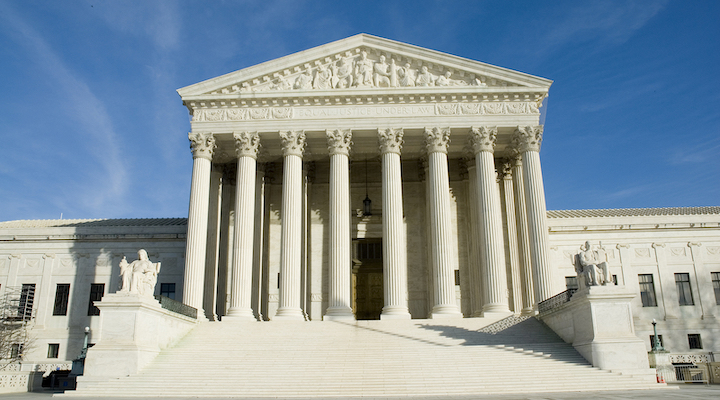
On February 20, it was announced that the US Supreme Court overturned President Donald Trump’s “Liberation Day” tariffs, an aggressive trade policy that imposed a 10 per cent baseline tariff on most US imports, with higher “reciprocal” tariffs (up to 50 per cent) targeting countries with high trade surpluses. In a six-to-three ruling, the Supreme Court decided that President Trump did not have the authority to levy tariffs using the International Emergency Economic Powers Act (
t (IEEPA), a 1977 statute meant for emergencies, not routine trade policy.
Even though this comes as much welcome news to many brands, it’s a bit too early to pop the champagne bottle just yet.
For one thing, while it is clear that President Trump doesn’t have the power to levy tariffs using IEEPA, several financial experts noted that it is possible that the administration could use a combination of other legal measures to replace the IEEPA tariffs, such as the Tariff Act of 1930 or sections of the Trade Act of 1974.
“These replacement authorities could be activated very quickly — potentially within 24 hours of the Court’s ruling,” wrote Cowen analyst Tristan Margot.
Margot’s prediction proved accurate as just this past Saturday, President Donald Trump announced that he plans to increase the global tariffs he imposed a day before to 15 per cent from 10 per cent.
On a social media platform dubbed Truth Social, Trump posted that he would be “raising the 10 per cent worldwide tariff on countries … to the fully allowed, and legally tested, 15 per cent level.”
He added that the administration will determine and issue the new tariffs “during the next short number of months.”
Where do retailers go from here?
According to Erica York, the vice president of federal tax policy at the Tax Foundation, the 15 per cent duties would put this year’s effective tariff rate at six per cent. This is a measure of the estimated duties as a share of estimated imported goods for the year, as reported by the Tax Foundation.
Presidents are able to impose up to 15 per cent in tariffs using Section 122, but those duties are temporary and require congressional approval after 150 days.
For the foreseeable future, it is unclear whether companies will be able to recoup the fees they paid under the previously invalidated emergency tariffs.
Since Trump announced the “Liberation Day” tariffs in April 2025, the federal government has collected more than $200 billion in tariffs.
As Sean Henry, the CEO of Stord, a leading commerce enablement platform, told Inside Retail, the Supreme Court’s overruling the “Liberation Day” tariffs won’t reset things back to the way they were.
“Tariffs under other authorities, including Section 301, Section 201 and Section 232, remain in place, and trade policy volatility is likely to persist. The risk is not over,” Henry warned. It is unclear how the White House will formally respond. Still, President Trump already indicated that he would use Section 122 to impose an across-the-board global 10 per cent tariff, amongst other tools at his disposal.”
Additionally, Henry noted that, since the Supreme Court has not established an official refunding process, retailers may need to work with customs brokers or trade counsel to understand their eligibility and options.
Similarly, John Mercer, Coresight Research’s head of global research, noted that the Supreme Court’s decision re-injects “substantial uncertainty” over trade policy and the tariff rates that retailers and brands will pay. It will also add further complexity to sourcing planning, especially for the upcoming holiday season.
“The ruling comes at around the time of the year when many retailers are planning for the end-of-year holiday season, but given the lack of clarity about what comes next, it is currently unclear whether tariff certainty will be evident in time for most peak-season manufacturing orders,” said Mercer.
The potential positives of the Supreme Court’s ruling
Mercer noted that the potential upside of the current uncertainty left by the ruling is that it will likely reduce the likelihood of full tariff implementation.
However, retailers should still brace themselves for the expectation that this Supreme Court decision will be challenged.
“While the Supreme Court’s ruling is significant, it is unlikely to resolve the tariffs issue entirely. There are widespread expectations that the US government will continue to pursue tariffs or attempt to circumvent the ruling.”
On a more positive note, Henry pointed out that this decision could serve as an “operational reset” opportunity for brands navigating today’s trade environment.
“Over the past year, tariffs imposed under IEEPA introduced significant cost volatility and forced companies to rapidly rethink sourcing, inventory positioning, and pricing just to protect margin. With an estimated $200 billion or more in duties potentially subject to review or refund, brands now have both an opportunity to organize their import data and reassess their exposure,” said Henry.
He noted that the brands that will benefit most from this ruling are those that will use this decision as a catalyst to build structurally resilient operations. This will include diversifying sourcing, establishing multi-node fulfilment, improving real-time inventory visibility and investing in scenario-based cost modelling.
“Ultimately, resilience, not reaction, is what protects growth and ensures consumers continue to receive reliable service at competitive prices, no matter the current trade policy in effect,” Henry concluded.
Further reading: Why has Trump threatened to raise tariffs on South Korea again?