
Victoria’s Secret CEO, Hillary Super, has done it again. Despite naysayers, including some of the brand’s own investors, the lingerie label has delivered another strong fiscal quarter as it continues to restore its cool factor. The success comes despite her inheriting a damaged institution in 2024 that was derided as objectifying women and presenting a dated view of beauty. As Neil Saunders, managing director at GlobalData, told Inside Retail, “For the Victoria’s Secret brand, sexy is ba
back – and has been for a while – but the cultural lens through which it is focused is about empowerment and self-expression, not objectification. This may seem like a subtle difference, but it is an absolutely critical one that allows the brand to have a clear and distinct voice in the market without all of the toxicity that previously surrounded it.”
The company’s latest results, released on Tuesday, far exceeded market expectations. For Q1 2026, net sales rose 15 per cent to $1.6 billion, while total comparable sales increased by 13 per cent year over year. “Our customer responded strongly to our product innovation, emotionally resonant storytelling, and distinct brand projection, driving double-digit growth in new customer acquisition, increased regular-price selling, and broad-based strength across categories, channels and geographies,” said Super.
Thanks to its strong Q1 2026 results, the company raised its full-year adjusted operating income guidance by more than $100 million. Victoria’s Secret is now expecting adjusted operating income to be between $550 million and $580 million, up from a previous range of between $430 million and $460 million.
What Victoria’s Secret is getting right
As Super noted in the report, a key factor in the turnaround has been its focus across both the core brand and labels such as its younger-skewing sister brand Pink.
“An exceptionally strong set of numbers shows that Victoria’s Secret is not only on the road to recovery but is accelerating the pace,” added Saunders. “Much of that operational enhancement is the result of Hillary Super and her team having a very clear sense of direction, guided by a firm focus on the customer.”
The brand’s high-level positioning is backed by practical changes on the ground, both in stores and online.
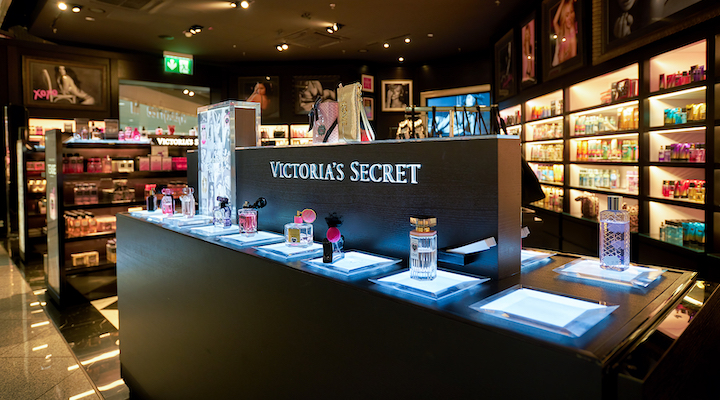
“Pleasingly, growth is being balanced across stores and digital channels, which supports the view that the acceleration is being driven by a general improvement in image and relevance. However, we [at GlobalData] are particularly pleased with the disciplines around physical stores. These include relocations, selective pruning, and sensible investments in remodeling.
“Remodels made before the previous management team was in place were pleasant but tended to feel sterile. This has now been corrected, and a bigger dose of emotion and storytelling is present across new stores.”
Pink has also gained a stronger identity after spending years absorbed into Victoria’s Secret’s broader business. “The tone is sufficiently different from Victoria’s Secret to make this a more distinct business that targets a different customer and need state. The early results are positive, with solid customer growth among younger cohorts. However, we think there are further gains to come as the brand image sharpens.”
Taken together, these changes help explain how Victoria’s Secret has regained relevance and won back customers it had lost. They have also helped drive higher spending among existing shoppers while attracting new customers, both of which have contributed to the company’s sales growth.
Can Hillary Super keep pulling out hero-level moves?
Super’s advocates have expressed little doubt about the CEO’s ability to revive the legacy lingerie retailer’s market position.
Retail strategist Christine Russo argued that the CEO inherited a brand with significant equity buried beneath years of weak messaging and heavy discounting. She said the CEO has spent nearly two years rebuilding that value and reversing the effects of a transactional mindset.
“Super saw deep brand equity remained in a rubble of promotional sales and weak messaging, and she has spent nearly two years uncovering the brand, shining it up and creating value,” said Russo. “Super also had to undo the damage that was caused by a transactional mindset combined with weak storytelling.”
Russo added that, when combined with the short-term thinking often seen at accounting-driven brands, where investment is viewed as an expense rather than a driver of growth, it is not surprising that the company’s stock has jumped 160 per cent since Super’s appointment.
The company’s shares rose 47 per cent on June 2, shortly after the report was released.
Meanwhile, Melissa Minkow, CI&T’s global director of retail strategy, said, “I’ve been championing Victoria’s Secret’s turnaround for a while as very possible. The brand had many necessary elements for success – strong assortment, smart channel strategy, name recognition – and with Hillary Super, they’re primed to continue this success.
“The retailer has revamped its marketing approach, which has been crucial, and it has committed to quality. The fit technology incorporated into its app experience is exactly what it should be using its digital channels for – building certainty into decision-making.”
Looking ahead, Minkow said the company should integrate agentic capabilities into its virtual channels to autonomously customize bundle deals for both new and existing shoppers.
Despite the brand’s positive sales figures, the turnaround still faces headwinds.
As Saunders noted, “Expectations have been raised, and this means that Victoria’s Secret will be under greater scrutiny as it reinvents. It might be that the path ahead is a smooth one, but it would not be unreasonable to expect a little choppiness as the reinvention continues.”
For example, one issue the company is currently dealing with revolves around its supply chain. It sources and manufactures products across several countries, including Vietnam and Sri Lanka, and may face a $90 million net tariff impact.
Super has also been locked in a battle with activist investors since her appointment, with one investor directly objecting to her leadership and arguing that she had limited public-company experience. However, the brand’s latest fiscal results should alleviate some of those concerns.
Tuesday’s blowout quarter may be her most effective rebuttal yet. Regardless, Victoria’s Secret’s CEO appears unfazed by the pressure.
“You have to remember that none of these things are personal, that it’s business,” said Super.
For now, she appears to be doing exactly that, tuning out external noise and focusing on her mission to revitalize Victoria’s Secret.
Further reading: How Victoria’s Secret CEO Hillary Super proved doubters wrong in Q4