In a sea of lackluster Q4 fiscal reports, American retail giant Urban Outfitters has been a stand-out. In the apparel giant’s latest quarterly earnings report, it was revealed that the wider Urban Outfitters group’s net sales increased by 10.1 per cent to reach a record of $1.8 billion. Additionally, it was confirmed that the corporation’s total retail segment net sales increased 7.7 per cent, with comparable retail segment net sales increasing by 5.5 per cent. Breaking it down further, Ur
rther, Urban Outfitters’ namesake brand’s comparable net sales increased by 9.6 per cent over the same period, whereas Urban Outfitters’ other brands, including Anthropologie and Free People, net sales increased by 3.7 per cent and 5.2 per cent, respectively.
Most impressively, Urban Outfitters’ subscription clothing service Nuuly saw an increase in subscription segment net sales of 42.6 per cent, primarily driven by a 40.3 per cent increase in average active subscribers in the current quarter versus the prior year quarter.
In light of these positive results, Urban Outfitters earned an adjusted profit of $1.43 per share, up 37 per cent from a year earlier and $0.17 better than expected from financial experts.
Regarding Urban Outfitters’ successful fourth quarter, Neil Saunders, analyst and managing director at GlobalData, commented, “If Urban Outfitters were a band, they’d be a very harmonious one!”
He explained that while each of the brands could very easily perform solo and have earned plaudits for doing so, it is the synchronicity of Urban Outfitters’ brands that has fueled the company’s overall positive performance.
“Put them together [Urban Outfitters’ portfolio of brands], and the result is sublime: a group that manages to reach a lot of different ears and leaves everyone satisfied.”
What Urban Outfitters is getting right
As CI&T’s global director of retail strategy, Melissa Minkow, told Inside Retail, “Urban Outfitters is yet another proof point that turnarounds work when assortment and price are nailed.”
Similar to Saunders, Minkow noted that all of Urban Outfitters’ brands – Anthropologie, Urban Outfitters and Free People – have got assortment in a resonant place with their respective, distinct yet overlapping audiences.
“There’s been clear intentionality behind each chain’s offering, as well as strategic discounting where and when appropriate. This is a textbook case of returning to deep customer understanding and alignment,” said Minkow.
She added that Urban Outfitters has invested intelligently in omnichannel, establishing strong apps for all three brands, ensuring that the websites have top-notch user experiences with easy navigation, and stores that consumers will actually enjoy visiting, thanks to how well they have been merchandised.
Adding to Minkow’s observation, Saunders commented, “The reason Urban Outfitters works so well is that all of its parts sing in the same key. That key is one focused on building strong brands through deeply understanding customers and buying and merchandising that is highly aligned to their needs… An amble into any one of their stores reveals the care and attention that is applied. It is pleasing to see this rewarded with consistently good results.”
In addition to a well-curated approach to merchandising, rental retail also played a significant role in Urban Outfitters’ boosted numbers, noted Saunders, Minkow and Urban Outfitters’ CEO Richard A. Hayne.
“Nuuly has been a brilliant contribution to the business, as it successfully strikes the challenging rental chord by hosting products that consumers actually see as sensible for rental purposes,” explained Minkow.
Pushing momentum forward with strategic social media and pop culture moments
In addition to the observed strategies above, there has been another significant factor behind the success of Urban Outfitters’ namesake brand: the power of pop culture.
Over the past few years, Urban Outfitters has strategically been tapping into the power of pop culture to connect with its Gen Z consumer base.
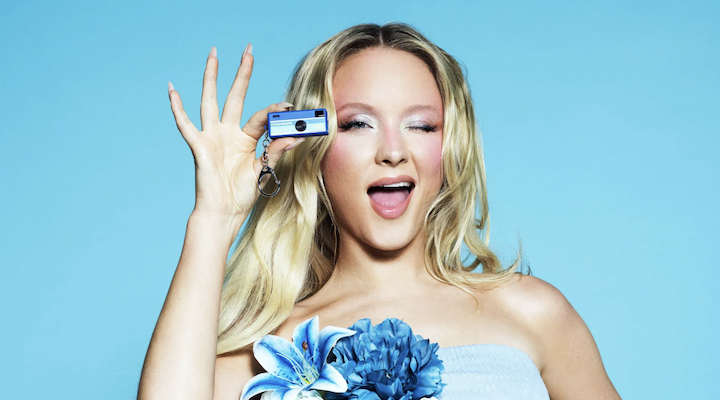
Notably linking up with the internationally known pop girl group Katseye in 2025, and more recently with the Swedish pop artist Zara Larsson this month.
As Minkow observed, “Pop culture collaborations are a big win when done well, and the reason Urban Outfitters’ were done well is because they matched the target audiences’ aspirational styles and fit the product assortment. They have chosen celebrity collaborators that are easy to connect at a campaign level to both how consumers see their brands and how they want to see themselves.”
Moving forward, Urban Outfitters is planning to better connect with its internet-savvy consumers via a hyperpersonalized creator program.
On February 15, Urban Outfitters launched Me@UO, a platform created specifically for creators with fewer than 10,000 followers that invites them to respond to weekly prompts in exchange for affiliate revenue and access to exclusive content.
The platform’s launch kicked off with “Add to Story,” a campaign starring Zara Larsson that will run until April 24. The top 100 creators participating in the campaign will be invited on a brand trip to Joshua Tree, California, at the end of what the team is calling “Season 1.”
Urban Outfitters’ head of brand marketing Cyntia Leo marks a shift away from campaigns that are just observational to those that are more interactive, a marketing strategy that highly appeals to today’s Gen Z consumer.
Assuming that Urban Outfitters keeps its merchandising and pricing strategy as top-line as it has in Q4, there should be no reason to assume that the next fiscal quarter will not fare equally successful results.
Further reading: How merchandising and marketing led Urban Outfitters to a successful Q3