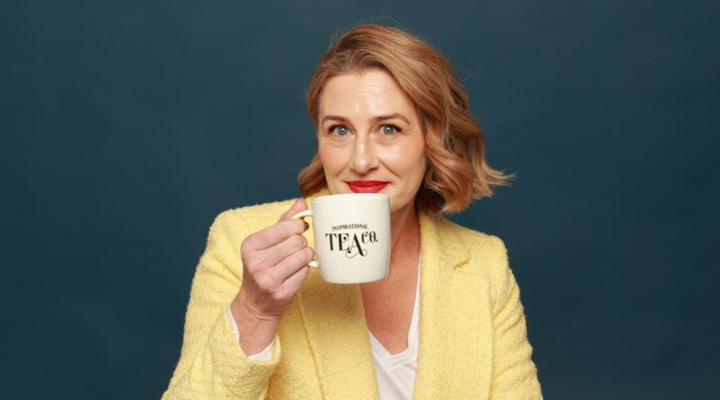
From supermarket aisles to boutique gifting shelves, the journey from FMCG category management to founding a premium tea brand is anything but ordinary. Inside Retail spoke with Tanya Boots, founder of Inspirational Tea Co, to explore the spark behind the pivot, the lessons learned and the surprising channels reshaping the way consumers think about tea and gifting. With more than 15 years’ experience as a category manager at the supplements brand Blackmores and Wesfarmers-owned safety
afety supplies brand Blackwoods, Boots brings a seasoned retail perspective to her entrepreneurial journey.
Inside Retail: What inspired you to pivot from category management to launching a premium tea gifting brand?
Tanya Boots: Category management is a great mix of consumer insights, strategy and commercial skills like pricing and range assortment and I got pretty good at finding patterns and opportunities. I’m always observing when I shop; I can’t help myself. My weekly supermarket trip is never quick! I guess I got tired of spotting opportunities and not doing anything with them.
So when my daughter came home from school one year with a hand-made Mother’s Day gift of messages stapled onto teabag tags, I was struck by the way it made me feel. I’ve always been a tea lover, but this turned my tea ritual into something even more meaningful.
Meanwhile, I had noticed what was happening with gifting in the chocolate category, the way it was increasing the average rate of purchase and solving the problem of small but meaningful gifts that don’t break the budget. I believed the same could be done with tea. So opportunity met purpose and solution and Inspirational Tea Co was the result.
IR: How did your FMCG experience shape the way you approached creating Inspirational Tea Co?
TB: First and foremost, I wanted to be much closer to the consumer than is often the case in FMCG, which is why I started with an online store and a mission to build a community. I also wanted to be more agile, to bring new products to market quickly, delete them if they failed and scale if they worked.
I underestimated how hard it is to build a new brand, probably because most of the brands on shelves in Australia are so well established.
But social media has made it easier for small brands to compete for attention and it’s free. But it does take time, and you need to get comfortable with the fact that you are, in fact a content creator along with all the other roles.
My category background gave me a head start on how to price my tea. I started with shopper ‘willingness to pay’ and worked backwards from there. I still see many new starters get burnt when they realise that a cost plus model prices them out of the market, or they haven’t built in enough margin to sell at wholesale.
I deliberately chose a channel strategy that was right for my premium tea and wasn’t dependent on a promotion cycle that trains shoppers to buy on discount.
Our tea is sold in gift stores, wellness spas, hampers, boutique hotels, post offices, garden centers and online. We rarely discount, so when we do, it has a real impact. Our revenue during the Black Friday Sale last year was 10x a regular month. On a supermarket shelf, we’d be considered expensive, but in a gift store, we’re a convenient under $20 gift that appeals to everyone.
IR: Can you describe the process of developing your range? How do you choose teas, blends and packaging?
TB: I leverage the talent of the teams that I know are working in the big tea and gifting brands, come up with a prototype and then ask my customers what they want.
For example, we’re about to launch a sleep tea. I bought and tried as many sleep teas as I could find in Australia, the US and Canada, then created a spreadsheet to spot the common ingredients in the best sellers.
Once I had that starting point, I got the bulk ingredients I’d chosen and tested different formulations until I landed on the right taste. I was stuck on whether to go with organic or not, so I went to my community and asked them, then made sure the numbers worked. They didn’t, so I took five teabags out of the pack so that it would line up with the rest of the range. That’s definitely a tip I learned from FMCG!
I attended the World Tea Expo in Las Vegas this year and came back with a much clearer idea of where future growth will come from in the fast-growing tea category. It’s an exciting place to be right now, and the trip definitely shaped my plans for our future range development.
IR: Which channels have surprised you in terms of growth or customer engagement?
TB: We are consistently signing up new customers in hampers, florists and subscription boxes, and we’ve barely scratched the surface as there are thousands of them in Australia.
This works well for us as we have a trial size that we only sell at wholesale, so we get discovered by the gift receiver, and then they come to our online store for their next purchase of the bigger pack. We lose out on margin when we sell wholesale, but it’s still a cost-effective customer acquisition strategy.
Boutique hotels are looking for something different, and thank goodness, because we’ve all had awful tea in very nice hotels! We had to launch a single-serve pouch to do this, but it’s another great way of getting trialled.
I noticed at a recent trade show the evolution of the typical gift store. Pharmacies are becoming the go-to for last-minute gifting, as well as garden centers and newsagents. If you’ve got foot traffic, then you should be selling gifts, especially when the average retailer margins are higher in gifting than other product categories.
IR: Are there any lessons you’ve learned since launch that you wish you’d known beforehand?
TB: So many. I’ve learned so many new skills in the last five years, and I’m now comfortable with constant change and daily problem-solving:
Keep your range tight until you get consistent sales
Test cheaply with minimum runs, then scale
Build a community before you launch
Build organic sales before you start spending on advertising
Be intimately familiar with your P&L
Have enough cash to grow
Don’t expect an income for some time; it will all go back into the business
Find people who will cheer for you and mention your name in rooms that matter
Give back. The love from our charity partners lifts me up on the hard days
Stay true to your values, especially around sustainability. You don’t want to feel guilty every time you ship an order (we are 100 per cent plastic-free).