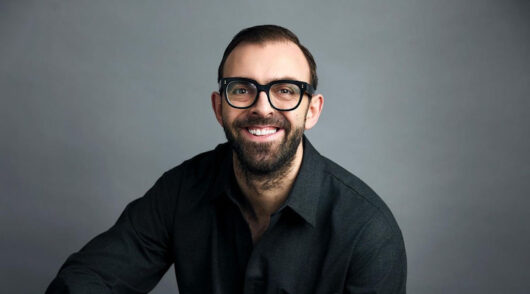
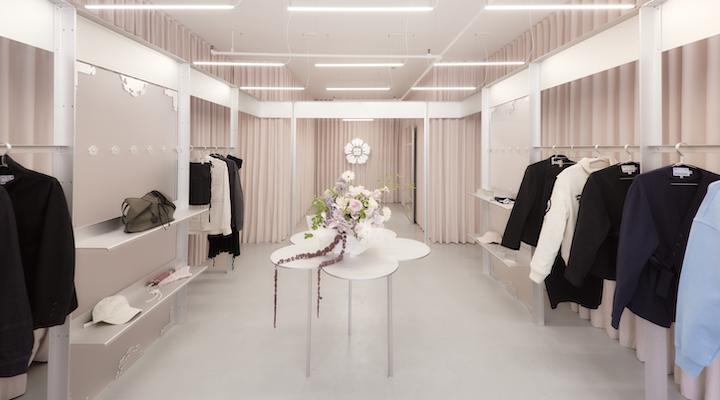
Even with almost nine years in business and $10 million in sales in 2025 alone, there is a very different number on the mind of Dae Lim, the founder and creative director of Sundae School. One. This May, after years of hosting pop-ups, Sundae School officially opened its first permanent physical store in the heart of New York City’s Chinatown. Located at 117 Hester Street, the store is just three blocks from where the Korean-inspired streetwear brand was first dreamt up. “I never thought the
ought the brand I started as a thought experiment would turn into an eight-year journey that would have me open a retail space right across the street from the Chinatown apartment I launched it in,” said Lim.
The starting point for Sundae School
From the brand’s initial conception in 2018, shortly after Lim quit his consulting job, Sundae School leaned hard into boundary-pushing, counterculture-centric design. Its debut featured a hand-printed tee of King Sejong holding a joint – a design so iconic that the Korean National Bank sent him a cease-and-desist.
At its core, Sundae School is a lifestyle brand designed for “high-achieving degenerates” that creates “high-quality goods for high-minded people”.
The brand’s clothing and accessories range from a more formal blazer inspired by the hanbok – a traditional South Korean clothing style, and an item worn by Lim himself on his wedding day – to more technical pieces, such as a jacket modeled after a jeogori, an upper garment worn by both men and women as part of the Korean hanbok ensemble.
Like many items in Sundae School’s assortment, the latter features the brand’s signature stash pocket on the arm because “we all wear flowers on our sleeves”. The “flowers” are a nod to Sundae School’s sister brand, Sundae Flowers, an edibles brand that sells THC-infused mochi gummies in flavors including yuzu, golden pear and lychee.
Getting lost in the rat race of retail
Lim admitted the store almost never came to fruition. In fact, he briefly considered closing the business.
“Last year was a really breakthrough year for me as I actually was thinking about shutting the business down. [At the time] I just felt like I was grinding away and losing a bit of myself in the rat race, constantly comparing myself to others. That’s when I actually decided to take my own advice, essentially our mission for Sundae School and Sundae Flowers, to take a break.”
For one week, Lim even went without his computer as he returned home to South Korea to spend time with family members. He also reconnected with several members of his team – a group of women in their sixties whom he had worked with since the beginning – and they reminded him what he originally loved about running the company.
By stepping back from the business, Lim realized he had outsourced much of the work he truly enjoyed, such as design, to outside executives in an attempt to “focus” more on what he believed his duties as a boss should be.
However, despite taking back more responsibilities – from design to various aspects of operations – Lim explained that he became less anxious, partly due to his perfectionist personality, and felt more connected to the joy of running the business.
The company has also never been more successful, according to Lim, who disclosed that sales had grown 150 per cent compared to the previous year.
From conception to creation: A $74k journey to opening Sundae School’s first store
Like many founders opening their brand’s first store, budgeting was an immediate concern.
After finding their dream Chinatown location, Lim and his team initially aimed to open the store with a budget of $35,000 – before quickly realizing they would need to increase it.
“The budget started ballooning, and at some point it reached $100,000, and I was like, ‘Oh my gosh, no, this is not gonna be possible. We’re gonna go under before we open this,’” Lim recalled.
Taking a step back, the Sundae School team decided they needed to make adjustments to the original store rendering and began exploring creative workarounds.
For example, rather than covering the store’s brick walls with plaster and paint – an expensive move recommended by contractors – Lim chose to preserve the quintessential New York feature by covering the walls with fabric instead.
Lim found material that would have cost more than $35,000 in the US for just $3,000 in South Korea, hand-carried it in his luggage and brought it back to the store.
The decision to use fabric was partly inspired by the store’s overall design concept, conceived by creative director and lead architect Nohar Agadi – Yale-educated, formerly of Foster + Partners, and Lim’s romantic partner.
The shop is modeled on the spatial logic of a traditional Korean Buddhist temple, using floor-to-ceiling curtains to transform the space. Metal pillars and gates, designed by co-architect and sculptor Andy Kim, create transitional courtyards that visitors move through, marking each passage as a threshold.
At the center is a gathering space, while at the back sits the Daeungjeon (main altar), where original accounting desks adorned with Chinese talismans now serve as the brand’s headquarters.
Works by South Korea-based artist Honey Kim frame the space, referencing traditional Korean hemp textiles through modern applications using frosted acrylic and aluminum.
“A traditional Korean temple isn’t just a building – it’s a sequence of thresholds,” stated Agadi.
“Each gate, each courtyard, is designed to strip something away, so that by the time you reach the altar, you’ve left the noise of the outside world behind. We applied that same spatial logic to a 500-square-foot space. Every pillar you pass or curtain you move through marks a transition, slowing you down and preparing you for something quieter.”
In creating the physical space, Lim hopes the store will provide a sanctuary of rest for the community.
Alongside offering customers the chance to browse the brand’s SKUs in real life and access store-exclusive pieces, Lim said he plans to use the space for collaborations, pop-ups and events featuring indie brands, creatives and community members.
“We want our community members who are in the Sundae School ecosystem to be able to use this space to foster conversations,” stated Lim.
Looking ahead, Lim said that, depending on the success of the New York store, the team plans to open a second location in San Francisco within the next year, where a large portion of Sundae School’s fan base is based.
“I’m gonna focus on the task at hand, which is to build our community here, and showcase to people what Korean culture can look like through the lens of counterculture.”
Further reading: Five up-and-coming Korean fashion brands to have on your radar