
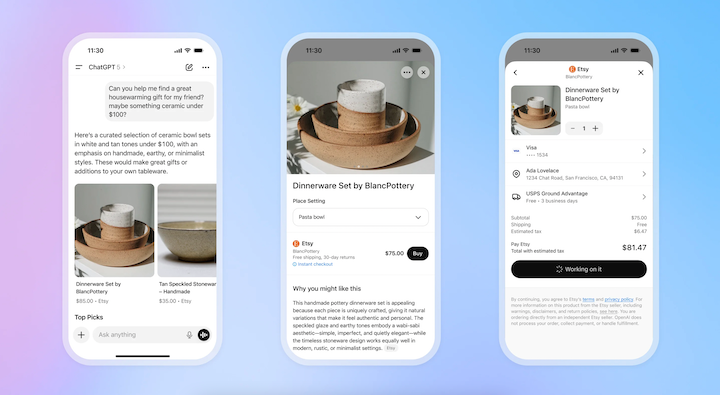
There’s a quiet shift under way in e-commerce. One that might seem like science fiction but is quickly becoming a commercial reality: the shopper of tomorrow might not be human. Instead, it could be an AI-powered agent making purchase decisions on behalf of consumers. This isn’t ChatGPT adding things to a wishlist – it’s the rise of personal AI shoppers. These bots will scan online stores, compare prices, read reviews, factor in past behaviour, align with personal values and even o
even optimize for shipping timelines – all in real time. Think Amazon Alexa on steroids meets your smartest, savviest personal assistant.
And it’s not a matter of if. It’s a matter of when.
What happens when your customer is no longer human?
In this new retail landscape, your front-end UX matters less. Fonts, colour palettes and lifestyle imagery aren’t selling to AI bots. Instead, bots will scan metadata, price feeds, delivery lead times and customer ratings with machine precision. The emotional cues that influence human impulse buying are also irrelevant here.
But the implications run deeper. AI bots won’t get distracted by banner ads or fall for dodgy discounts. They’ll be ruthlessly efficient, stripping out friction and emotion from the buying journey. If your e-commerce backend is clunky, your delivery proposition vague, or your product information incomplete, you simply won’t make the cut.
It’s a hard reset for the algorithmic age.
The implications for online retail
When AI bots do the shopping, trust becomes machine-readable. Ratings, return policies, stock transparency, and real-time fulfilment data will be the new differentiators. It’s no longer about storytelling – it’s about structured data integrity.
Retailers that rely on brand equity, loyalty programs or heritage alone will find themselves sidelined. AI won’t care about your origin story unless it affects product efficacy, price or availability. The bots will call BS on greenwashing and penalize poor product reviews with no emotional filter.
Expect platforms like Google Shopping, Amazon, Shopify and marketplaces in Asia to race toward standardized schemas that better serve AI buyers. Structured data will be gold.
So how can you prepare?
Make your backend bot-friendlyStart with your product feeds. Ensure SKUs are updated in real-time, descriptions are machine-readable, and price, stock and delivery information are precise. Schema markup isn’t optional anymore – it’s your new shelf display.
Optimize for AI discoverabilityAI bots won’t browse. They’ll filter and eliminate. So, relevance isn’t about being browsable – it’s about being selectable based on logic, data and context. Think: fast shipping, best-reviewed, most cost-efficient.
Build trust signals into every product listingThat means verified reviews, live inventory, delivery guarantees, sustainability certifications, return policies – anything that builds consumer confidence through algorithmic logic.
Prepare for “Bot Battles”Expect a new arms race: retailers deploying their own AI bots to compete with third-party shopping agents. Imagine your AI negotiating against another AI over bulk pricing or loyalty incentives. Retailers need to game out these scenarios now.
This isn’t just a tech upgrade – it’s a mindset shift.
Much like how the evolution of retail media reframed store design from ‘stock and sell’ to ‘connect, entertain and monetize’, AI commerce demands a reframe of the retail value chain – from ‘persuade the shopper’ to ‘satisfy the algorithm’.
In the same way cyber resilience became a branding issue, not just an IT function, AI readiness will sit squarely with commercial, digital and marketing leaders. The retailers who bake AI visibility and bot-friendliness into their core proposition will own the algorithmic shelf space of tomorrow.
Retailers have spent years designing for humans, now it’s time to design for their proxies. Get ready for efficiency to trump emotion.
When the shopper becomes software, the rules of the game change. The prize? Winning the loyalty of the bots that make everyday purchases on behalf of millions.
And in that world, the best experience won’t be the most emotional. It’ll be the most efficient.
Simon Porter is the head of retail at media agency Hatched.
Further reading: AI meets retail: Ebay’s plan to make every shopping experience unique