In part two of our Ones to Watch 2026, we list five more CPG brands that are adding a bit of spice to the ever-evolving flavor of the retail industry. Graza Category: Food and beverageCountry: USLaunched: 2022 How does a single bottle of olive oil turn into a $48 million empire? Through quality products at an affordable price point, engaging social media content and aesthetically designed packaging, but let’s rewind a bit. In December 2019, Graza co-founder and CEO Andrew Benin took a trip wit
took a trip with his girlfriend, now wife, to her native country of Spain. It was there that he tasted the best olive oil he’d ever had and experienced the catalyst moment that started the journey to launching his own brand.
Benin, who had garnered experience in the startup space working for mattress brand Casper and cereal company Magic Spoon, decided to launch an olive oil brand that would tap into the sweet spot between price and quality.
Versus a lower-level, larger bottle of olive oil from a brand like Kirkland, or a smaller, more premium $40-plus bottle of olive oil from brands like Brightland, Benin wanted to create a brand that was “not only affordable, but also top notch, rad, and fun to use, so we landed on squeeze bottles and Picual olives from Spain.”
“We want everyone to be able to embrace their inner chef in the kitchen and experiment with new ingredients – whether you’re a next-level home cook or someone who has burned pasta in the microwave,” added Allen Dushi, Benin’s longtime colleague and Graza’s co-founder and COO.
With several SKUs, including the original olive oil formulations, a finishing oil dubbed Drizzle and a cooking oil dubbed Sizzle, and several olive-oil-enhanced snack options, Graza brought in an estimated $48.4 million in revenue at the end of 2024 and shows no signs of slowing down.
House of Balance
Category: Beauty/wellnessCountry: South KoreaLaunched: 2024
In the world of retail, there are a few motivators as powerful for launching a brand as burnout.
Which is precisely what led Taejun (TJ) Yoon, the founder and CEO of House of Balance, to launch his million-dollar K-wellness brand.
After reaching a point of imbalance between his emotional and physical wellbeing, Yoon realized that one of the best things that brought him comfort was his self-care routine.
As Yoon told Inside Retail, “That simple 30-minute ritual became my reset – a quiet space where I could breathe deeply, clear my thoughts and finally feel like myself again. That experience made me realize how powerful small daily moments can be, especially in a world where everyone feels overwhelmed.”
Yoon asked himself, “What if we could transform these ordinary routines into meaningful moments of balance?”
That question led to the launch of House of Balance, a K-wellness brand designed to help people reconnect with themselves through everyday body care. Just one year into launching in the US retail market, Yoon disclosed that the brand has garnered almost $1 million in sales from this sector alone.
Moving into 2026, the founder stated that the brand will be progressing further in the American retail scene through sensorial and intentional pop-up experiences, new product formulations and building up its roster of US retail partners.
Nguyen Coffee Supply
Category: Food and beverageCountry: USLaunched: 2018
Coming from a background in journalism, Sahra Nguyen, the founder and CEO of Nguyen Coffee Supply, didn’t initially set out to become an entrepreneur.
However, after observing a unique white space in the American coffee retail scene (which brought in an estimated total revenue of $113.61 billion in 2025), Nguyen set out to create a brand that would highlight the full potential of Vietnamese coffee to American consumers.
Nguyen recalled, “I started to think, ‘If Vietnam is such a major producer of coffee in the world, why are they not included in American coffee culture?’
“I saw that there was a glaring injustice happening in the coffee industry, particularly where it was rendering Vietnamese-sourced coffee invisible and exploiting Robusta coffee-growing communities by pushing the Robusta coffee (the most common coffee bean in Vietnam) segment into the cheap conventional coffee category.
“If I want to change this perception, I have to work with farmers at the ground level and help them improve their product as a livelihood, and then produce a different product for the market,” Nguyen emphasized. “So that’s what really led me down this path.”
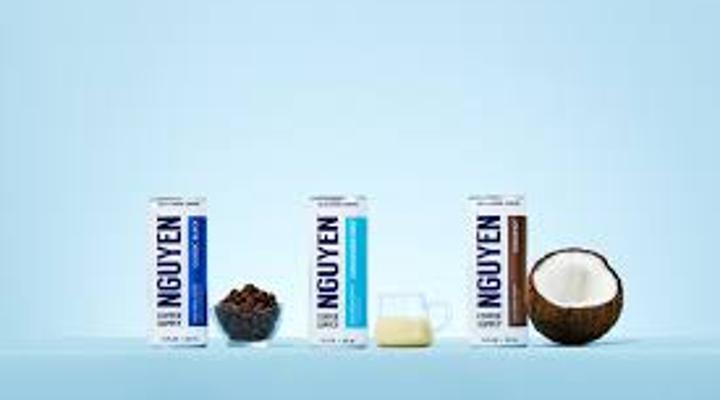
By 2018, Nguyen launched Nguyen Coffee Supply as a direct-to-consumer (DTC) brand, and by 2022 the brand began to develop its first ready-to-drink (RTD) line of products.
Today, the brand is carried in over 2700 doors via retailers including Target, Whole Foods, Albertsons and Sprouts Farmers Market. Nguyen reported that the brand experienced 100 per cent year-over-year growth in 2024.
In addition to its various flavors of coffee beans, several of which are named after locations in Vietnam like Saigon and Hanoi, the brand has expanded its merchandise assortment to include American and Vietnamese-style brewing tools and accessories and an aesthetic variety of apparel and goods.
Monday Haircare
Category: BeautyCountry: New ZealandLaunched: 2020
When it comes to skincare, there are a plethora of brands, such as The Ordinary and The Inkey List, that provide top-quality ingredients at a price-accessible tier. Until recent years, however, the same couldn’t be said for the haircare category.
Which is where Monday Haircare, a New Zealand-born brand, comes into play.
“When I started building out Monday Haircare, my partner [Nick Mowbray] and I were walking the supermarket aisles, and I thought that I could 100 per cent create a masstige beauty brand here on these shelves,” said Jaimee Lupton, a PR executive turned serial beauty brand founder.
Lupton and Mowbray co-founded Monday Haircare and several other brands, including Châlon Paris, Being Haircare, Laura Polko Los Angeles and Daise Beauty.
“When it came to haircare, there wasn’t really anyone doing it in a truly modern way and making it accessible. There were so many mass haircare brands, but they didn’t reach the benchmarks that Gen Z and Millennial consumers were after, such as being cruelty-free, sulfate- and paraben-free and with a really beautiful aesthetic as well.”
She elaborated, “We wanted to create a premium, modern product that looked good in people’s bathrooms, but without a high price tag.”
Unlike most consumer product goods brands, which start with solely a direct-to-consumer (DTC) site, Monday Haircare immediately jumped into being an omnichannel brand upon entering the market.
“We approached [Monday] as if it were solely a direct-to-consumer brand, but then we shortly partnered with mass retailers after launch, which I think was not as common at the time. A lot of people start out DTC before scaling into mass retail,” Lupton remarked.
Monday Haircare went on to partner with several American retail giants, including Ulta Beauty, Target and Costco.
“Now, with Monday Haircare, we’ve partnered with over 200 retailers, scaled globally across 43 countries, and are on track to do $600 million since we launched in 2020,” Lupton reported in May 2025.
Uni Beauty
Category: BeautyCountry: AustraliaLaunched: 2022
In 2022, Alexandra Keating, a tech entrepreneur and daughter of Paul Keating, the prime minister of Australia from 1991 to 1996, launched the innovative bodycare brand Uni. Named after the Japanese word for sea urchin, Uni (oo-nee) is a blue beauty brand, similar to green beauty but more centered on ocean-derived ingredients. It is making waves in the world of beauty with its sustainability-focused products.
In a discussion with Stephanie Caite Chadwick, features and premium editor at Inside Retail Australia, Keating explained that she wanted to create formulas that harnessed the power of natural ingredients, without the negative environmental impact.
“I want to lead by example and create [performance] sustainable products that aren’t going to end up in landfills or our oceans.”
Relying upon her tech background, the bodycare brand founder remarked that she runs Uni similar to how one would run a software company, in that everyone is very autonomous and has access to all important information in the company. It is partially this technology-first leadership approach that differentiates Uni as a beauty brand and Keating as a beauty founder.
In addition to its stockists in the Australian beauty market, including Mecca, Uni is also stocked by several US retailers, including Erewhon, Goop and Credo.
“We have a very brand-focused retail approach – we want to show up where our customers are shopping, so our retail partners are a natural extension of the Uni brand,” Keating says.
Further reading: Ones to Watch 2026: Oomee, Nuudii, Off Season and more