
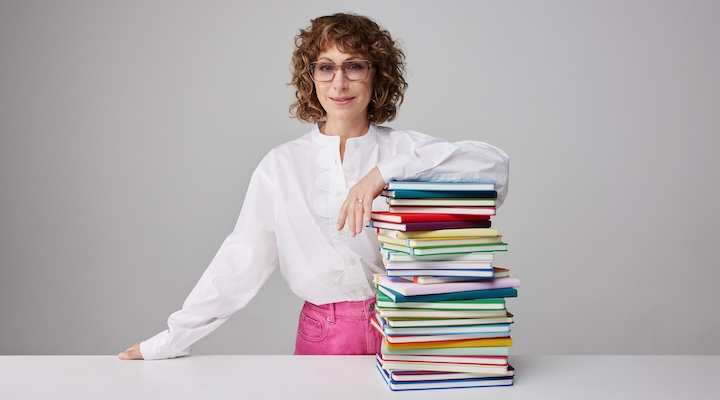
Lisa Gorman stepped back from her eponymous fashion brand Gorman in 2021, and after a hiatus from the Australian retail scene, she took on the role of creative director at Kikki.K in 2023. The opportunity to reinvent the future of Kikki.K is what convinced Gorman to step back into a commercial venture. Since joining the beloved stationery brand, Gorman has been slowly unveiling her vision for a refreshed Kikki.K – launching new products, such as suitcases, apparel and trekking gear. Insi
.
Inside Retail caught up with Gorman at the brand’s flagship store in Melbourne to unpack how she’s approaching her role as creative director at Kikki.K.
Inside Retail: Your retail successes are well-documented, but I’d love to hear what you see as your strengths when it comes to building a lifestyle brand?
Lisa Gorman: I’m not sure whether you’d describe it as an almost obsessive focus on formulating and establishing a brand vision, or plain stubbornness – I’ve been known to possess both – but either way, a brand needs its own distinguishable handwriting, and that is the absolute starting point for me.
I like to tell a story with a brand, I don’t like boring. Not in product or marketing. I like quality and I like interesting, which I think could be said for most of our consumers by and large.
There are a lot of brands out there, and a lot of them are doing the same thing. It’s never been a more competitive retail market, and a brand needs to hit the mark from all directions. Not only through product (though product is queen) but the entire customer experience – both digital and in real life – needs to be written from the same pen, so to speak.
I start close to home for my inspiration and vision for a brand. I look at what people are doing in life, what they wear, how they move about, communicate, spend time, how they function in today’s world. I look at that lifestyle-based activity and then think about the tools that might streamline that, creating efficiency through functionality with a specific aesthetic – a look and feel that is becoming known as Kikki.K as the brand enters this new chapter.
I set out considering a brand’s holistic offering – I think to myself, what would I want to see, hear and experience from that brand that completely defines it. I guess to sum it up, I want to know what that brand is offering, with absolute clarity and without any questions, because it’s that obvious.
IR: How is your role as creative director of Kikki.K different from your role as creative director at the label you founded, Gorman?
LG: Kikki.K was a brand for 20-plus years before I came along as creative director, so there is a valuable heritage component that I’m considering as part of the rebrand.
This is quite a different approach to founding a brand, but it is one that’s given me a valuable perspective around brand evolution, and the storyline between a brand’s past, present and its future.
IR: Is your creative process or design approach different when designing for a brand without your name on it?
LG: No, it doesn’t make a difference to me whether my name is on the door or not; my creative approach is about working to the unique vision for the brand. What actually matters to me is that the brand I’m creatively directing, regardless of name, builds its place in the retail landscape and delivers on the vision.
IR: What qualities do you think make for a great creative director?
LG: A genuine belief in the brand’s success. If that exists, the rest should follow. Curiosity – questioning what the brand is, why it offers what it does, the relevance in the market, not accepting that it’s just the way it’s always been done, experimenting and testing ideas, challenging and inspiring the creative teams across product design, marketing, retail spaces and online stores, putting themselves in the customer’s shoes, and probably the hardest one – learning to recognise a good idea from a bad one.
Be creative – sounds obvious – but with the delicate dance between creativity and commerciality. It’s the creative director’s task to think big and conceptualise the vision, then protect that vision as it’s worked into a viable, commercial concept with the team. Diluting the vision tends to drive creative directors somewhat mad, but it’s often about finding different ways to execute it rather than letting it go. Creative direction day-to-day is more about finding a solution for creative concepts than it is about coming up with a vision in the first place, in my experience. Lots of people have creative ideas all the time, it’s realising them and bringing them to life that takes some persistence, and a decent dose of creative bravery.
IR: Are there any qualities you still have to work on despite your decades of experience? LG:
In terms of myself, I’m constantly learning. Successful brands evolve, so there is really only a period of time where a creative director will get on and get off the ride with a brand, hopefully leaving their influence on the brand for time to come, passing the baton to the next CD to continue that evolution through their lens.