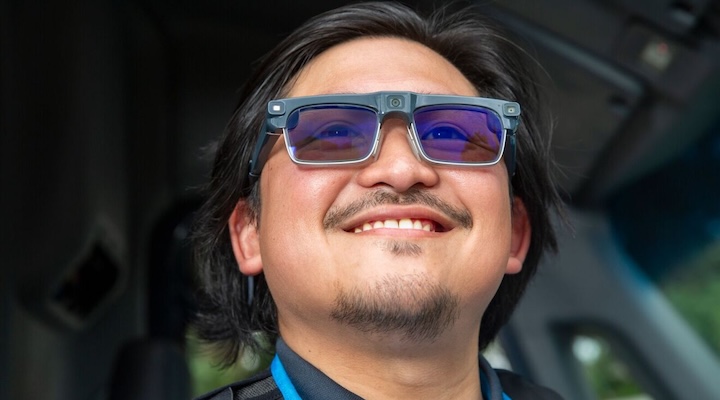
At its annual Delivering The Future event, hosted in San Francisco, Amazon unveiled its latest initiative to support its delivery drivers: smart glasses. Since launching the delivery service partner program in 2018, the e-commerce giant has used technology to enhance its employees’ experience, including a dedicated simulation training program. In fact, over the past few years, it has trained more than 300,000 drivers through virtual reality and real-world simulations. “For over 25 years n
5 years now, we’ve been using AI and machine learning at Amazon,” said Beryl Tomay, Amazon’s vice president of transportation, at the launch event.
“These technologies have made a real difference in people’s lives, helping drivers stay safe on the road, improving their experience.”
Now, Amazon has narrowed its continuous investment from the last mile to the last “100 yards to the customer”.
Delivering the future
According to Tomay, Amazon didn’t just invent the smart glasses in a lab. Instead, they created these glasses by working directly with the people who would use them.
“Hundreds of drivers have used several iterations of this technology on delivery routes, along with testing sessions and other user experience programs,” Tomay said.
“They helped us refine everything from how the glasses fit to the way packages are scanned.
“Their feedback and experiences have made one thing crystal clear: being hands-free wasn’t just convenient, it was game-changing.”
Using AI and computer vision, the glasses can identify obstacles such as pets or uneven paths and share those insights to enhance future routes.
The smart glasses are being developed in collaboration with hundreds of Amazon’s delivery associates. The system improves safety by keeping drivers’ attention forward and streamlining each delivery.
When drivers park safely at a delivery stop, Amazon says the glasses automatically activate, displaying all necessary delivery details directly in their line of sight.
They begin by helping delivery associates identify the correct packages in the vehicle and match them to the correct delivery addresses.
Next, the display provides walking turn-by-turn navigation to the destination, powered by Amazon’s geospatial technology.
This guidance precisely directs drivers to the delivery point without requiring them to check their phones. Amazon estimated that the glasses could save up to 30 minutes per 8- to 10-hour shift.
If potential hazards arise or the route involves complex spaces, such as apartment buildings, the glasses help delivery associates navigate safely to the doorstep.
Amazon hopes the smart glasses will use real-world data collected by drivers, along with the latest advancements in generative AI, to inform future drivers’ experiences.
“Future iterations of the glasses will be able to provide real-time defect detection,” Tomay revealed.
“For example, the glasses can help notify drivers if they mistakenly drop off a package at a customer’s doorstep that does not correspond with the house or apartment number of the package.”
Delivery associates can opt in or out of using the smart glasses, but every pair comes with a privacy mode button.
Built in is a hard-wired circuit switch that cuts off the cameras and microphone when a driver may need them.
Amazon is currently trialing the glasses with delivery drivers in North America and plans to refine the technology before a wider rollout.