
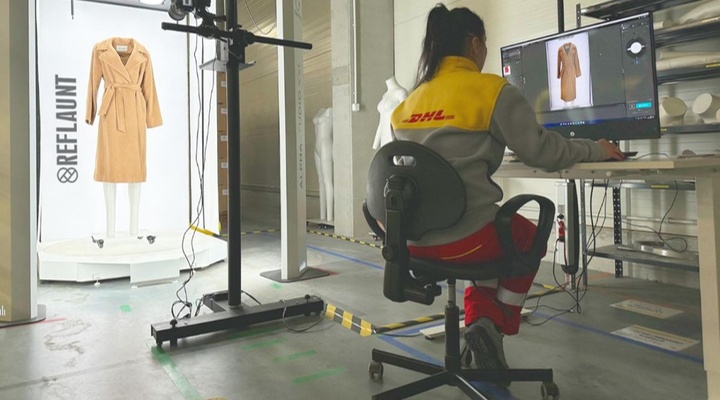
Reflaunt, a Lisbon-based technology platform behind leading fashion resale sites including Poshmark, Vestiaire Collective and eBay, as well as luxury sites such as Yoox and Saks Off 5th, is looking to bolster its logistics capabilities to improve the customer experience for brands and end users alike. Reflaunt recently announced a partnership with DHL Supply Chain that will enable it to provide existing brand partners with a fully integrated resale service. In a statement, Stephanie
hanie Crespin, Reflaunt’s CEO, explained, “For years, first and second hands have been in separate corners. You buy an item from a brand, then sell it in a completely different experience. It’s been a headache for users and brands alike.”
“Our cooperation with DHL opens the door to a seamless circular supply chain. Imagine one place handling first hand fulfilment, returns, resale management, and other end of life solutions such as recycling. That’s the game-changing expertise Reflaunt brings to supply chain operators, and teaming up with DHL is a real win.”
The rising power of re-commerce
The partnership between Reflaunt and DHL Supply Chain could not have come at a more opportune time, especially considering how the discussion around resale and its place in the retail industry is continually increasing.
From Gen Z embracing their interest in thrifting, to brands like New Balance looking to facilitate a more eco-friendly shopping cycle, the re-commerce industry has never been as strong as it is today.
According to ThredUp’s 2023 Resale Report, the second-hand goods market is expected to reach $350 billion by 2027. In the US alone, the secondhand market is predicted to reach $70 billion by 2027.
Resale has gone from being a niche consumer habit to a necessary area of consideration for retailers to consider to maintain and grow their consumer bases.
As Marie Driscoll, an expert on luxury retail and the founder and chief analyst at Driscoll Advisors, told Inside Retail, “Retailers and brands can maintain and enhance their relationships with their shoppers – and attract new shoppers too – with on-brand resale. Brands that offer online site credit for resale items often see transaction values higher than the credit and a combination of resale and new product. Resale has become part of the consumer’s consideration set when shopping.”
However, the challenge that platforms like Rent the Runway are coming across is the difficulty in turning a profit.
Due to the inconsistent infrastructure and high cost of acquiring stock and digitizing inventory, foraying into resale offerings can often be a high-effort, low-return investment for retailers.
Driscoll concurred, noting that “Many retailers and brands have been reluctant to take on the complexity of resale with likely lower price points and potentially cannibalistic to their existing online sales.”
However, that complexity also provides an opportunity for platforms like Reflaunt that promise to alleviate it.
How DHL Supply Chain and Reflaunt are fixing infrastructure issues in resale
By partnering with DHL Supply Chain, Reflaunt can tap into the logistics provider’s scale with over 1,300 warehouses and offices worldwide, and its extensive experience across various touchpoints in the fashion supply chains, from warehousing and e-commerce fulfillment capabilities.
Driscoll noted, “The DHL Supply Chain and Reflaunt partnership underscores where the consumer has already gone and will help more brands become involved in circular retail. As a trusted retail logistics partner, DHL Supply Chain is already working with many retailers and brands for e-fulfillment, omnichannel and returns and this partnership should facilitate greater adoption of the resale model by retailers and brands that have postponed resale market entry.”
However, she noted that Reflaunt is not alone in this space.
“Reflaunt is one of many resale-as-a-service providers that integrates with a brand’s product database using product descriptions and photos to simplify listing. Accessing the warehouse space and logistic facilities of DHL is a game changer,” Driscoll concluded.
Neil Saunders, managing director and retail analyst at GlobalData, also warned, “The industry is getting more crowded, as players like ThredUp have been offering their resale-as-a-service proposition for a long time, the same is true of companies like Trove. So this new venture will have to work hard to stand out.”
Introducing resale items on the sales floor
Another route some retailers are taking to resale is by introducing a combination of recently launched items and on-brand vintage items.
French company Printemps has dedicated an entire floor, dubbed “7th Heaven”, to vintage designer items, making it the biggest-ever space to be dedicated to secondhand fashion in a department store.
Printemps also offers customers a buyback program where clients can sell items for store credit.
H&M’s new store concept in New York City’s SoHo neighborhood launched this February is a more recent example, marking the brand’s first store in North America to offer a “Pre-Loved” shop-in-shop experience.
By displaying pre-loved items on the floor aesthetically alongside fresher inventory, consumers can more easily access these pieces and get a sense of what the true quality of the items is like in-person and have more confidence in purchasing pre-loved items from the brand in the future.