
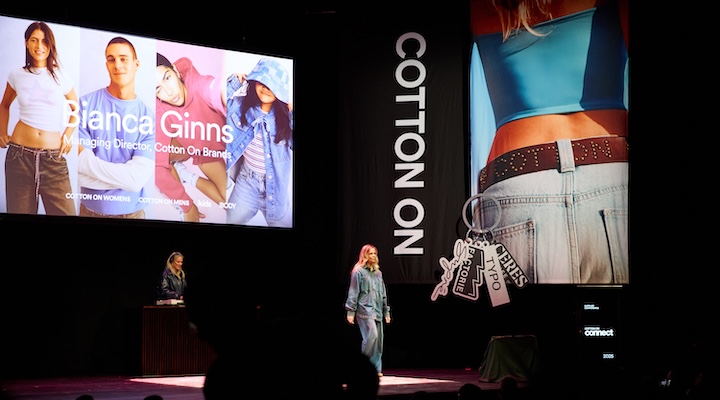
At a time of extreme disruption in global supply chains, as retailers search for workarounds to US tariffs, Cotton On Group is doubling down on its existing suppliers to help it bring better products to market faster and at a better price for customers. At its second Cotton On Connect event this year, the global retail giant welcomed 48 of its suppliers, with 150 guests travelling from China, Cambodia, Bangladesh, Vietnam, India, Pakistan and Indonesia to Geelong. The four-day event was designed
signed for the company to connect with, inspire and celebrate suppliers that have been instrumental to its success.
Inside Retail was behind the scenes at the supplier conference last month to listen in on the retailer’s growth playbook, bestseller forecasts and five-year strategy.
Growing together
Headquartered in Australia, Cotton On Group is a global retailer with operations spanning 20 countries, 1300 stores, 10 distribution centers, nine e-commerce sites and eight brands, including Cotton On, Cotton On Kids, Cotton On Body, Typo, Rubi, Factorie, Supre and Ceres Life.
However, as the retailer sets its sights on further global expansion, it needs a strong supply chain to match its ambitions. The Cotton On Connect event is intended to reinforce the importance of partnership in the company’s global strategy.
“Our suppliers are critical to our success,” Penni Donaldson, general manager of Cotton On Production, told Inside Retail. Inside Retail.
“We know how important it is for our supplier partnerships to extend beyond the transactional, working together to build strategic plans for long-term performance goals and growth for both our and our partner’s businesses,” she continued.
Cotton On Connect seeks to nurture the supplier relationships in three ways: through transparency, celebration and education.
The supplier conference – attended by both Cotton On Group team members and suppliers – commenced with keynotes from business and brand leaders, including CFO Michael Hardwick and CEO Peter Johnson, on strategies that will drive the business in FY26.
General managers of emerging brands like Typo’s Scott Druce and Factorie’s Jodie Bongetti also shared the new creative direction of their businesses directly with audience members.
Donaldson walked suppliers through the company’s supplier scorecard system, which includes its ‘14 Rules of Trade’, supplier strategy improvement program, ethical sourcing audits, sustainability and what it takes to become a lucrative ‘Diamond Supplier’.
The group also brought back its Supplier of the Year Awards to recognize the highest performing supplier partners across 12 categories: cut and sew, woven, denim and knitwear, intimates and swim, accessories and footwear, gifting, stationery and hardgoods, product, quality, sustainability, ethical sourcing and the Diamond Supplier of the Year.
While collaboration was the throughline of the conference, the end goal for Cotton On Group is clear: more seamless shipments, fewer quality control issues, better deals and potentially more viral products.
“Collaboration and the way we’re able to build resilience as one team during Cotton On Connect contributes directly to our growth and momentum as a business,” Donaldson said.
“We’re really proud of this unique event that enables us to celebrate shared success with our supplier partners and to look ahead at how we can win together,” she added.
The most obvious example of collaboration at Cotton On Connect could be seen at the product fair, where suppliers set up a trade show inside the company’s headquarters. Buying teams from each brand could attend to make deals on the floor and secure next season’s bestsellers.
The fair included hands-on workshops covering ethical sourcing, sustainability and product innovation and brand strategy sessions for suppliers on-site.
The supplier conference last week closed with a presentation from Cotton On Foundation general manager Tim Diamond, who revealed that the foundation has raised over $13 million since its inception, a reflection of the joint effort of Cotton On Group, its suppliers and customers.
The company said this positive impact wouldn’t have been possible without suppliers helping create products its customers love, which has enabled the foundation to reach more people and make a positive difference in the lives of people across the world.