ChatGPT has announced the inevitable. After revolutionising the way consumers write, search and problem-solve, ChatGPT is now ready to reshape how they shop and most significantly, how they buy. According to recent reports, OpenAI is developing a payment and checkout feature inside ChatGPT. In late April this year, OpenAI publicly introduced its shopping integration within ChatGPT search, enabling the system to serve product suggestions in response to queries like “best travel luggage un
age under $200”.
Although in early testing, this new tool will allow consumers to complete a purchase without ever leaving the chat window.
Brands fulfilling those orders would pay a commission to OpenAI, which marks a new monetisation lever for the company as it accelerates past a $10 billion revenue run rate.
The implications are tangible. Existing as part AI assistant and part virtual personal shopper, ChatGPT is moving into territory once dominated by Google Shopping, marketplaces and social commerce. And with Shopify already reportedly looped in as a potential partner, the integration of e-commerce infrastructure is well underway.
The question that undoubtedly is on the mind of every retail leader is what this means for their businesses, particularly those with a strong direct-to-consumer focus.
The human element
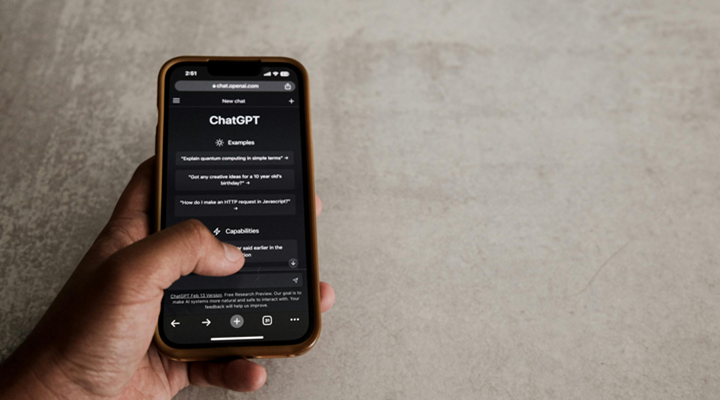
Right now, if a consumer asks ChatGPT to find them a “dress for a business awards night,” they will be prompted with an abundance of questions on the style, budget, length and colour they prefer. It then serves up a curated tile of products, pulled from local retailers, alongside review summaries and purchase links.
In the future, those links may vanish altogether with the purchase happening seamlessly inside the chat, with OpenAI collecting a commission.
Open AI’s vision is clear in its objective to reduce friction, boost conversion and turn conversation into commerce. But while consumers are indeed shopping more than ever, commerce run by AI feels more efficient, but less human.
And therein lies the problem: A recent study commissioned by commerce media platform, Criteo found that globally, 76 per cent of consumers say online shopping lacks excitement, and 29 per cent describe it as a “chore”. More than half, 61 per cent, of shoppers say they turn to online shopping purely for convenience, while a third, 36 per cent, “lament the loss of unexpected finds online”.
That tension, between convenience and connection, sits at the heart of how retailers are responding to ChatGPT’s checkout.
Changing the game
For Jordyn Evans, founder of seasoning brand Mingle, the move could create new opportunities for challenger brands. But only for those with a strong digital presence and earned media.
“It’s a really interesting shift and one that could definitely impact how people discover and shop for products online,” Evans told Inside Retail.
“If platforms like ChatGPT become a place where people both ask for product recommendations and complete the purchase, it will change the game. But it’s not going to be a level playing field,” she added.
Evans reinforces that AI pulls from online content, and the brands that show up will be the ones with strong earned media, credible press and a solid digital footprint.
“That’s where it gets interesting for brands like Mingle. We’ve always invested in storytelling, PR and building brand trust beyond just paid ads, so this kind of shift could actually work in our favour,” she said.
It’s a subtle but important distinction. In a traditional DTC model, brands have full control and design the journey, shape the message and own the checkout.
That raises questions around customer ownership, brand visibility and data access, a particular concern for small to mid-sized businesses.
“That said […] it’s still early days. We’d want to see how the user journey works, what kind of cut OpenAI takes and whether it enhances or dilutes the customer experience,” Evans said. “We’ve built a strong direct-to-consumer presence, and we’re protective of that relationship. We wouldn’t want to hand that over lightly.”
Her caution is likely to be echoed by many in the sector. Retailers have spent years building communities, websites, customer journeys and loyalty programs.
To shift even part of that experience into generative AI, no matter how sophisticated, is not a decision to make lightly.
“But if it’s done well, if it’s transparent, fair and lets us show up in a way that feels authentically Mingle, then yes, I think it has real potential.”
When is the roll-out expected?
At this stage, ChatGPT checkout is still confidential. The tech giant has not yet disclosed how commission structures will work, nor how product listings will be prioritised.
That lack of clarity presents both a risk and an opportunity.
For retailers with deep community focus, strong SEO and an investment in content marketing, ChatGPT could become a powerful new sales channel. For businesses reliant on paid media, it could be disruptive.
In Australia, few retailers have commented publicly, but it’s certain that many are watching closely. Retail giants Coles and Woolworths are already doubling down on AI across their operations, albeit with more of a logistics and in-store focus, and it’s likely only a matter of time before customer-facing use cases like ChatGPT checkout are in their plans.
The future of online retail most likely won’t be built solely on websites and apps, but built on answers, prompts and a seamless conversation between consumer and machine. Whether that’s a step forward or a step too far remains to be seen.