
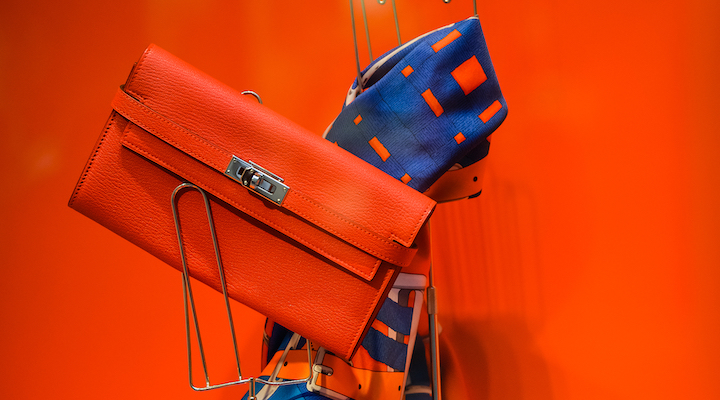
In a time when luxury brands and retailers like Kering and LVMH are struggling to hold onto the attention of both the one per cent shopper and aspirational customers alike, other players, like Hermès, have been thriving. This Thursday, Hermès reported noteworthy fourth-quarter revenue growth, lifted by strong sales in the United States and Asia. The luxury leather goods brand declared that sales of products, including Birkin and Kelly bags, silk scarves and perfume, grew by 9.8 per cent in the
in the fourth quarter in currency-adjusted terms, compared to an analyst consensus compiled by Visible Alpha of 8.4 per cent growth.
This was largely driven by sales in the Americas region, especially the United States, which rose 12.1 per cent, beating expectations of around 9 per cent, while sales in Asia, excluding Japan, grew 8 per cent.
Hermès’ full-year operating profit came in at €6.57 billion ($7.79 billion), with a 41 per cent profit margin, slightly ahead of estimates of a 40 per cent margin.
Over the last three years, Hermès has grown its annual sales by around 38 per cent, and its shares are up 36 per cent, despite the struggles facing the luxury retail industry at large.
According to Hermès’ CEO Axel Dumas, the brand is settling in for an even more successful year ahead.
“The group is going into 2026 with confidence,” stated Dumas.
The CEO noted that this year’s price increases would be around 5-6 per cent, down from 6-7 per cent in 2025, attributing the slower pace to currency movements.
Aside from price increases, multiple retail experts credited Hermès’ successful year to two major factors: the reliability of its ultra-wealthy clientele’s shopping patterns and the brand’s consistent approach to storytelling.
How Hermès’ steadfastness has successfully paid off
As Neil Saunders, analyst and managing director at GlobalData, told Inside Retail, “In the US, Hermèsis serving a very wealthy cohort of customers who are somewhat immune to general economic pressures. These individuals were very active over the holiday period, and this undoubtedly helped Hermès.”
However, Saunders noted that Hermès has also benefited from expansion, including new shops such as its latest Nashville, Tennessee, store opening in October 2025.
It was recently reported that Hermès just closed a high-priced real estate acquisition in Beverly Hills for a future store. According to real estate firm CBRE, the transaction marks the most pricey real estate acquisition in Beverly Hills since the early 2000s.
This deal further underscores the brand’s confidence in the year ahead. However, it is unlikely the store will open immediately, as current tenants’ leases remain in place for several more years.
In addition to the brand’s solid real estate presence, Saunders explained that, at its core, Hermès engineers desirability.
“Collections and marketing are carefully curated, and they are also infused with a certain joyfulness,” said Saunders. “This brand control aids sales, and the elegant simplicity of the brand is something that nudges many consumers into buying, because they know they are buying products that they will use and get wear out of.”
Building on Saunders’ comments, Christine Russo, the principal of Retail Creative and Consulting Agency (RCCA), added that Hermès’ success stems from the brand’s steadfastness.
“Over the last 6 years, Hermès did not rely on category dilution or volume-driven extensions the way some peers did. Other luxury brands arguably diluted their exclusivity by offering lower prices and less well-made items such as sunglasses and other categories,” said Russo.
In comparison, Hermès has been singularly focused on its offering, its clientele and creating the ultimate luxury experience.
While the luxury experience may be defined in many ways, in Hermès’ case, the brand has maintained the ultimate luxury characteristic, exclusivity, which has helped it to hold onto its competitive edge in this struggling market.
For as controversial as the brand’s purchasing limits are, for new and returning customers alike, there is no denying that the elusive shopping experience for Hermès’ top-tier items, like the iconic Birkin bag, has created a hunt that the more affluent are more than ready to participate in.
CI&T’s global director of retail strategy, Melissa Minkow, added, “Hermès has unwaveringly stayed true to itself- it knows its brand identity and remains aligned with its core customers’ interests through a commitment to expert, personalized customer service and specificity with assortment.
“In luxury, brand identity must be resilient and resonate flawlessly with customers, who are especially knowledgeable and precise about what they want to buy. Luxury consumer expectations are high, and in being sure not to overextend itself, Hermès has been able to be a long-term, reliably consistent brand in meeting those high expectations.”
Further reading: Hermès’ balancing act: Growth, creative renewal and investor patience