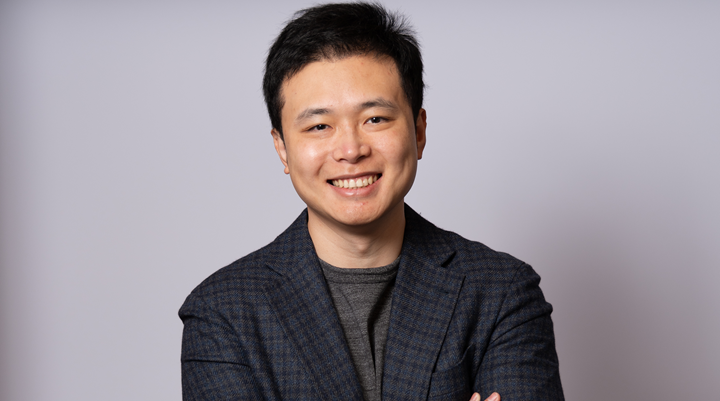
Ringo Chan’s early career involved packing phone cases, answering customer calls and storing Ebay stock in his parents’ living room until they had nowhere left to sit. Now, the Ecosa co-founder and CEO has an executive team to delegate to and sleep scientists to consult, although he admits handing over the work takes some self-control. “I changed jobs multiple times in my career within the same company,” he told Inside Retail. Headquartered in Melbourne, Australia, Ecosa has grown from C
from Chan’s first mattress in 2015 into an international sleep solutions company with a presence across Australia, New Zealand, Hong Kong, the US and Canada. This month, Ecosa was named the official sleep partner of Australia’s national women’s soccer team, the Matildas.
Since founding the brand with his brother, Chan has gone from wearing several hats to deciding which projects deserve years of the company’s attention. He’s conscious of micromanaging, enthusiastic about learning from his hires and perfectly candid about his tendency to move straight to the next goal.
In this interview with Inside Retail, Chan talks about the team he learns from, responsibilities that naturally come with brand growth and learning to give other people room to do their jobs.
Inside Retail (IR): How did you get your start in business, and what were you hoping to build?
Ringo Chan (RC): I was selling things on Ebay – mainly phone cases and accessories. Ebay, or any other marketplace, is really about price. It’s very price competitive.
Back then, I was always looking for an opportunity to sell something that we could evolve, like the iPhone, where you have iPhone 3,4,5, 6 – and then just keep building on it, working towards an empire, not just selling garbage.
IR: Where were you working from?
RC: It was a typical ‘starting in a garage story’. But for me, it wasn’t the garage, it was the living room. I used my parents’ living room to store goods until my parents didn’t have a place to sit [laughs].
Then we rented a warehouse somewhere. I think it was in Knoxville, VIC, back then.
IR: What were those early years of working for yourself like, and what led you into the mattress business?
RC: Being an entrepreneur, you really have to do everything when you don’t have a lot of people to help you. In the morning, I’d be printing orders, packing. In the afternoon, I’d be doing customer service and marketing. So, the whole lot. It’s good experience. I learned a lot of things – even now I know a bit about warehousing system logistics.
But it was a warehouse job. My back hurt, and then I thought, why don’t I invest in a good mattress? I went looking for the best mattress that a store could have.
I saw a $5000 mattress and told the team member I really only have a $1000 budget. And then he gave me ‘the look’ and said, ‘Well, if that’s the case, you’ll be looking at our cheapest range.’
I started to develop our first mattress and sell it online, and it pretty much worked in the first week. I closed down the Ebay business within three to four months, even though that was making money. I went straight into doing Ecosa. It was back in 2015. It was me and my brother, so a very small team.
IR: When you’ve taken Ecosa overseas, what has surprised you? Has something that worked in Australia fallen flat in another market?
RC: It’s not as easy to expand to another country as it is to expand within Australia. We were lucky because we won CHOICE’s number one mattress brand two years in a row, so that gave us a lot of credibility.
But the same credibility doesn’t translate in the US. People don’t know what CHOICE is in the US. We are pretty much starting from zero. But then again, we hired sleep scientists – the science behind sleep really helped. Surprisingly, no one in the mattress industry does that.
We’re building a brand, and hence we care about product quality and service. But some brands in the US are just sort of there for 6-12 months.
IR: How different is your working day now from the early days? Is there anything you still get involved in that your team could take off your hands?
RC: I’m conscious not to be too hands-on because then you’ll be micromanaging.
But I changed jobs multiple times in my career within the same company, including a lot of strategic work. We’ve been hiring; we have so many executives now, and I learn a lot from them.
I know a lot more about sleep from our sleep scientists than a year ago, because we have regular weekly one-on-one meetings and weekly team meetings. You can ask random questions, and they will give you an answer in a second – they’ve done 20 years of sleep research.
IR: What part of the job came naturally to you, and what took more work to get your head around?
RC: I think prioritizing tasks is definitely a big one, because in the business, it’s not in one tenure. You’re pretty much overseeing the whole company.
And then I’ll be thinking, ‘OK, for this quarter or for these six months, which are the things that have the highest impact and lowest effort?’ But then, more importantly, ‘is it high impact and high effort?’, because they take time and people don’t usually invest time into something that takes a year or especially three years to do.
IR: Have your ambitions changed since you started? After more than a decade of running Ecosa, what does doing well mean to you now?
RC: They definitely changed. I think anyone who tries to start up a business has a bit of passion, but then it’s more about survival, more about trying to make more money for your kids, for your family. Now I want to change, to help the community and people.