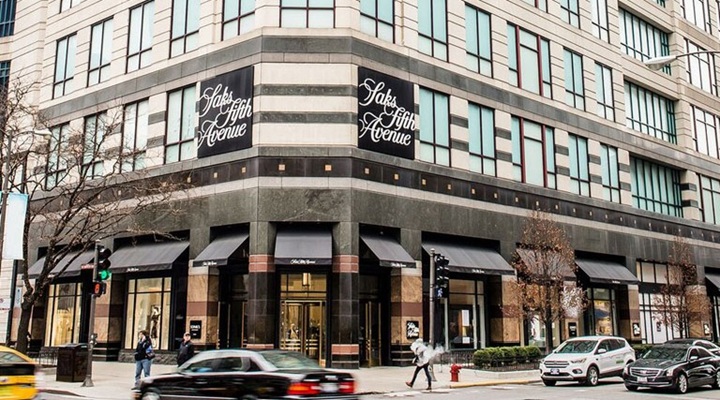
Before 2025 came to a close, retail experts were hedging bets on Saks Global’s already shaky retail play taking a turn for the worse in the year ahead. The predictions regarding Saks Global’s future remain strong, as it was revealed on January 2 that the company’s CEO, Marc Metrick, will step down from his role, capping a 30-year run with the luxury retailer. In Metrick’s place, Richard Baker, Saks Global’s executive chairman, has assumed the role of CEO. Baker’s appointm
appointment to the role comes at a tenuous time for the luxury giant, which just skipped an interest payment to bondholders that was due on December 30 and totaled more than $100 million.
Bloomberg reported that Saks Global’s bondholders are discussing a debtor-in-possession (DIP) loan structure that could include at least $750 million in new money and a roll-up of existing debt to allow the company to continue operating as it files for bankruptcy.
However, it will take more than a shift in leadership and some opportunistic financial moves to bring Saks Global back in the black.
As analyst Neil Saunders, managing director at GlobalData, told Inside Retail, “Although Richard Baker likely feels that he will be able to better direct the company through bankruptcy, changing the CEO is not the solution to the problems at Saks Global.
“In essence, the jockey may have changed, but the horse is still burdened by debt and is in no fit state to finish the race. Also, there is a degree of denial at Saks, which talks about strong industry relationships, even though everyone knows the company’s vendor partnerships are severely damaged.
“Saks really needs to undergo a major financial restructuring, which is going to be hard to accomplish and, even then, it is still in a very precarious position.”
Richard Baker is Saks Global’s stopgap, not its savior
Adding to Saunders’ remarks, Christine Russo, the principal of Retail Creative and Consulting Agency (RCCA), argued, “Since the creation of Saks Global, emotions have run high: anger over unpaid vendors, sadness to see storied institutions flail and disappointment over what could have been.”
Furthermore, she noted that news of the company’s moving on from a CEO unable to move the needle to a replacement by an industry insider and board member was met with a tepid response.
Much like Saunders, Russo remarked that Baker’s advancement within Saks Global doesn’t promise much in the way of innovation or strategic financial handling.
“Richard Baker is not an operator, but more of a deal maker. Is this the answer? No, it’s a stopgap. Baker has a legacy of closures, brand dilution and legacy dismantling. Several retail names he has controlled, including Hudson’s Bay Company and Lord & Taylor, have declined, closed or entered liquidation under his ownership or strategic decisions.”
To provide a point of comparison, Russo noted that Baker is frequently grouped with retail executives such as Eddie Lampert, who orchestrated the 2005 merger of Kmart and Sears and eventually led the combined Sears holdings into bankruptcy in 2018.
Where does Saks Global go from here?
Despite a series of steps meant to cut costs, including the closure of the iconic Neiman Marcus flagship in Dallas, Texas and plans to sell up to 49 per cent of its stake in Bergdorf’s, Saks Global is at its shakiest financial level yet.
As all this has been going on, other plans have been brewing in the shadows: the development of Authentic Luxury Group (ALG).
ALG, which was first announced in October 2024, was a partnership formed under Baker’s stewardship between Saks Global and Authentic Brands Group CEO Jamie Salter.
As Russo explained to Inside Retail, “ALG is positioned as a broad platform intended to explore luxury brand expansion even beyond conventional retail, including hospitality, real estate, digital and experiential categories.”
In addition to housing Authentic Brands Group-owned brands, such as Hervé Léger and Vince, ALG will serve as an incubator for brand growth through new strategic licensing agreements and distribution channels across sectors, including fashion, retail, digital, hospitality, real estate, art, and travel.
In a press release, Baker and Salter confirmed that Barneys New York will be the first brand positioned for accelerated growth under the ALG platform.
Additionally, the CEOs promised that ALG will extend its brands beyond fashion and into lifestyle categories, similar to the Barneys New York Residences, which opened in Tulum, Mexico, earlier this year.
“Building on our complementary strengths, ALG will further cultivate our brands by creating a multifaceted environment that reaches a broader audience through a wide range of offerings and experiences,” Salter said. “Our shared commitment to excellence and strategic vision positions us at the forefront of modern luxury.”
“With ALG, we are able to further our efforts to serve the full continuum of luxury consumers,” added Baker. “We are proud to further enhance our partnership with Authentic and leverage our collective capabilities to unlock access to new audiences and reimagine the luxury experience.”
With a model rooted in licensing, renting and intellectual property access, Russo concluded that we might be watching the ultimate rewrite of the department store model, which could leave the sector deeply altered. “If the model was restructured so the business didn’t have to purchase the product, pay the staff or pay rent and simply brought customers in because of the storied names of Saks, Neiman Marcus and Bergdorf Goodman; that could be a huge win.”
Further reading: Can Saks Global overcome its missteps and recover in 2026?