Drunk Elephant is attempting something notoriously difficult in beauty: convincing a customer who walked away to come back. Once a millennial cult favourite built on clean formulations and efficacious actives, the brand became collateral damage in the “Sephora Kids” craze of 2023–2024, when Gen Alpha descended on prestige beauty aisles clutching wish lists full of candy-coloured serums they saw on TikTok. The result was a dramatic identity crisis – and a 65 per cent year-on-year
sales collapse in Q1 2025.
How the tweens took over
Drunk Elephant never set out to court children. Founder Tiffany Masterson has repeatedly stressed that the playful packaging reflected her personal aesthetic, not a demographic strategy. But social media algorithms don’t read brand decks. The brand’s technicolor bottles became irresistible visual fodder for skin-care-obsessed tweens on TikTok, turning Drunk Elephant into shorthand for an entire cultural moment. The influx initially looked like a tailwind; by 2023 the label was Sephora’s number-one skincare brand. Yet the association came at a steep cost: older customers – the millennials and young Gen-Xers who valued clinical results over cute caps – quietly moved on.
When Gen Alpha inevitably found the next shiny thing – masstige alternatives and a fresh wave of K-beauty brands – Drunk Elephant was left stranded between audiences. Search volume for the brand has fallen 75 per cent from its January 2024 peak, according to data platform Spate, underscoring just how quickly cultural cachet can evaporate.
The “grown-up” pivot
Parent company Shiseido, which acquired Drunk Elephant for $845 million in 2019, is now betting heavily on a mature repositioning. Barbara Calcagni, president of global brands for Shiseido, describes the new campaign, debuting this month, as “disruptive and irreverent,” but decidedly adult. The tagline, “Skin so good it should come with a warning. Please enjoy responsibly,” deliberately echoes alcohol labelling, a nod to the brand name that also signals this is not a product for pre-teens.
Creative assets have been overhauled in just six months. Gone are the saturated colours that once dominated social feeds; in their place are bare-faced adult models, clinical trial callouts and hero-product-focused visuals. Calcagni insists the pivot is about clarity rather than exclusion: “Drunk Elephant has never been age-driven; it’s always been skin-needs driven”.
Can a beauty brand actually reclaim lost ground?
History offers mixed precedents. Rebrands are common in beauty – Olaplex, Bread and Boy Smells have all attempted them within the past year – but success is far from guaranteed. Huda Beauty’s 2024 overhaul, which included a new logo and discontinued product lines, showed that bold moves can re-energize a label when paired with strong founder storytelling. YSL Beauty took an even more dramatic route, wiping its Instagram feed and staging a five-day blackout to herald a new chapter.
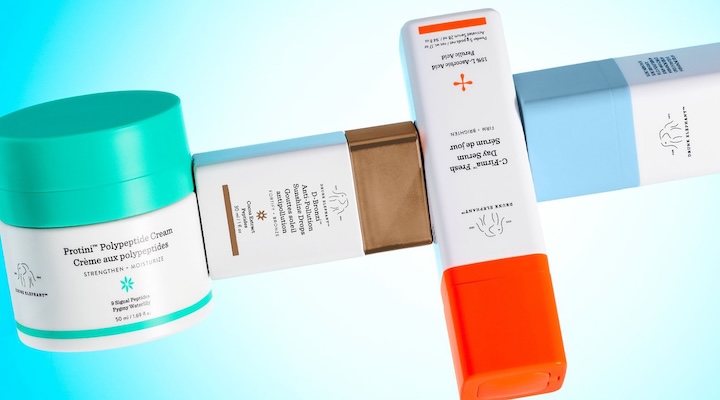
Drunk Elephant’s challenge is more complex. The brand must simultaneously distance itself from the tween association and remind lapsed loyalists why they fell in love with Protini Polypeptide Cream and T.L.C. Framboos Glycolic Night Serum in the first place. Shiseido’s Q3 2025 results hint at early progress: sales declined 19 per cent year-on-year in the quarter ending September, a marked improvement on the 65 per cent freefall six months earlier. The company has flagged new product innovations for the second half of 2026 and expects a return to growth within a year.
The verdict
Drunk Elephant’s fate will hinge on execution and patience. The new campaign strikes the right tone – clinical credibility wrapped in the brand’s trademark irreverence – but rebuilding trust with an audience that felt abandoned takes more than a tagline. Calcagni’s six-month creative sprint was impressive; the harder work is sustaining momentum in a category where consumers have endless alternatives and short memories. If the brand can deliver genuinely innovative products alongside its mature messaging, a comeback is plausible. If not, Drunk Elephant risks becoming a cautionary tale about the perils of letting someone else write your brand story.
Further reading: Shiseido, hung over from Drunk Elephant woes, slashes US jobs