September delivered another strong set of numbers from retail – with the 6.8 per cent total growth representing a solid acceleration over the prior month, as inflation continues to play an outsized role.
On a volume basis, core retail sales grew by 1.2 per cent, a respectable result given all the economic stresses and strains on households, but still significantly more muted than the headline figure.
With the overall numbers, gas stations contributed 1.9 percentage points of the total growth thanks to very hefty price increases at the pump. Historically speaking, this is a very elevated impact – and it is a more significant one than even last month when the contribution was 1.3 percentage points – which underlines the pain that consumers are feeling when filling up.
The good news is that this pain is not translating into a large retrenchment by shoppers – many of whom still seem determined to go out and spend. However, that does not mean that there aren’t some underlying shifts in behaviors.
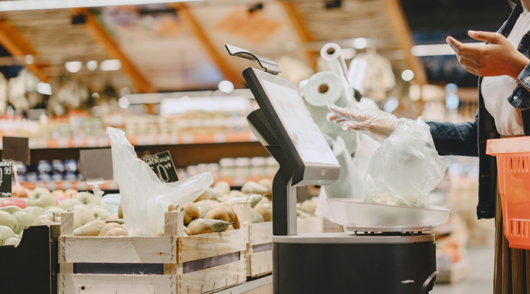
One of the most notable is the more muted growth from grocery, where consumers are being far more selective and budget-conscious than they have been for most of this year. The overall growth rate for grocery chains of 1.9 per cent in value terms translates to a 0.2 per cent slide in volumes.
This compression is also spreading to other categories outside of food like household and personal care. This choosiness, and a search to reduce spending, frees up money for more discretionary categories which, this month, were also helped along by the back-to-school period.
Sales at apparel stores rose by 5.4 per cent this month, with volumes rising by 2.1 per cent. The tail end of back-to-school was helpful as consumers snagged last-minute bargains, but so too was the transition to fall, which helped nudge more people into closet refreshes. Sluggish growth continues to be more visible in the basics and everyday segments of apparel where consumers are more focused on price and deals. As with food, the priority seems to be to free up money for more discretionary and indulgent buys.
Sporting goods stores also benefitted from a last-minute back-to-school rush, generating a 9.1 per cent uplift in sales over the prior year. However, there is also wider resilience in spending on fitness, recreation and hobbies – which a lot of consumers are prioritizing for health and wellness reasons.
Bigger ticket segments also performed well this month, with electronics stores up by 8.8 per cent and furnishings stores up by 5.3 per cent. The former is partly due to a stronger replacement cycle kicking in, boosted by some new product launches – including those from Apple. The latter was aided by some better levels of activity in the housing market where existing-home sales increased 1.5 per cent in September. This, in turn, reflected purchases negotiated during the summer when mortgage rates hovered around the more favorable 6 per cent level. That said, neither of these sharp upticks should be taken as an indication that the categories will remain on this kind of growth trajectory.
Looking ahead, the outlook for the remaining quarter of the year looks solid enough. While there is certainly some modest tightening in the depths of the numbers, it is not sufficiently pronounced as to suggest that consumers are about to retrench. They seem to have a determination to enjoy the holidays, which always gives impetus to spending. However, despite the strong headline numbers, the distribution of growth is such that the outcome of the holidays will be polarized.