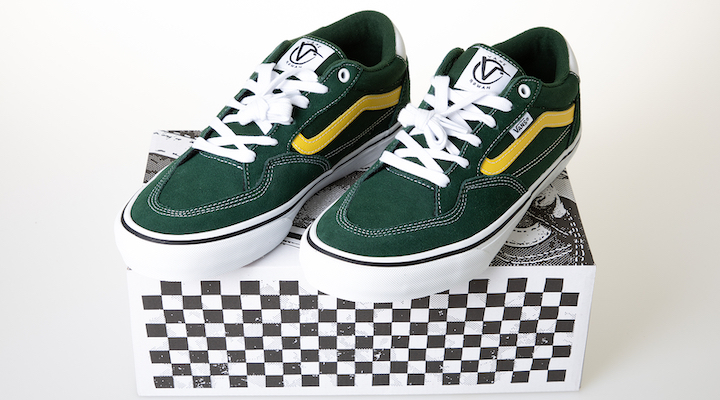
In the early 2000s, footwear brand Vans was at its peak, thanks to the popularity of skateboarding and youth culture in the social zeitgeist. But the brand hasn’t been able to replicate that success with Gen Z, recently announcing a 14 per cent year-on-year drop in Q1 sales on a reported basis amid channel rationalization actions, following a 22 per cent decline in Q4 last year. However, Bracken Darrell, VF Corporation’s president and CEO, told analysts on last week’s earnings call t
call that “things are really coming together” for Vans.
Darrel said he expects a revival in skate-inspired silhouettes, Vans’ speciality, especially considering the plethora of luxury brands showcasing these styles during Paris Fashion Week.
“I’m not suggesting that Vans will be growing 9 per cent a year from now, but I am excited to see the tide turning on skate style shoes and luxury where trends start,” Darrell said.
Closing down stores to tighten up operations
Since joining VF Corporation in June 2023, Darrell has been running an aggressive company-wide restructuring plan called “Reinvent” to tighten up operations and restore growth across the portfolio, especially with Vans.
Over the past two years, the California-born skate label closed 140 of its least profitable retail locations, representing approximately 20 per cent of its global footprint. Additionally, the brand has been hard at work redesigning the remaining store layouts, particularly those of its global flagship locations, to improve product segmentation and enhance the brand’s assortment of styles.
In the US, roughly 90 per cent of Vans’ full-price locations now feature an updated format that more distinctly separates men’s and women’s assortments and showcases new styles more clearly. This strategy has already garnered some positive results, as the brand’s pilot store on Fifth Avenue in New York is reportedly outperforming the network average, and the London store is up 15 per cent, with average selling prices 35 per cent higher.
“Based on these early successes, we’ll be rolling out our new retail playbook to improve assortment, curation and navigation to other regions,” Darrell affirmed.
Speaking of newer styles, Vans has also been changing its approach to product development under the guidance of brand president Sun Choe, who was hired in June 2024.
Under Choe’s leadership, Vans launched an unexpected, but well-received collaboration collection earlier this year, and the former Lululemon executive disclosed a resurgence of interest in vintage styles like Vans Authentic.
What experts have to say about Vans’ chances for a comeback
As Melissa Minkow, CI&T’s global director of retail strategy, told Inside Retail, “Vans is definitely the next ‘Millennial signature’ brand to go through this revamp, similar to what we saw with Gap and J.Crew.”
Minkow explained that it won’t be an easy journey for the brand best known for skate shoes, as the “footwear space has experienced a lot of disruption over the last few years between On and Hoka taking off.”
She noted that brands like Adidas are a good example for Vans to follow “in terms of owning their heritage” and “putting well-received design twists on their iconic Sambas”.
Regarding Vans’ retail moves, Minkow observed that Vans has been aggressive in the metaverse realm: “I think that sacrificed resonance with a fair portion of their audience,” she said.
She sees an opportunity for Vans to funnel its digital investment towards its website through personalization opportunities and other more consumer-engaging experiences.
“I find it strategic to reduce their brick-and-mortar presence as long as they prioritize the online shopping journey simultaneously,” Minkow added.
However, Naomi Omamuli Emiko, founder and owner of TNGE, a growth studio built to accelerate beauty and wellness brands, believes that Vans’ closure of 140 stores “signals the end of an era where nostalgia was equal to relevance.”
Emiko explained that the brand’s cool factor eroded when it scaled into mass audiences without retaining a tight relationship with its core customer.
“That not only diluted Vans’ subcultural roots in an attempt to serve everyone,” Emiko elaborated, “but also transformed an iconic brand that once stood for rebellion into retail wallpaper.”
Additionally, she said that Vans underestimated “today’s consumers’ ability – especially among younger audiences – to spot a brand that’s coasting on legacy rather than innovating while keeping its core identity intact.”
To regain cultural traction, Emiko said Vans needs to resist the urge to overcorrect with hype or heritage alone, as Jaquar recently attempted, and failed, to do.
“This reinvention window is an opportunity to rebuild desire through intentional scarcity, re-anchor in micro-communities like skate and street and create products that understand, capture and translate today’s emotional energy into desirable tokens,” Emiko cautioned.
“There’s no more space for yesterday’s graphics, because the next era of ‘cool’ won’t be inherited – it must celebrate its roots while spreading its wings into tomorrow. Brands now need to earn their relevance one subculture, one silhouette, one story at a time,” she concluded.