Despite the dramatic results of weight loss drugs, their reach could eventually cap out at just half of all overweight people it could benefit. David Ricks, the CEO of Eli Lilly, made the prediction at a conference last week, arguing that getting them into patients’ hands would be strongly affected by costs and the complexities of healthcare systems. Lilly and rival Novo Nordisk have been competing for share in the global market for wildly popular GLP-1 injectable and oral weight-loss drug
oss drugs, which analysts see topping $100 billion per year in the next decade.
Today, just one in 10 people who are overweight or obese are using GLP-1s, Ricks said at the Semafor World Economy conference in Washington.
“It’s never going to be a hundred,” he said. “For institutional reasons in healthcare and some other complexities in managing health, it’s never going to be that high.”
Ricks pointed to low-cost statins, the most commonly prescribed cholesterol medicines, as a comparable example. “Between 40 and 50 per cent of people who should be on them are on them. I think of that as maybe a ceiling,” he said.
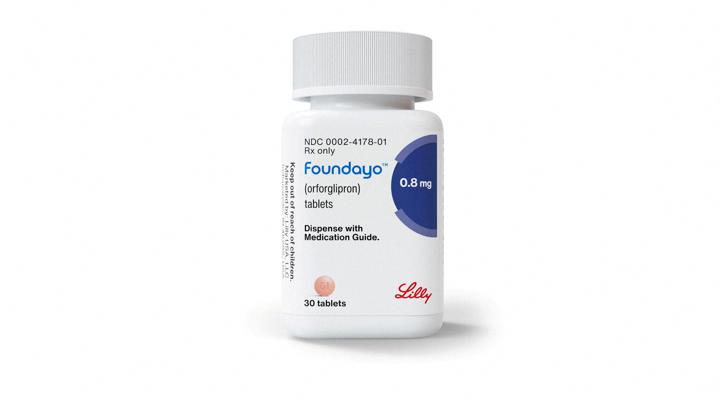
Lilly’s just-launched weight-loss pill Foundayo was prescribed 1,390 times in the US in its first week of sales, according to analysts who cited IQVIA data.
The pill will compete with Novo’s oral Wegovy, which entered the US market in January and had 3,071 US prescriptions in the first four days after its launch.
Production ramp ‘expensive and slow’
Ricks said ramping up production to meet even a 50 per cent market cap would take time. He estimated that about 500 million people worldwide are on weight-loss drugs.
“Today we’re treating 21 or 22 million,” the CEO said. “So, can we basically 20-fold that production? Not anytime soon.
“It will take a long time to do that. There is no real efficiency gain left – we’ve just got to put in more units of capacity. And we will do that, but that capex rollout is expensive and slow.”
Foundayo offers convenience to consumers who may not want to take an injectable GLP-1, Ricks said.
Obesity medicine specialists told Reuters that Americans were interested in GLP-1 pills as a lower-cost, needle-free alternative to injectables like Lilly’s Zepbound.
Price remains a key consideration for many potential GLP-1 patients, as the drugs are still cost-prohibitive to most people, the doctors said.
The self-pay price for the lowest dose of GLP-1 pills and injectables ranges from $149 to $349 per month.
“The history has been, it’s really been for people with means and not for people without means,” Ricks acknowledged. “I think we need to change that. I think it’s a moral imperative, but also it’s a cost imperative. Obesity flows with poverty.”
Further reading: How vulnerable is Eli Lilly to unbranded weight loss drugs?