
As retailers confront rising operating costs, shifting channel preferences, labor constraints, and rapidly maturing AI, a new consumer study suggests grocery shoppers are already changing the rules of engagement.
Commissioned by Morgan’s Retail Technology in partnership with Inside Retail, the report – titled The Future Shoppers Want – surveyed more than 750 US grocery shoppers to understand how expectations are evolving across in-store, click-and-collect, rapid delivery and emerging “click-and-go” journeys.
For Morgan’s Retail – the world’s first fully AI-powered retail ecosystem – the project set out to independently validate what its teams have observed across global pilots: Shoppers are demanding a grocery experience that is quicker, cleaner, more intuitive and more sustainable than the legacy models currently allow.
“We wanted to hear directly from shoppers,” says Rajeev Lee, group CEO of Morgan’s Holdings. “Retailers feel the pressure, but it’s consumers who ultimately decide what wins. The data confirms that behavior is shifting faster than most strategies are. That’s the gap we’re helping retailers close.”
Building a future-ready retail model
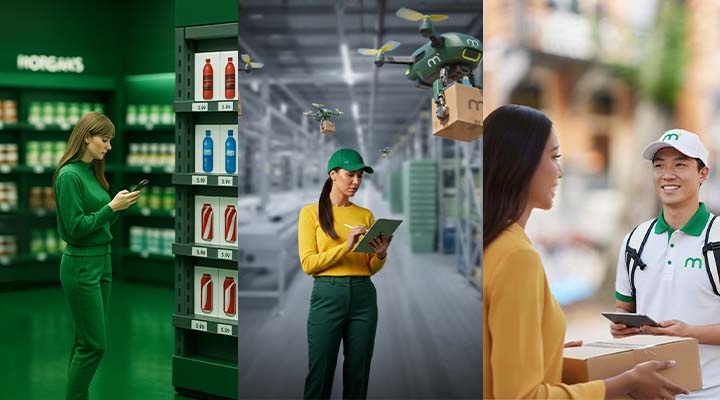
Morgan’s Retail has built significant attention globally for its end-to-end, AI-powered platform – a turnkey model that blends automation, sustainability and store design into a radically efficient operating system. With 88 per cent less capex, 99.7 per cent less opex, zero waste, zero theft and stores that generate more than 3500 carbon credits a year, the Morgan’s model is a blueprint for the next generation of grocery retail formats.
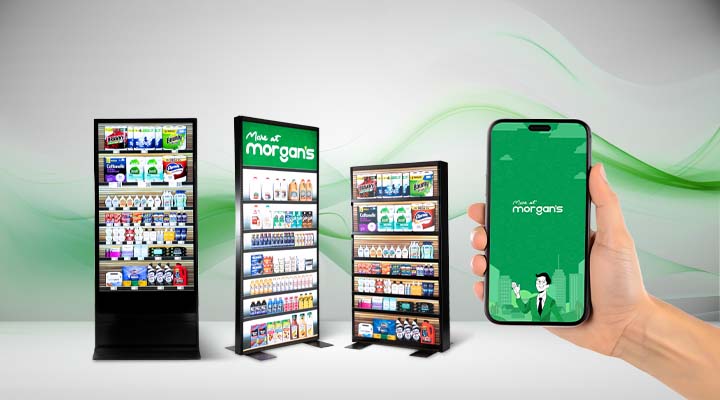
Morgan’s Retail’s stores, deployable in 48 hours and built from 100 per cent recycled materials, shrink a traditional 60,000sqft footprint to just 3500sqft while offering a broader SKU range via virtual browsing. The Customer Visualisation Unit (CVU) – a patented digital interface – allows shoppers to explore more than 30,000 virtual products with instant nutritional, pricing and sustainability insights. Combined with eye-tracking analytics and real-time behavioral signals, retailers can optimize layouts, inventory and promotions in minutes instead of months.
“We’re not replacing the human feel of shopping – we’re enhancing it,” Lee says. “Frictionless checkout, personalized dietary insights, AR wayfinding, sustainability data at your fingertips… this is what modern shoppers value. It’s the definition of technology making the experience more human, not less.”
The six signals shaping grocery’s next decade
The new consumer report distils hundreds of datapoints into six non-negotiables for retailers – and they paint a clear picture of an industry that must evolve quickly.
1. The hybrid, local mission is the new center of gravity
The classic weekly “big shop” still anchors behavior, but consumers now plan across apps, complete tasks in-store and finalize fulfillment based on convenience. Shoppers want full-range stores within 15 minutes of home and digital tools that let them plan, execute and decide on carry-vs-deliver at the end.
For retailers, this means rethinking networks and rebalancing store formats. “Location still matters, but relevance matters more,” Lee notes. “If your digital and physical experiences don’t talk to each other, you’re doubling your cost and halving your impact.”
2. Click-and-go expectations are rising fast
Across generations, scan-and-go consistently outranks queue-and-pay experiences. Shoppers – particularly those aged 25–44 – want reliable scanning, instant exits and clear safeguards if technology misfires. Retailers must treat store apps not as promotional channels, but as navigation and transaction engines.
“This is the friction point that erodes loyalty fastest,” says Lee. “If shoppers can move through your store in 15 minutes instead of 40, why wouldn’t you empower that?”
3. Precision delivery is a loyalty engine, not a value-add
Mid-life households will pay for 45-minute or same-day delivery, but are unforgiving when promises are missed. The report signals a shift towards 15-minute delivery windows, message-first substitution approval and “shop-in-store, deliver-home” options that separate physical shopping from the burdens of carrying.
“Consistency now beats speed,” stresses Lee. “Retailers that tighten accuracy and communication will outperform those focused solely on expanding capacity.”
4. Life-stage segmentation matters more than channel segmentation
Under-45s are digital power users with no patience for friction; over-55s prefer assisted, dependable, low-tech journeys. The report argues these groups effectively constitute two businesses operating under one roof – and that stores must design for both.
Fast lanes, scan-and-go, AR guidance and rapid delivery for the former; staffed service, stable layouts and human checkout options for the latter.
“Retailers should stop debating channel migration and start designing for cognitive comfort,” Lee says. “People don’t hate technology – they hate feeling lost.”
5. Automation and data must feel safe, transparent and optional
While shoppers are open to AI recommendations and staff-lite formats, almost half express discomfort if they cannot see how to get help or understand what data is being used. Winning retailers will make support visible, display running totals to reduce overcharge anxiety, and deliver AI that provides practical value – like cheaper swaps or complementary items – rather than abstract lifestyle predictions.
6. Reducing friction and reducing waste often solve the same problems
Frustrations like out-of-stocks, poor discoverability and heavy loads overlap directly with sustainability concerns. Improving inventory accuracy, list syncing, basket visibility and substitution controls reduces labor, waste and carbon simultaneously – a core principle of the Morgan’s Retail ecosystem.
“Sustainability can’t be an extra step,” Lee says. “It has to be the by-product of a system that runs smarter.”
A blueprint for the next era of grocery
One overwhelming conclusion from the report is that shoppers want a grocery ‘system’ that is quick but not hurried, digital but not cold, local but logistically strong, and intelligent without being intrusive. These consumer expectations have already arrived and will continue to evolve.
For Morgan’s Retail, the findings reinforce its belief that retailers need partners who can reduce complexity, deliver sustainable cost structures, and evolve at the speed consumers expect.
“Every retailer we speak to knows they can’t win the future with yesterday’s architecture,” Lee says. “Our role is to make advanced, AI-driven retail achievable now – not in five years. This report proves shoppers are ready. The question is whether the industry is.”