The global business-to-business (B2B) market, an ecosystem valued at over $30 trillion, is undergoing a profound transformation.
The onset of agentic AI models is driving a massive shift, with nearly 90 per cent of buyers using AI tools in sourcing and evaluation, and almost half of all online searches powered by AI. The question from here becomes: What does this mean for small and medium-sized enterprises (SMEs) as they attempt to navigate a complex trade environment and find their niche in crowded vertical markets?
Understanding the use cases for Agentic AI
With agentic AI models coming into the fold for sourcing operations, the days of simple keyword-based searches for products and partners are over. With just one search, SME decision-makers can tap cutting-edge, actionable insights to help make informed decisions around the right products to bring to market, the right sourcing partner to turn that product idea into reality, and even initiate outreach to potential suppliers.
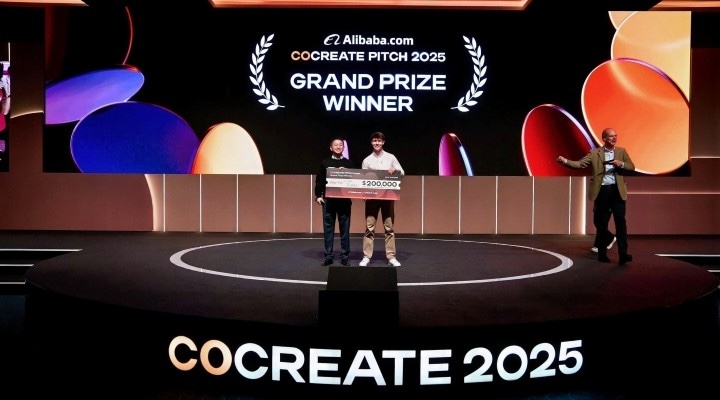
A prime example of this is Alibaba.com’s ‘AI Mode,’ powered by Alibaba International’s enhanced B2B search engine, Accio. This new application, which the platform announced at its first-ever CoCreate Europe event and will officially roll out in December, moves beyond Large Language Models (LLMs) used for simple deep search; it introduces agentic capabilities, meaning the AI system can act as a fully automated agent.
The ongoing agentic shift allows AI resources like ‘AI Mode’ to deliver actionable insights for users through capabilities such as:
- Interpreting complex queries: Agentic AI tools can understand natural language requests and analyze unstructured inputs like technical specifications, engineering blueprints, product sketches, and certification documents.
- Automating comparison and vetting: In seconds, these AI models can automatically compare suppliers across multiple, complex criteria, including pricing, logistics capabilities, production capacity, factory track records, and regulatory certifications.
- Facilitating the entire journey: By deeply connecting with other platforms and services like secure payment and Trade Assurance, Alibaba.com’s ‘AI Mode’ in particular aims to enable a fully automated trade experience, from initial discovery to post-sale support.
This level of automation drastically simplifies the procurement cycle time, lowers the barrier to entry for complex sourcing projects, and ultimately transforms the buyer’s role from a search operator into a strategic partner guiding the AI agent.
Democratizing the ‘hidden product shelf’ and diversifying supply chains
A persistent challenge in global B2B trade is the difficulty in discovering specialized, custom, or regionally-focused suppliers and manufacturers that can help SMEs deliver unique products that meet consumer demands and stand out in crowded markets. These suppliers and manufacturers – often the source of niche expertise and high potential for innovation – can be hard to find under traditional, keyword-driven discovery models, locked away on a ‘hidden product shelf.’ This challenge is only becoming greater as platforms like Alibaba.com see as much as 50 per cent increases in worldwide suppliers available to SMEs that leverage their platform.
The rise of advanced, multimodal agentic models like ‘AI Mode’ is a direct response to the global commerce industry’s need for supply chain diversification and resilience. By utilizing Accio’s enhanced search functions, ‘AI Mode’ can extract meaning from complex documentation about factory capabilities and match it with buyer requirements, thereby surfacing these previously hidden SME suppliers.
This capability is critical in the current global trade environment, where businesses are actively seeking to diversify their supply chains and move away from over-reliance on any single region. With this in mind, the rise of AI in sourcing is an enabler of trade democratization, empowering smaller businesses with unique manufacturing expertise to compete on the world stage based on their true capabilities, rather than just their search engine optimization.
The future of global trade is happening now
These intersecting trends – the shift to agentic AI and the rapid expansion of the market of untapped, specialized suppliers and manufacturers – are converging to redefine global B2B commerce. AI is transitioning from a helpful feature to the foundational layer of the industry with the rise of agentic models. This new era of AI-driven commerce promises to create a more efficient, resilient, and inclusive system of global trade, making it possible for SMEs everywhere to innovate faster and compete on a level playing field. The launch of agentic tools like Alibaba.com’s ‘AI Mode’ is only the beginning of the next chapter of cross-border trade that is unfolding.