
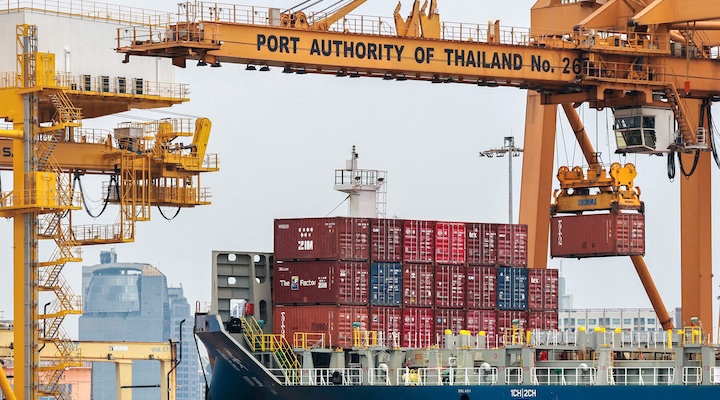
While much of the focus around the Trump administration’s tariffs has been on their effect on retail prices and on the profits of retailers in the US that import stock from China, something less noticed has been the diversion of Chinese merchandise into Southeast Asia and its effect on manufacturers, retailers and consumers throughout the region. The role of China’s neighbors, particularly Vietnam and Thailand, is transforming from trans-shipment hub to end-consumer of Chinese products
cts that previously might have found their way to the US. At the forefront of this are the usual suspects: e-commerce players like Shopee, TikTok and Temu.
This isn’t entirely new, of course: Well before the Trump tariffs took effect, indeed well before he was even elected, cheap Chinese goods flowing into Southeast Asia was a significant enough problem for local manufacturers and retailers for most of those countries to consider – and in some cases implement – ways of defending their local retailers and producers. Vietnam was a prominent example, having already banned Shein and Temu in November 2024. Indonesia had all but eliminated its de minimis limit on imported retail goods and Malaysia had started taxing low-value shipments.
The problem has been exacerbated though, as the ripple effects of the Trump administration’s tariffs wash around the region. To keep the Chinese production lines running requires that goods be manufactured on a scale that the Chinese market by itself can’t absorb, and Southeast Asia, with its proximity and massive, upwardly mobile population, is a logical outlet. A rising volume of cheap goods originating in China is entering the market, particularly on popular e-commerce and social-media platforms.
Countries in the region that were once trans-shipment conduits for Chinese exports to the US are finding themselves major end-users. Consumers are happy, of course, with lower prices, but governments around the region are bristling, countries like Indonesia are even worried that their national character is being eroded as domestic players struggle to compete.
The US is cracking down on trans-shipment, too
With the US tariffs eating away at China’s foundational position in the global retail supply chain – it’s no accident, but rather an intentional US policy – countries that the US regards as trans-shipment conduits for Chinese exports to its shores are coming under greater scrutiny in Washington. Vietnam, Thailand and others will find it increasingly difficult to fulfill any kind of trans-shipment role to allow China to get around the tariffs as the US puts pressure on them to stop acting as de facto Chinese ports. Vietnam appears to have already signed a specific agreement with the US government, in which trans-shipments from third-party countries via Vietnam will attract a 40 per cent tariff, which is twice the new 20 per cent duty on direct US imports from Vietnam. The principal ‘third party country’ being targeted is clearly China. The trade imbalance between Vietnam and the US is stupendous, with more than $136 billion of exports from Vietnam to the US in 2024 and only $13 billion being shipped back in the other direction. The 40 per cent levy would apply to merchandise to which Vietnam added no significant value, although what the threshold would be for a shipment to qualify as a trans-shipment or how it would be policed is not clear.
What is clear is that the same kinds of deals will be made by the US with other countries in the region. Although some of the details are obscure, Indonesia is another country that has already signed up to a deal like this: In exchange for a lowered tariff rate of 19 per cent, in line with the rest of the region, the US and Indonesia will, in the words of the White House press release of July 22 “negotiate facilitative rules of origin that ensure that the benefits from the agreement accrue to the United States and Indonesia, not third-countries.”
Meanwhile, in a useful application of economic leverage, Thailand and Cambodia both also got 19 per cent deals but only after their heads were knocked together by the US administration to stop their nasty little border war. It is inevitable that their role as trans-shippers will also be scrutinized closely, particularly given that both of their economies are heavily integrated with China’s.
All this, of course, means that Chinese goods have to end up somewhere, and if not in the US, then where? The buck (or rather the goods) seem to be stopping particularly in China’s regional neighbors. This delights shoppers but makes local manufacturers get their backs up.
Effects on US retail prices
While Southeast Asian governments try to figure out what to do to protect themselves from a flood of Chinese imports, the clampdown on exports from China continues to have an impact on the prices of some US retail goods, although it is filtering through slowly. The exact scale of that impact is difficult to quantify, particularly as the Bureau of Labor Statistics, which produces inflation data, is itself under heavy suspicion after it allegedly cooked the employment books for a year to make the job market look better than it actually was. In August, President Trump extended the tariff truce with China for another 90 days, meaning that tariffs on Chinese imports are now capped at 30 per cent until mid-November and will have a less disruptive effect on retailers during the upcoming holiday season.
For global retailers with a lot of exposure to Chinese imports, like Walmart, the impact of tariffs has so far proven slightly anticlimactic. CEO Doug McMillon told investors on the company’s August conference call that price increases due to the tariffs had been gradual enough that consumer reactions had been “muted”.
Likewise, major shopping mall operators have indicated that although tariffs have been a pain in the neck for retailers trying to manage their supply chains and pricing, they don’t seem to have disrupted the demand for quality retail space in centers.
It could well be that the next battlefield for China’s little tariff problem will not be in the US, but in Southeast Asia.


