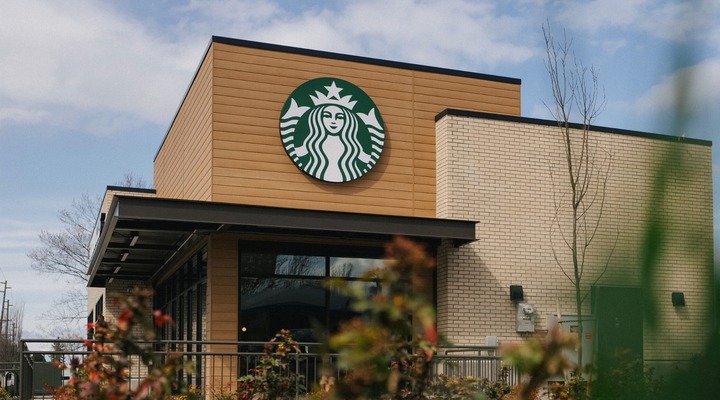
Last week, Starbucks COO Mike Grams announced plans to close 250 more underperforming North American stores. The cafes represent about one per cent of Starbucks’ 18,000 US and Canadian locations, which Grams argued either offered a poor customer experience or weren’t performing financially. This follows a similar move last year, when Starbucks reduced its store count by one per cent while investing in renovations and overhauling its loyalty program in a major turnaround push. Today, the bigg
igger question is whether pruning weaker locations will help the chain turn recent sales gains into a lasting recovery.
So far, the plan appears to be slowly bearing fruit. Starbucks has reported improvements in foot traffic and store sales over the past few quarters. In the quarter ending June 28, sales at its North American stores were 8.1 per cent higher than a year earlier, and its share price has also risen. Even so, annual net income remains well below its 2018 peak of approximately $4.518 billion, standing at $1.9 billion for the full 2025 fiscal year.
In a letter to employees released earlier this month, Grams wrote, “We remain excited about the significant long-term growth opportunity ahead in North America.”
What experts say about Starbucks’ store closures
A second round of closures in as many years might look troubling. But retail experts see the decision as part of Starbucks’ revival efforts.
“Starbucks has been getting its house in order, mainly by trying to simplify operations, improve the cafe experience, and be a bit more innovative with the menu,” Neil Saunders, managing director at GlobalData, told Inside Retail. “This is mostly working, although the business has more to do.”
Reviewing locations is part of that work, Saunders said. “Starbucks has an enormous number of outlets and some of these overlap too much, and others are in locations where traffic has changed over time. It makes sense to optimize and close stores that no longer make financial sense. The number of closures may seem high in isolation, but it’s a small fraction of the total base – so this is more of a gentle pruning than something too radical.”
Barney Stacher, CEO of consultancy Retail OCD, also cautioned against reading too much into the closures. “My first reaction is: it’s roughly 250 stores out of about 18,000,” Stacher said. “If Starbucks has confirmed those locations cannot become profitable, why keep them open? Closing them is a sound business decision, not necessarily a verdict on the entire turnaround.”
For Stacher, the more telling figure is the 8.1 per cent rise in North American comparable sales. “Customers are coming back,” he said. “The next test is whether Starbucks can deliver the experience consistently: a reasonable wait, a place to sit when customers want one, and a barista who has enough support to make the interaction feel human. Then it has to show that those gains can support healthy margins. A comeback is measured by what happens in the stores that stay open, not simply by how many stores close.”
What should Starbucks do next?
For Stacher, the next stage begins at the counter. Starbucks should measure the time from ordering to handoff, he suggested, and staff each store according to its mix of walk-in, mobile, drive-through and delivery orders. That would help prevent customers ordering in person from feeling they have joined an invisible line when mobile orders surge.
He also recommended giving each order type a clear place to go. Where layouts permit, stores could separate pickup from ordering, show order status on digital signage and give customers realistic estimates of when their drinks will be ready. That could ease crowding at the handoff counter and give baristas more time to greet people instead of repeatedly asking, “Is mine ready?”
Stacher also wants Starbucks to give customers more reasons to stay after ordering. “Comfortable seating, clean tables and a store manager with room to respond to the neighborhood are practical parts of rebuilding Starbucks as a gathering place,” he said.
Stores should be tailored to their neighborhoods rather than look identical. “Finally,” Stacher added, “Starbucks should judge the comeback store by store.”
That means asking whether customers are returning more often, waits and complaints are falling, baristas have time to recognize regulars, and each store can earn a healthy profit while delivering that experience.
The rise in North American comparable sales suggests customers are returning. Sustained growth will depend on making each visit worth repeating.
Further reading: Starbucks back on track as sales momentum returns