
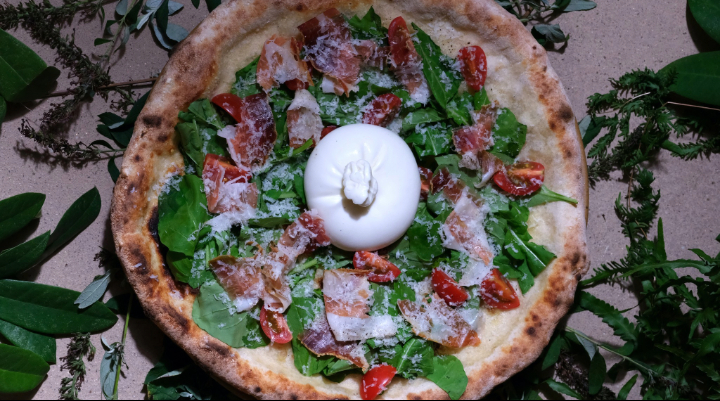
For a city that has perfected the pizza slice, hosting everything from dollar-slice joints to century-old pizzerias, the arrival of a foreign brand might seem bold. Yet Pizza 4P’s, the Vietnamese-Japanese chain known for its artisanal approach, has chosen Greenpoint, Brooklyn, as its first US location. The decision signals more than an expansion; it is a test of how a brand built in Asia can navigate one of the world’s toughest pizza markets. Founded in 2011 by Japanese couple Yosuke Masuko
ko and Sanae Takasugi, Pizza 4P’s launched its first store in Vietnam’s Ho Chi Minh City and currently operates locations across Cambodia, India, Japan and Indonesia. In 2022, Cool Japan Fund, an investment arm of Japan’s Ministry of Economy, Trade and Industry, acquired a minority stake in the company from Vietnamese private equity firm Mekong Capital for $10 million.
The founders frame New York as a “market of extremes”. Affordable slices coexist with high culinary standards, and the city’s history and culture around pizza are deeply entrenched. “Our goal is to become a truly inspiring global brand. In that regard, New York is arguably one of the most influential cities for shaping global trends and narratives,” Masuko told Inside Retail. “Since every business decision we make is driven by our desire to get closer to our vision, choosing New York as our next global lighthouse was a natural and inevitable step.”
Betting on Brooklyn: why New York
New York was not a random choice. According to the founders, the team internally identified the city as their top destination for expansion, ahead of Paris and Singapore. The success of previous international locations, particularly in Tokyo, where reservations often book weeks in advance, gave the company confidence to attempt a market with even higher stakes.
Greenpoint was specifically chosen for its creative energy and independent culture. The neighbourhood is known for small cafes, artisanal shops, and an engaged local community, all of which align with Pizza 4P’s ethos of craft and design. The brand has partnered with chef Ken Sakamoto, Michelin-recognised for his work at Cenci, to develop the menu, while interior design is led by Kiyoaki Takeda, formerly of Kengo Kuma & Associates. The goal is a space that combines culinary precision with an immersive, nature-inspired environment.
“We are approaching this New York project as the culmination of everything we have learned and built so far. Our vision is to create a space that goes beyond the traditional role of a restaurant, one that offers a value deeper than just ‘dining’,” he added.
High stakes, higher slices: taking on New York’s pizza arena
New York, however, has proven to be as demanding as its pizza reputation suggests. “The sheer cost of living and doing business in New York has been our primary hurdle,” the founder said. Construction, fit-out and staffing expenses have surged, forcing tough decisions on timing and design.
Visa restrictions add another layer of difficulty. In Asia, Pizza 4P’s routinely sends a core team of experienced chefs to oversee training in new markets, ensuring that the brand’s culture and standards are maintained. “In New York, the high barrier to entry for visas means we are currently limited in our ability to deploy the full strength of our seasoned cultural ambassadors,” Masuko explained.
Regulatory challenges have also required creative problem-solving. Raw milk cheese, a hallmark of the brand in other markets, cannot be produced on-site due to local laws, forcing the team to rely on high-quality local suppliers for curds. “While we have fortunately secured excellent dairy partners to ensure a stable supply, our ultimate dream remains to one day produce our signature cheese starting directly from raw milk, just as we do in our other global locations.”
Licensing and labour laws are equally exacting. From intricate liquor licensing procedures to strict rules on hiring practices, even minor oversights can carry serious consequences. “Adapting to these cultural nuances and professional norms is essential, yet remains a significant learning curve for us,” the founder said.
Craft, philosophy, and flavor: adapting without losing identity
Despite the hurdles, Pizza 4P’s is adapting its Vietnamese-Japanese identity for New York while staying true to its philosophy. The dough blends locally milled flour with Japanese fermentation methods, while toppings mix Vietnamese herbs with Japanese umami. The goal is not to imitate New York-style pizza but to offer a distinctive flavor profile that resonates with local tastes.
Beyond the menu, the brand’s philosophy informs every detail. “Every element, from menus to uniforms, is handcrafted to tell a story, rooted in the theme ‘What the Earth Told Me’,” the founder said. This narrative extends to the restaurant’s design and layout, which the team envisions as a “sensory gallery” rather than a conventional dining space.
The concept, called ‘Earth Child’, invites guests to reconnect with wonder and nature from the moment they enter. Skylights, plant installations, and curated art pieces enhance the immersive environment, complementing the culinary experience with a tangible connection to space, ingredients and philosophy.
“We do not view a restaurant merely as a place to eat. Instead, we envision it as a space where guests can truly feel the interconnectedness of humanity, nature and the Earth,” he said. “We call the essence of this message ‘Oneness’. Our goal is to bring this to life by sharing the stories behind our producers, our ingredients, and the craftsmanship found in everything our guests touch. However, to ensure this doesn’t feel overly ‘preachy,’ we have subtly woven these expressions throughout the space, allowing guests to intuitively sense what the Earth and nature have taught us.”
In a city full of iconic pizza brands, the company is positioning itself as more than a restaurant. Storytelling, artisanal craft and immersive design aim to create an experience rather than a transaction, a place where diners leave with a sense of wonder, curiosity, and appreciation for craft.
Currently operating 42 restaurants across Asia, with a target of 100 by 2030, further US expansion will depend on the Brooklyn location’s reception. For now, New York is the ultimate proving ground. The city will test whether a Vietnamese-Japanese approach, grounded in craft, philosophy, and design, can find a foothold in one of the world’s most exacting culinary capitals.
“Our humble hope is to provide an experience that truly moves our guests, leaving them with a sense of wonder and perhaps even a touch of ‘impact’ that they haven’t encountered elsewhere. We believe that if our message resonates deeply enough to spark conversations that spread naturally around the world, that would be the truest definition of our success.”
Further reading: Domino’s revamps its brand. Here’s the new look