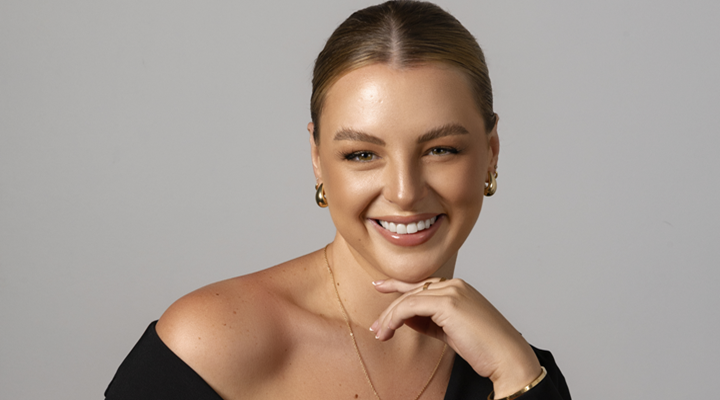
In a fashion industry crowded with sameness, Fayt has grown by privileging something far less measurable, emotional proximity. The brand’s trajectory has been defined by a founder who chose early to collapse the distance between business and customer and then built systems to protect that closeness as the company scaled. Founder and CEO Brittney Saunders has led Fayt through eight years of growth by resisting the idea that community, inclusivity and commercial discipline sit in opposition. I
ion. Instead, they operate as mutually reinforcing levers shaping product, leadership structure and decision-making cadence.
In this interview with Inside Retail, Saunders reflects on the early instincts that set Fayt’s course, the leadership recalibrations required as the business expanded and how she thinks about growth without losing grip on brand, culture or customer trust.
Inside Retail (IR): Fayt has grown into a highly engaged, community-led brand in a crowded fashion market. Looking back, what were the early decisions or instincts that most directly shaped the business Fayt has become today?
Brittney Saunders: One of the biggest ones was choosing to build Fayt as a community-first brand from day one, not just a clothing brand. I didn’t want people to feel like they were just buying a product. I wanted them to feel like they belonged here. So we treated customers like they were part of the brand, not separate from it. We listened obsessively, we talked back, we built things with them in mind and we made them feel seen. I shared my business journey organically in real time.
Another massive early instinct was inclusivity being non-negotiable. Sizes 6 to 26 wasn’t a ‘later down the track’ goal. I wanted women to shop together and feel good together, not have it be this separating experience where one person misses out. That decision shaped our customer base, our culture, our brand voice, everything.
I also made the decision early on to be very hands-on with our tone and customer experience. I cared deeply about how Fayt made people feel, not just what it looked like. Everything from how we communicate online to how someone feels in store. That’s why the brand is so emotionally connected to people, because we’ve always treated that part as important, not just a ‘nice extra.’
And then there was the obsession with feedback and speed. If customers didn’t like something, we didn’t get defensive, we got curious. We moved fast, improved quickly, fixed issues, made changes, and never acted like we were above learning. That mindset created the brand trust we have today.
IR: As both founder and CEO, how has your leadership style evolved as the business scaled? What rituals, structures or non-negotiables help you stay close to the customer while running a growing operation?
BS: My leadership style has changed a lot as we’ve scaled, mainly because it had to. Early on I was in every decision, every detail and if I’m being honest, I cared way too much about being everyone’s friend vs being an actual boss and leader. That worked when Fayt was small, but it doesn’t work when you’re running a big team with stores, warehouse, HQ, online, marketing, everything. If I stayed the same kind of leader, I’d actually be the bottleneck.
So the biggest evolution has been moving from ‘I do everything’ to ‘I build people who can do everything.’ I’ve had to get way better at delegating, trusting, and not micromanaging. And also being really honest with myself about what I should be spending my time on as CEO versus what I’m just doing because it’s familiar or I’m good at it.
I still care deeply about the details, but now my job is setting the standard and building the structure, not being the structure.
In terms of rituals and non-negotiables, the biggest one is that I never want Fayt to become one of those brands that grows and suddenly forgets who it’s for. I stay close to the customer in a lot of ways, even 8 years in.
One, I’m constantly in our community. Fayt Society, DMs, comments, customer feedback, even complaints. I don’t hide from it, I actually like being in it because it tells me what’s real. You can’t lead a customer-led brand from a spreadsheet.
Two, I’m obsessive about fit and feedback. I care so much about how the clothes make women feel, not just how they look on a model. That’s been a core part of Fayt since day one and I still personally stay across the product in a big way. Not in a controlling way, more in a ‘this is the heartbeat of the brand’ way. Most people are shocked when they find out I am the buyer of all of our stock at Fayt.
Three, I’ve put structures in place where the customer voice isn’t dependent on me. So it’s not like, ‘if Brittney sees it, it gets fixed.’ It’s built into our culture and expectations. Team members bring problems with solutions, we review feedback constantly, we look at patterns, we act quickly. That’s how you scale without losing what made you special.
And then personally, I’ve got a few non-negotiables around protecting my energy because if I’m burnt out, I’m useless to everyone. I’m really big on clear priorities, a strong leadership team, and staying in my lane. My lane is vision, brand, creative direction, big decisions, and culture. If I’m spending my day on tiny tasks, I’m not doing my actual job.
IR: Fayt’s approach to sizing, fit and inclusivity has been commercially meaningful, not just values-led. At what point did you determine this was a strategic advantage and not a risk, and how has it influenced product and inventory decisions?
BS: To be honest, I never saw inclusivity as a risk. In fashion, including more women is just common sense. The idea that making clothes for more people is somehow ‘brave’ or ‘dangerous’ has always been weird to me.
From the very beginning, I knew sizing and fit would be a competitive advantage because most brands were either ignoring a huge portion of women, or doing it as an afterthought. And women know when they’re being treated like an afterthought. So we made the decision early that sizes 6 to 26 wasn’t a collection add-on, it was the brand. I will say – it wasn’t something I did overnight. I slowly added size by size as my business grew.
The strategic advantage became really obvious once we saw the customer response. The loyalty, the repeat purchases, the way customers talked about Fayt, and the fact that women could shop together in the same store, same drop, without anyone missing out. That emotional connection is powerful, and commercially it shows up in everything.
In terms of product and inventory decisions, it impacts literally every step. We don’t just grade patterns and hope for the best, fit is a major focus. We test, refine, and make changes based on real feedback. I’ve lost count over how many items we’ve tweaked over the years based on our customers feedback and I’m not ashamed of that whatsoever, I’m proud of being a reactive brand – even if it’s our customers coming to us saying “these pants don’t fit right” – I’ll fix them. We also buy with real intent across the full size curve, not just token units. Because there’s no point ‘offering’ inclusive sizes if you’re not actually backing it with stock levels and proper fit development.
It’s definitely values-led because that’s just who we are, but it’s also smart business. When you genuinely serve more women and make them feel good, they come back. And they bring their friends too.