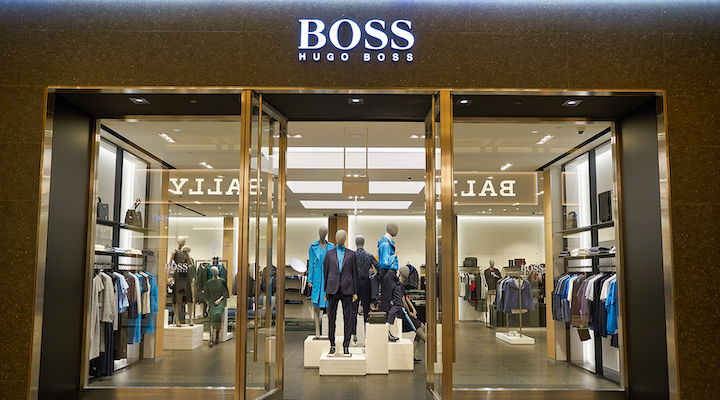
The German fashion giant Hugo Boss is continuing with its strategy of purposely shrinking its business to ensure future growth. The company has reported falling sales and profits, but its chief executive, Daniel Grieder, insists the “deliberate” tactic will pay off and, for now, analysts and investors have his backing. On the surface, though, performance looks bad. On May 5, the business released its Q1 report, revealing that sales had fallen significantly over the past quarter. First-quarte
rter sales reached $1.06 billion, marking a 6.1 per cent decrease from the year prior, and were accompanied by a 42 per cent fall in earnings before interest and tax (EBIT). Breaking things down by brand, sales at Boss declined by three per cent over the past quarter, while sales at Hugo dropped 21 per cent.
Retail sales also declined, with brick-and-mortar transactions down 2 per cent as Hugo Boss continued efforts to enhance store productivity, while wholesale sales dropped 10 per cent.
The company attributed the declines in both retail and wholesale sales to its “continued focus on distribution excellence”, which included closing 15 freestanding stores globally and being more selective about assortments and wholesale partners. On a more positive note, the brand’s gross margin improved 1.1 per cent to 62.5 per cent, primarily driven by sourcing efficiencies, while operating expenses declined by four per cent, largely due to lower selling and marketing expenses. Additionally, Hugo Boss’s total customers grew by 20 per cent year on year in Q1 to almost 14 million.
Investors remain optimistic, with Hugo Boss shares rising by about five per cent during morning trading in Germany on May 5. As of now, currency-adjusted group sales are expected to decline by the mid-to-high single digits, while EBIT is expected to range between €300 million and €350 million (approximately $408 million to $476 million).
“We made tangible progress in implementing our targeted brand and channel realignment, including streamlining product assortments and refining our global distribution footprint,” said Hugo Boss CEO Daniel Grieder.
“As expected, these deliberate actions are reflected in our top-line performance and mark the first concrete steps in structurally refocusing the business and strengthening long-term earnings quality… Against this backdrop, we focused on what lies within our control and moved decisively into the execution phase of Claim 5 Takedown.”
Hugo Boss’s ongoing “Claim 5” comeback plan
If the brand’s current comeback plan sounds familiar, it is because Hugo Boss originally introduced the strategic mission, “Claim 5”, in 2021 under then newly appointed CEO Grieder. The brand refresh and new marketing campaigns officially launched in January 2022.
Hugo Boss reported some success with Claim 5, saying it helped double the company’s revenue to more than €4 billion (approximately $4.7 billion) by 2023, two years ahead of its 2025 goal, while also boosting brand relevance among younger consumers. In December 2025, Hugo Boss introduced Claim 5 Touchdown as an update to its original 2021 strategy, focusing on improving brand distribution and operational excellence to achieve profitable growth by 2028.
Just a month after the updated comeback plan was announced, Hugo Boss disclosed that it was establishing a new organisational structure. One major move the brand has made since announcing its updated comeback plan was setting up a new organisational structure to ensure gender-specific expertise across all brand and product areas.
As part of this transformation, former Adidas and Tory Burch executive Kerstin Dorst was hired in January for the newly created role of senior vice president of the women’s businesswear unit. This is particularly notable because the brand said it would be zeroing in on womenswear sales as one of its main growth areas and would later this year release the first collection from its revamped womenswear line.
Experts say a slow but steady pace could help revive Hugo Boss
As Neil Saunders, managing director at GlobalData, told Inside Retail, Hugo Boss’s sales decline is only a temporary setback in a broader plan to win back market share.
“On the surface, the results from Hugo Boss don’t look all that good,” said Saunders. “However, the company has deliberately engineered the decline so that it can become more focused in what it sells and where it sells. The aim is to have a clearer identity around a more tailored look and to reduce exposure to channels that don’t convey the quality position that Hugo Boss wants. The results can partly be seen in the improved margin numbers, and this is something that will likely strengthen over the balance of the year.”
Saunders said we’ve seen a similar playbook used by brands like Coach and commended Hugo Boss for slowly rebuilding relevance rather than rushing to profitability, only to later burn out and potentially damage its premium image. Mario Pace, longtime retail strategist and vice president of business development for Cupshe, echoed Saunders’ positive assessment of Hugo Boss’s slow-but-steady approach.
In a LinkedIn post, Pace stated, “The ability to decline misaligned growth is not a luxury; it’s a survival skill. Despite this challenging [financial] situation, their leadership has not wavered, reaffirming guidance for the full year and committing to their ‘Claim 5 Touchdown’ strategy.
“Often, the most critical impact of having a clear strategy lies not in what it instructs you to do, but in what it allows you to stop doing. Organizations that will thrive in this era are those that do not say yes to everything but master strategic execution and the power of saying ‘No, not this’ or ‘No, not now’.”
Further reading: David Beckham seals multi-year partnership with Hugo Boss