Roughly two years after Richard Dickson was appointed CEO of Gap Inc, the corporation’s Q2 report revealed that he delivered on quite a few of his promises to revive the company’s image through ‘fashiontainment’ and updated product offerings. The report revealed a 1 per cent increase in overall sales, to $3.73 billion, and a sixth consecutive quarter of positive comps. “In the second quarter, Gap Inc overdelivered on profit expectations and achieved our topline goals,” Dickson said
n said. “With positive comps for the sixth consecutive quarter, fueled by our three largest brands – Old Navy, Gap and Banana Republic – it’s clear our strategy is working.”
In addition to the three brands mentioned above, Gap Inc also owns Athleta.
GlobalData’s managing director Neil Saunders said the results show that US-based Gap Inc has passed an ‘acid test’, noting that the corporation “started to lap tougher comparatives from the prior year during a period when the apparel market was a little more discount-driven and value-focused”.
Saunders elaborated, “Given the numbers and the now-established recovery, it is fair to say that CEO Richard Dickson has made a difference. He and his management team have injected significantly more energy into the business as a whole and have given those who work there permission to think more boldly and ambitiously about the company and its future.”
How Gap pulled itself back into cultural relevancy
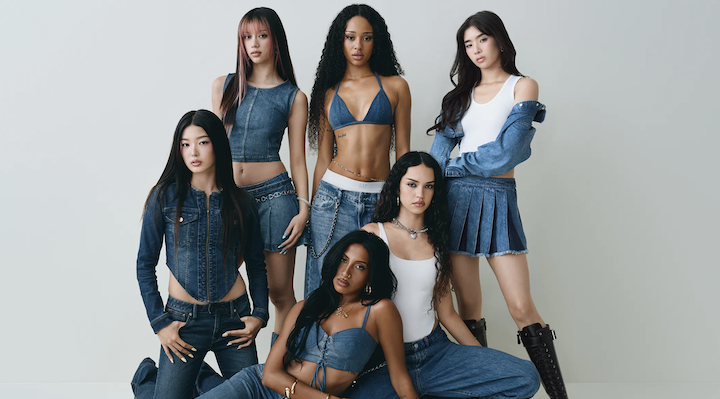
Christine Russo, the principal of Retail Creative and Consulting Agency (RCCA) and the host of the retail podcast “What Just Happened”, pointed out that Gap’s latest marketing campaigns, such as the ‘Feels like Gap’ campaign fronted by “White Lotus” actress Parker Posey, and the ‘Better in Denim’ campaign, featuring the girl group Katseye, played a role in updating the company’s image.
Russo told Inside Retail that Gap’s approach to consumer relevancy has been “fast and furious” and proves that psychographics matter more than demographics, with no generation getting left behind.
“From Gen X to Gen Z, Gap has something for everyone; from dressing celebrities for the Met Gala or couture events, such as Ann Hathaway’s denim dress for a Bulgari event, to generation-agnostic ad videos that break the internet. It all feels like both a throwback and modern,” Russo reflected.
Saunders said it would take time for the social significance of the campaigns to translate into sales, but they have already accomplished the important goal of helping to improve the visibility of the brand, attract younger shoppers, and increase the lifetime value of Gap’s customers.
He pointed out that Gap has also updated its image through its recent store design efforts.
“At the Gap brand, many stores now look more interesting and have a better style profile in terms of the product and the way it is merchandised. We think there is much further to go here but, nevertheless, we appreciate the steps Gap has taken to put an end to years of blandness,” Saunders concluded.
A breakdown of brand performance within Gap Inc’s portfolio
While it’s clear Gap Inc’s namesake brand has refreshed its image, the corporation’s Q2 results showed that some brands performed better than others, indicating there is still work to be done, particularly with Athleta.
Saunders noted, “At a divisional level, Gap and Banana Republic led the way, each producing a 4 per cent uplift in comparable sales. Banana Republic’s reset gained more ground in the quarter, especially since many of its vacation-inspired styles were suited to the warmer weather and were on point in terms of consumer tastes.”
Banana Republic benefited from buzzy collaborations, such as its recent tie-up with “The White Lotus”, which Russo described as a “fashiontainment moment right in Dixon’s product/movie/collab wheelhouse from his Mattel days”.
Meanwhile, Saunders observed that Old Navy produced a 2 per cent uplift in comparable sales, “which is solid in a market that was dominated by quite a bit of trading down”.
Like Gap, Old Navy benefited from removing irrelevant products and the jumble of signs that used to pepper stores.
“The result is a much cleaner and easier shopping experience that is better able to highlight value for money – something that is resonating with the family shopper,” Saunders said.
Both Saunders and Russo concluded that the weak point in Gap Inc’s Q2 results was Athleta, which experienced a 9 per cent decline in comparable sales.
“The brand still feels tired and does not cut through enough in a market that is now saturated with athleisure players,” Saunders said.
While tariffs have affected margins and will continue to do so in the months ahead, the GlobalData team predicted that Gap Inc’s sales trajectory should remain intact and remain in growth territory for the balance of the year.