
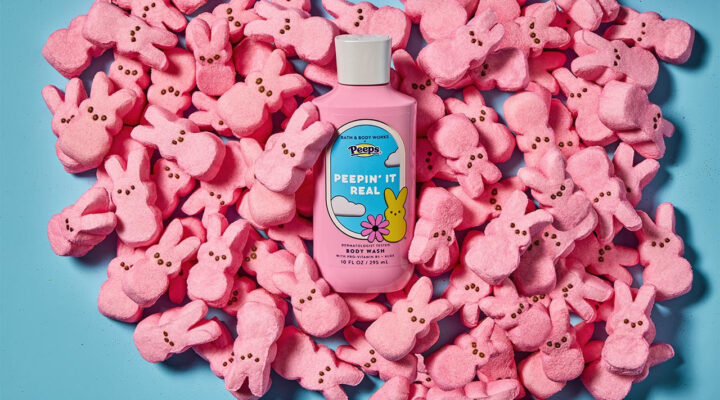
Personal care and home fragrance brand Bath & Body Works has had some unsatisfactory numbers to share. In its Q4 fiscal report, the brand revealed that its net sales reached only $2.7 billion for the quarter ending January 31, 2026, a decrease of 2 per cent from $2.8 billion for the quarter ending February 1, 2025. Additionally, the brand reported net income of $403 million, an 11 per cent decline from the year-ago quarter. These results are disappointing but understandable, given that Bath
th & Body Works just launched a transformation plan to revitalize the brand and drive long-term growth by 2027, dubbed the “Consumer First Formula”.
“We are making progress, but transformations of this scale take time,” said CEO Daniel Heaf. “We are undertaking a comprehensive, end-to-end evolution of our business – building a Bath & Body Works that is more innovative, more relevant, and easier to shop. This work lays the foundation for sustained, long-term growth as we reposition the company from a specialty retailer to a premier global brand.”
However, retail and beauty experts are mixed on whether the “Consumer First Formula” is enough to turn Bath & Body Works into a “premier global brand” as Heaf is promising.
What happened to Bath & Body Works?
Regardless of how strong a brand’s legacy is, name recognition alone won’t sustain profitability.
As Neil Saunders, analyst and managing director at GlobalData, told Inside Retail, “One of the interesting things about Bath & Body Works is that while it executes extraordinarily well, it has struggled to generate meaningful growth over recent years.” The brand’s revenue, he added, has been in deep decline since 2022, with the last quarter’s total sales dipping 2.3 per cent across both stores and online. “While these are not catastrophic dips, they are disappointing during the critical holiday quarter when both home scent and body care are categories that are high on the purchasing agenda.”
From GlobalData’s perspective, the softness stems from two factors.
The first issue arose during the pandemic. During this time, Bath & Body Works experienced significant sales growth – a 47.1 per cent increase between 2019 and 2021. As the already dominant player in categories like candles and shower gels, it effectively pushed penetration closer to its natural ceiling, which became much harder to maintain as retail space began to normalize again.
The second issue stems from competition. While Bath & Body Works remains popular, its customers are shopping around more, and the volume they buy from rivals has increased. GlobalData’s research revealed that in 2022, 48.7 per cent of Bath & Body Works’ candle buyers cross-shopped with other retailers. In 2025, that figure had climbed to 61.4 per cent – a rise of nearly 13 percentage points in just three years, with similar dynamics applying to body care categories.
Against this backdrop of added competition, from big-box brands and indie retailers alike, there lies the question of whether Bath & Body Works is doing enough to defend its share and drive gains – and the answer from the company’s management gives a firm “no”.
“The solution to get back on the front foot has two dimensions,” said Saunders. “The first is about meeting the customer where they are shopping. This is why Bath & Body Works has decided to sell through Amazon. This is both defensive – to ensure it is present where its customers are, and offensive – to get in front of new audiences.”
While there is some risk that this will cannibalize sales from the firm’s own direct channels, there is potentially more to gain than to lose. Additionally, as Bath & Body Works will only be selling a portion of its range on Amazon, it leaves its own channels as the true authority across its core categories. “The other side of the solution is to be more innovative, especially in personal care categories,” added Saunders.
While Bath & Body Works is quite innovative in terms of fragrance and collections, the focus will need to shift toward more scientific innovation in product efficacy, clean formulations, and addressing skincare and wellness needs. Bath & Body Works can deliver on this, but will need to showcase it in a clearer, more compelling way.
“These pivots will take time to materialize,” said Saunders. “However, the moves being made are essential as competition is intensifying as more players crowd into the space and retailers like Target look to significantly invest in their home and beauty offerings.”
Meanwhile, CI&T’s global director of retail strategy, Melissa Minkow, argued Bath & Body Works does have some of the proper ingredients needed for a turnaround.
“It’s a millennial nostalgia brand, and it has great products,” she said. “I’d like to see their digital channels feel more modern and explore more personalization opportunities, including the ability to create custom fragrances. Bath & Body Works also really needs to invest in a specific hero product. They exist in a category that is thriving if you look at smaller businesses in the space. There is a lot of consumer interest and opportunity here.”
How Bath & Body Works can connect with consumers once more
Kimber Maderazzo, a professor of marketing at Pepperdine Graziadio Business School and a veteran beauty industry expert, said that Bath & Body Works can regain its star power by focusing on its original standout traits.
“Bath & Body Works built one of the most powerful fragrance businesses in retail by making scent an everyday experience rather than a luxury purchase,” she said. “The brand succeeded because it understood its consumer deeply and translated fragrance into rituals across body care, home fragrance and gifting, all at an accessible price point.”
However, the brand fell off when it expanded and layered too many products, promotions, and launches over time, making the overall experience overwhelming for shoppers. “The strategic opportunity now is to return to that consumer-first mindset by clearly defining its core customer and designing products and in-store experiences that feel joyful, sensory and discoverable,” said Maderazzo. “Their ‘Consumer First Formula’ strategy signals an important step in that direction, particularly with its focus on returning to core categories and simplifying the assortment.”
The veteran beauty expert also suggested that a more disciplined approach to product innovation and storytelling could help refocus the brand around the scent experiences consumers love most. “When Bath & Body Works leans back into fragrance leadership and accessible indulgence while modernizing how the brand shows up in stores and online, it has a real opportunity to reconnect with a broad consumer base and reclaim the category leadership it once defined.”
Further reading: Can new CEO Michael Fiddelke revive Target’s profitability in light of Q4 results?