
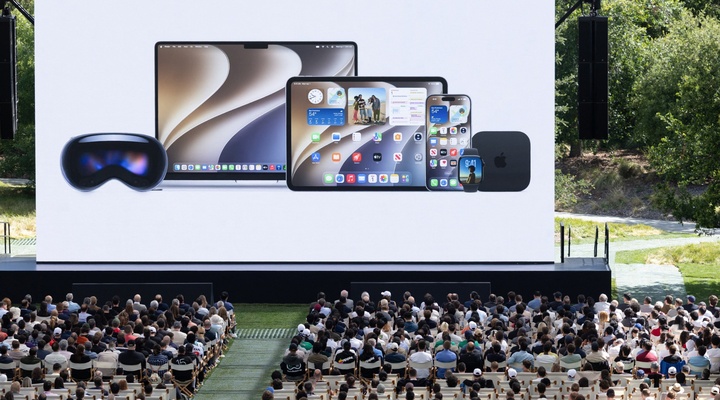
After years of falling behind AI rivals such as ChatGPT and Anthropic, Apple is betting a long-delayed revamp of Siri can reaffirm its position as the world’s number one consumer technology company. The business used its annual Worldwide Developers Conference on Monday to unveil a more conversational assistant capable of understanding on-screen content, recalling past conversations and drawing information from the web. Apple said users would be able to revisit past Siri conversations, while th
hile the assistant can locate details such as an address mentioned in a message, even if it was never formally saved.
The changes mark Apple’s most significant attempt yet to revive Siri, which has struggled to keep pace with rivals which have moved faster to embed “agentic” AI – or software that can carry out complex tasks – into everyday computing. The update, though, comes two years after Apple first promised major upgrades that were repeatedly delayed.
“Some appear to be racing forward, seemingly pursuing AI for the sake of AI, without clear regard for the people, all of us, that it’s ultimately meant to serve,” Apple software chief Craig Federighi said in his keynote speech, alluding to rival AI developers.
Apple has taken a different approach from rivals in how it builds those AI features: while competitors are pushing toward fully autonomous “agents,” Apple has largely avoided that framing. Instead, it emphasizes practical features integrated into everyday tasks.
“This finally delivers on the promise of Siri from 15 years ago,” said Bob O’Donnell, president and chief analyst at TECHnalysis Research. “It’s AI for the masses; it’s not really agentic,” O’Donnell said. “For a lot of people, this is the kind of smarts they’re looking for.”
Still, the early reception from analysts was measured. The updates were not “earth-shaking” but should make Siri “a credible chatbot and possibly a credible agent,” said MoffettNathanson analyst Craig Moffett.
Apple shares closed 1.9 per cent lower at $301.54 on the Nasdaq on Monday.
Smarter “Siri AI” raises some privacy concerns
Apple is also leaning on partners to power parts of its AI push. It said some of its models were built using Google’s Gemini technology, while larger models will run in cloud infrastructure using Nvidia chips.
At the same time, Apple stressed that personal data would remain private, with most processing done on users’ devices or through its own system designed to shield data from outside access.
But for Siri AI to be able to monitor what is happening on a user’s screen and inside apps, Apple needs greater visibility into a user’s digital life. “That creates an inevitable tension between convenience and privacy,” PP Foresight analyst Paolo Pescatore said. “The challenge for Apple is convincing consumers that intelligence does not have to come at the expense of privacy.”
Siri AI, Apple said, can help users search through messages and emails, and has on-screen awareness that allows it to answer questions immediately related to the content on a user’s screen.
Images and searches with the new Siri AI will be saved to a new freestanding app available across iPhones, iPads and Macs, synced together with Apple’s private cloud computing technology. Other AI capabilities are executed entirely on-device, Apple said.
Apple has been in the crosshairs of the European Union’s Digital Markets Act, with regulators pushing for the company to open up its ecosystem.
The company said that due to privacy and security concerns, Siri AI will not be available “initially” in the EU on iPhones or iPads. Apple added it will not be available in China as the company works through regulatory issues.
New child-safety updates
Beyond Siri, Apple announced a slate of smaller updates, including new child-safety controls that allow parents to manage the apps, websites and contacts their children can access. Messaging apps will blur graphic images by default and alert parents, expanding earlier safeguards focused on nudity.
The company also introduced upgrades to its image-generation tools and added AI features to its Safari browser, such as checking whether items are back in stock on a website.
Reporting by Stephen Nellis and Kenrick Cai in Cupertino, California. Additional reporting by Deborah Mary Sophia and Harshita Mary Varghese in Bengaluru. Editing by Sayantani Ghosh and Matthew Lewis. All courtesy of Reuters.
Further reading: Apple forecasts double-digit Q3 growth, sending its stock price soaring