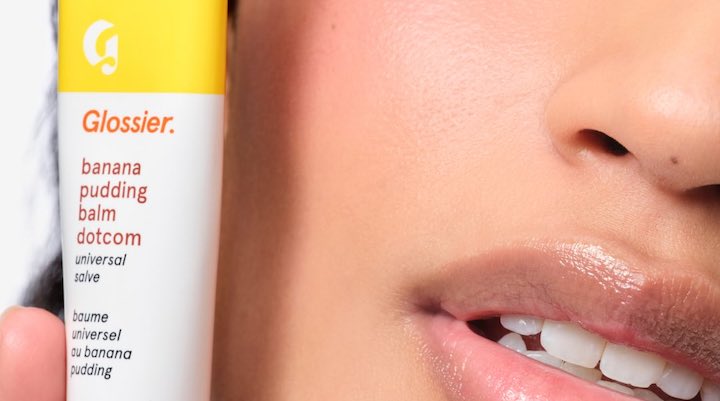
What is going on with Glossier? Between the departure of multiple senior leaders in the business and its recent launch on TikTok Shop, some in the industry are questioning whether the millennial-favored beauty brand is repositioning itself for a new stage of growth, or struggling to retain relevance amid rising competition from the likes of Rhode. Last month, Glossier announced that its CEO Kyle Leahy will resign from her executive position by the end of the year, while remaining on the co
company’s board to assist with finding a successor.
“We have reached a new chapter defined by scale, profitability and brand strength. With that foundation in place, the board and I believe this is the right moment to bring in the next CEO to lead this new phase of growth,” she stated.
Leahy isn’t the only Glossier executive to depart the business.
Kleona Mack, Glossier’s former CMO, parted ways with the company in May to take on the role of CMO at Shark Beauty, and in July, Marie Suter, the brand’s longtime chief creative director, and her deputy, Adriana Deleo, both resigned simultaneously.
In addition to these recent shifts in leadership, Glossier announced this week that it has added TikTok Shop to its sales channels, following its expansion into Sephora in 2023. This comes after Glossier rose to fame in the 2010s as a DTC-only darling.
At a time when brands like Rhode Beauty are winning over the hearts of Gen Zers with culturally fluent marketing campaigns and aesthetically-designed products, some industry experts question whether Glossier can maintain its cultural relevancy.
What experts have to say about Glossier’s current place in the beauty scene
“As a brand, Glossier is one of the most fascinating case studies in modern marketing and a cautionary tale. They were the original darling of the direct-to-consumer movement, not just for their business model but for how masterfully they built community,” Kimber Maderazzo, a professor of marketing at Pepperdine Graziadio Business School and seasoned beauty executive, told Inside Retail.
“Their customers didn’t feel marketed at; they felt seen, heard and a part of something. That kind of emotional resonance was rare at the time, and everyone wanted to figure out how to bottle it.”
As Maderazzo pointed out, the brand unintentionally created a playbook for brands with which it is now competing against.
“What made Glossier successful – its minimal aesthetic, crowdsourced product development, and social media fluency – was easy to copy,” Maderazzo elaborated. “Once every brand started doing it, the magic wore off.”
Competitors like Fenty Beauty, Milk Makeup, Summer Fridays and Rhode Beauty were not only able to pick up strategies from Glossier’s playbook, but they were able to execute them with more inclusivity, broader product appeal and a better sense of where the culture was going next.
Meanwhile, Glossier faced a number of challenges, including allegations of a toxic work culture and some product flops, as well as the natural limitations of growth through a DTC-only model.
In 2022, Glossier founder Emily Weiss announced she was handing the reins over to Leahy, who oversaw the brand’s move into the mainstream with its Sephora launch.
Leahy’s departure is an indicator of “yet another shift in direction, and that’s risky,” Maderazzo said.
“Glossier will always have cultural equity. But regaining relevance in this market, especially when Gen Z is looking for novelty, values, and newness, takes more than a viral moment. It takes vision and right now, that’s still to be determined.”
Will Glossier find success on TikTok Shop?
Maderazzo acknowledged that Glossier will likely succeed on TikTok Shop in the short term, but emphasized that the brand needs strong leadership to translate that into long-term success.
“They still have name recognition, a loyal base and a product line that aligns well with what performs on the platform, but let’s not pretend they’re leading the charge,” she said.
“They’re arriving late to a party that’s already moved on to newer names. The question isn’t whether they can get views, it’s whether they can turn those views into a meaningful brand renaissance and without strong, consistent leadership, that’s a tough road,” she warned.
Bethany Paris Ramsay, the founder of beauty marketing and communications firm Honey B, agreed that TikTok Shop gives the brand a chance to convert its in-app momentum into sales.
“The move to TikTok Shop is telling,” Ramsay commented. “At face value, it could seem like a reactive decision, but I think it’s a smart and strategic test. TikTok Shop is rapidly reshaping how consumers, particularly Gen Zers, shop for beauty and Glossier has to meet that moment.”
Is Glossier’s search for a new CEO a good sign for the brand?
While sudden shifts in leadership could signal that a business is struggling, they could also signal its commitment to a new strategy.
“Kyle Leahy came in during a time when Glossier was trying to mature from a cult indie brand to a global player,” Ramsay said.
She noted that Leahy was able to assist with operationalizing the business, expanding its retail footprint and getting it through some growing pains.
While her departure could raise eyebrows, “I wouldn’t necessarily read it as a sign of chaos,” Ramsay stated. “Glossier is in a new era, and new eras often mean new leadership.
“If anything, it reflects how quickly the brand is evolving post-Emily Weiss, and they may now be seeking a leader with deep omnichannel or retail experience for the next chapter,” she added.
Glossier is no longer the only “cool girl” brand in the beauty world. Brands like Rhode have taken the baton, and new players are commanding the kind of attention on which Glossier once had a monopoly.
However, Ramsay added, “Glossier isn’t out of the game and they have an opportunity to evolve from elusive ‘it girl’ energy to industry heavyweight. Whether they can do that without losing their edge will be an interesting test.
“In short, Glossier’s no longer the center of the beauty zeitgeist, but they’re not fading out right now either,” she concluded.